Brown rot: identify, prevent, control
Updated October 2026
Worst when flowering or the last month before harvest is wet and humid, from September flowering to summer harvest.
Brown rot is the most common fruit rot of peaches, nectarines, plums, apricots, cherries and almonds in Australia. The fungus attacks blossoms in spring, can kill twigs, and then rots fruit as it ripens, leaving shrivelled mummies that carry the disease into next season. Good hygiene and well-timed sprays in wet years keep it under control.
Monilinia fructicola, Monilinia laxa
.jpg)
How to identify it
- In spring, infected blossoms turn brown, wither and stay stuck on the twig instead of falling, often with a little gum at the base.
- From a blighted flower the infection can run into the twig, forming a sunken, gummy canker that may girdle and kill the twig so its leaves wilt.
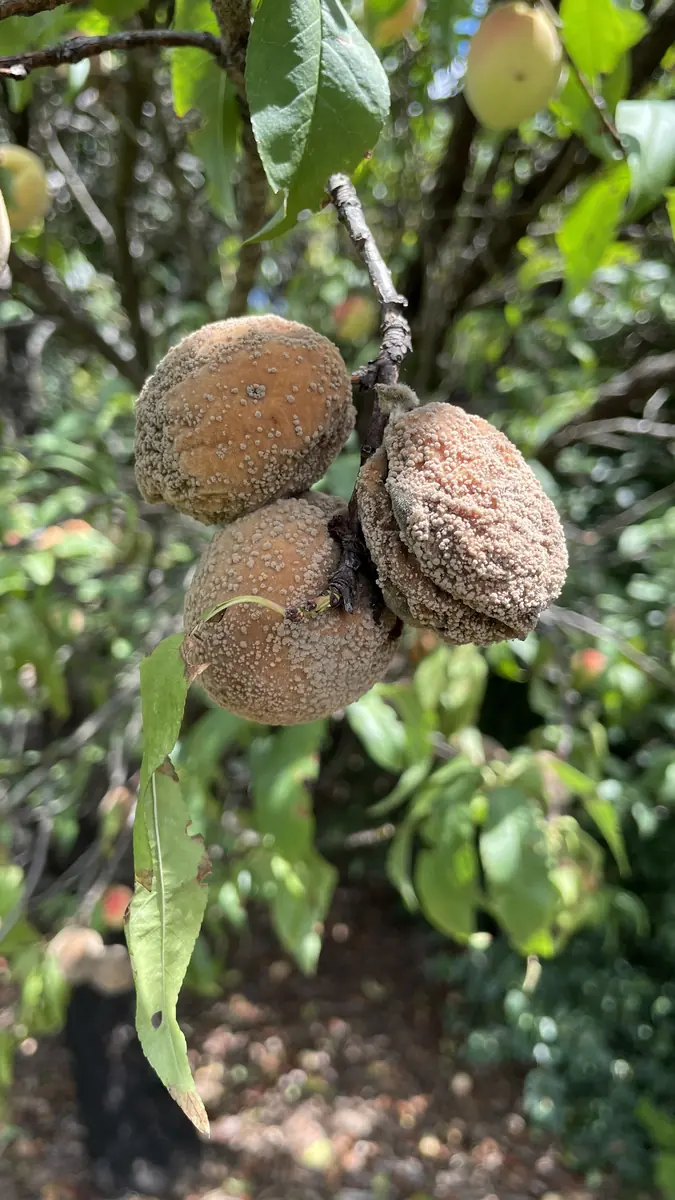
- On ripening fruit a small, round, light brown spot spreads quickly into a firm brown rot covering the whole fruit within days.
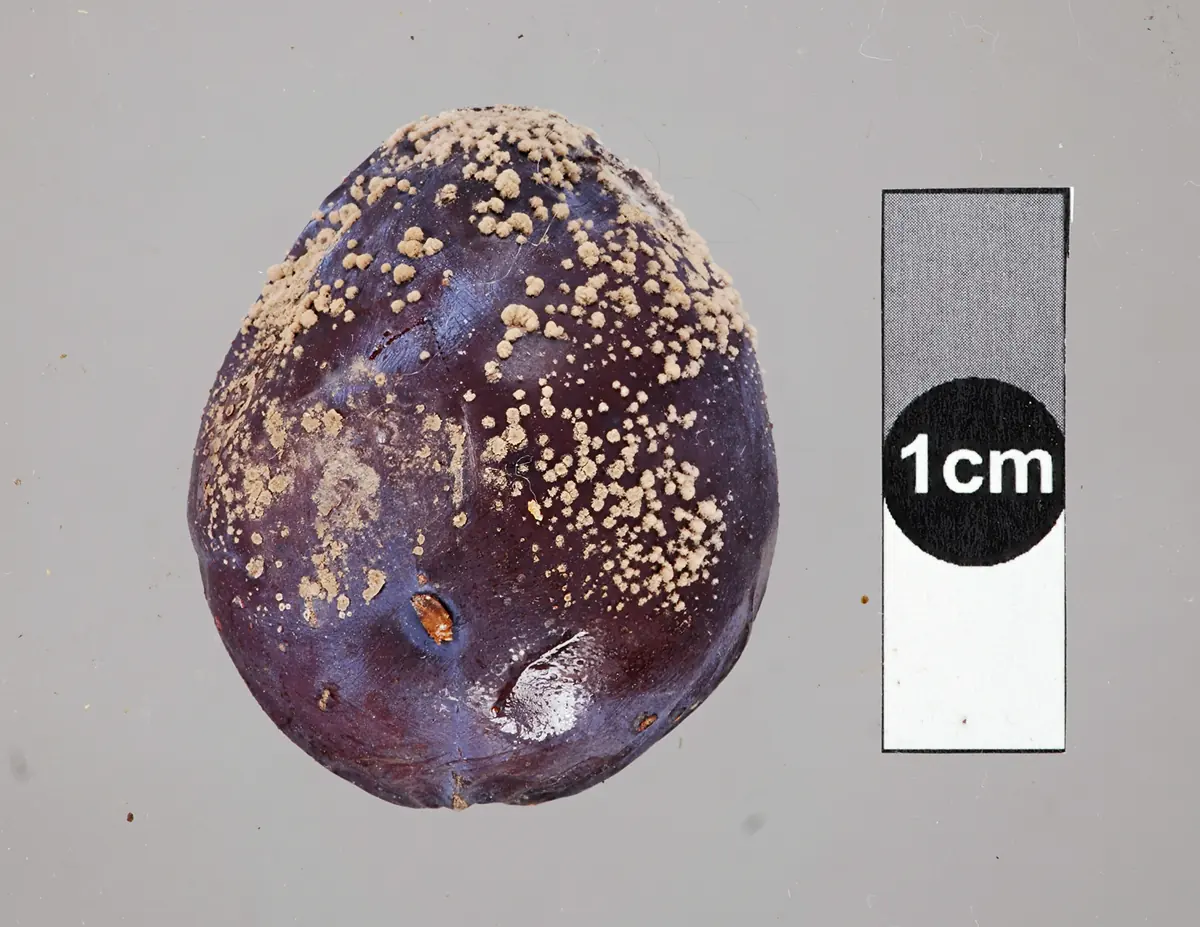
- The rotted skin soon becomes covered in powdery, fawn to grey tufts of spores, often in rings.
- Rotted fruit dries into a shrivelled, dark mummy that hangs on the tree or lies on the ground through winter.
- On loquats and almonds you may see the same blossom blight and fawn spore tufts on fruit or hulls.
What it is often confused with
Botrytis
Grey mould has fluffy grey fuzz and is more common on soft fruit such as strawberries and grapes. Brown rot has firmer rot and tidy fawn spore tufts, often in rings.
Fruit fly
Fruit fly damage starts at a small sting mark and the inside is soft and full of maggots. Brown rot can follow insect damage, so cut the fruit open to check for larvae.
Bacterial canker
Bacterial canker also causes gum and dead buds, but it starts on bark and buds over autumn and winter rather than from blighted flowers, and it does not rot ripe fruit.
When and where it is worst
Brown rot occurs in every state but is worst where rain falls at flowering or close to harvest, such as the coast and ranges of New South Wales, Victoria, the Adelaide Hills, Tasmania and South East Queensland. It is less of a problem in dry inland districts and in Perth, where summers are dry. Cherries, apricots, peaches, nectarines and plums are all hit, and almonds and loquats can also carry it.
The fungus survives winter in mummified fruit, old blossom stalks and twig cankers. Spores are released in wet weather at flowering in late winter to spring, and blighted flowers keep producing spores right through to harvest. Fruit becomes much more susceptible as it ripens, so a warm, humid or rainy spell in the month before picking, often November to February, can cause big losses. Fruit split by rain, pecked by birds or damaged by insects such as Carpophilus beetles rots first.
Plants it affects
These plants in our library list it as a problem to watch for.
How to prevent it
- In winter, pick every mummified fruit off the tree and the ground, cut out cankered twigs, and bin or bury them rather than composting them.
- Prune to an open vase shape so blossoms and fruit dry quickly after rain.
- Thin fruit so they do not touch, because rot spreads quickly between touching fruit.
- Avoid overhead watering, especially from flowering to harvest.
- Control birds, earwigs, fruit fly and beetles that wound fruit, and pick up fallen fruit during harvest.
- Pick fruit promptly when ripe and refrigerate it, removing any rotting fruit straight away.
Organic control, step by step
- Do the winter clean-up thoroughly, because removing mummies cuts the main source of spores.
- Cut out blighted blossoms and twigs in spring as soon as you see them.
- A copper or lime sulphur spray at bud swell reduces early infection; check the product label lists stone fruit and the timing.
- If rain is forecast during flowering or in the month before harvest, a sulphur-based or other organic-approved fungicide whose label lists brown rot can add protection.
Conventional control
- Mancozeb is used in home garden fungicides for brown rot on stone fruit; apply at bud swell, at full bloom and petal fall, then about every three weeks until the label's withholding period before harvest.
- In wet seasons a spray about a month before harvest and another two weeks later protects ripening fruit; check the product's withholding period fits your picking date.
- Do not rely on the same fungicide group every time, to slow the build-up of resistance.
- Read the label, check the crop is listed and keep to the withholding period before you pick fruit.
Frequently asked questions
Why do my peaches rot on the tree just before they are ripe?
That is usually brown rot. Ripening fruit is highly susceptible, and warm, wet weather close to harvest lets the fungus spread quickly, especially where mummies from last year were left on the tree.
Should I leave rotten fruit on the ground?
No. Rotten and mummified fruit produce spores for the next season. Collect them and put them in the rubbish or bury them deeply.
Can brown rot spread to other fruit trees?
Yes. It moves freely between peaches, nectarines, plums, apricots, cherries and almonds, so clean up all your stone fruit trees together.
Is fruit with a small brown rot spot safe to eat?
Cut away the rot generously and eat the sound part soon, but discard fruit that is mostly rotted or mouldy.
Related problems
Sources: Agriculture Victoria, Brown rot of stone fruits; Yates Australia, Brown rot. Identification and control follow these sources. Always read the product label before use.