Earwigs: identify, prevent, control
Updated June 2026
Most active in warm weather through spring and summer, September to February.
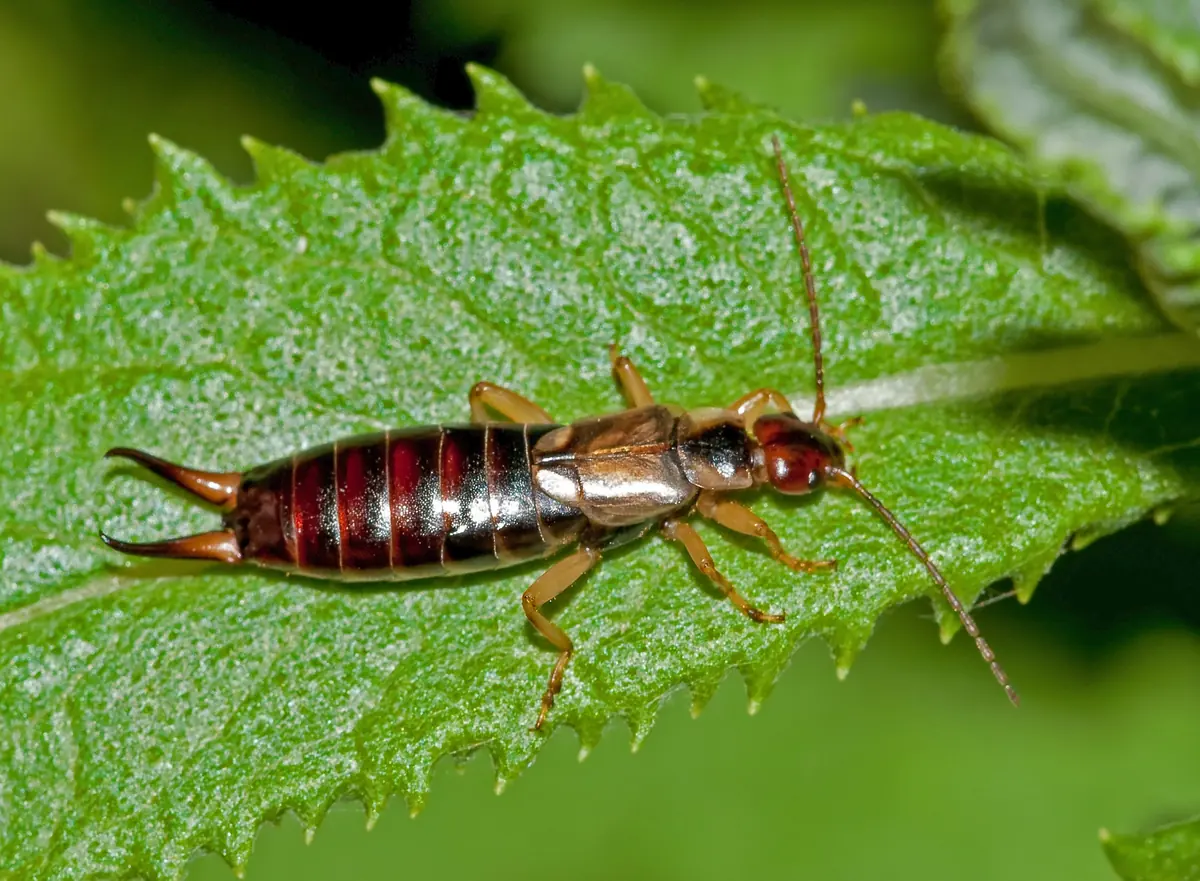
Earwigs are pincer-tailed insects that feed at night on seedlings, soft fruit and flowers, while also eating aphids and other pests. They are a mixed blessing, so we control them around vulnerable seedlings rather than wiping them out across the garden.
How to identify it
- Ragged holes in soft leaves, petals and seedlings, chewed overnight
- Brown insects with curved pincers at the tail hiding in tight, dark spots
- Damage to dahlias, strawberries and young seedlings in particular
- Earwigs sheltering under mulch, pots and in flower heads by day
Earwigs are a mixed blessing. For the insects that are fully on your side, see our Good Bugs vs Bad Bugs photo guide.
How to prevent it
- Remove daytime hiding spots like garden litter, loose mulch and stacked pots near seedlings
- Protect seedlings with collars until they are established
- Keep beds tidy to limit shelter close to vulnerable plants
- Tolerate earwigs away from seedlings, since they also eat aphids and other pests
Organic control, step by step
- Set rolled-up damp newspaper or upturned pots stuffed with straw as overnight traps, then empty them each morning
- Lay shallow containers of oil with a little soy sauce to attract and drown them
- Hand-pick at night with a torch around damaged seedlings
- Apply a band of diatomaceous earth around prized seedlings, refreshing it after rain
- Move traps around the garden to target the worst spots
Plants it attacks
Track it in the app. The free Planting Season planner lists the pests and diseases to watch for on every plant in your garden, tuned to your region.