Mealybug: identify, prevent, control
Updated June 2026
Numbers build in warm weather and stay active year-round under glass, peaking October to April.
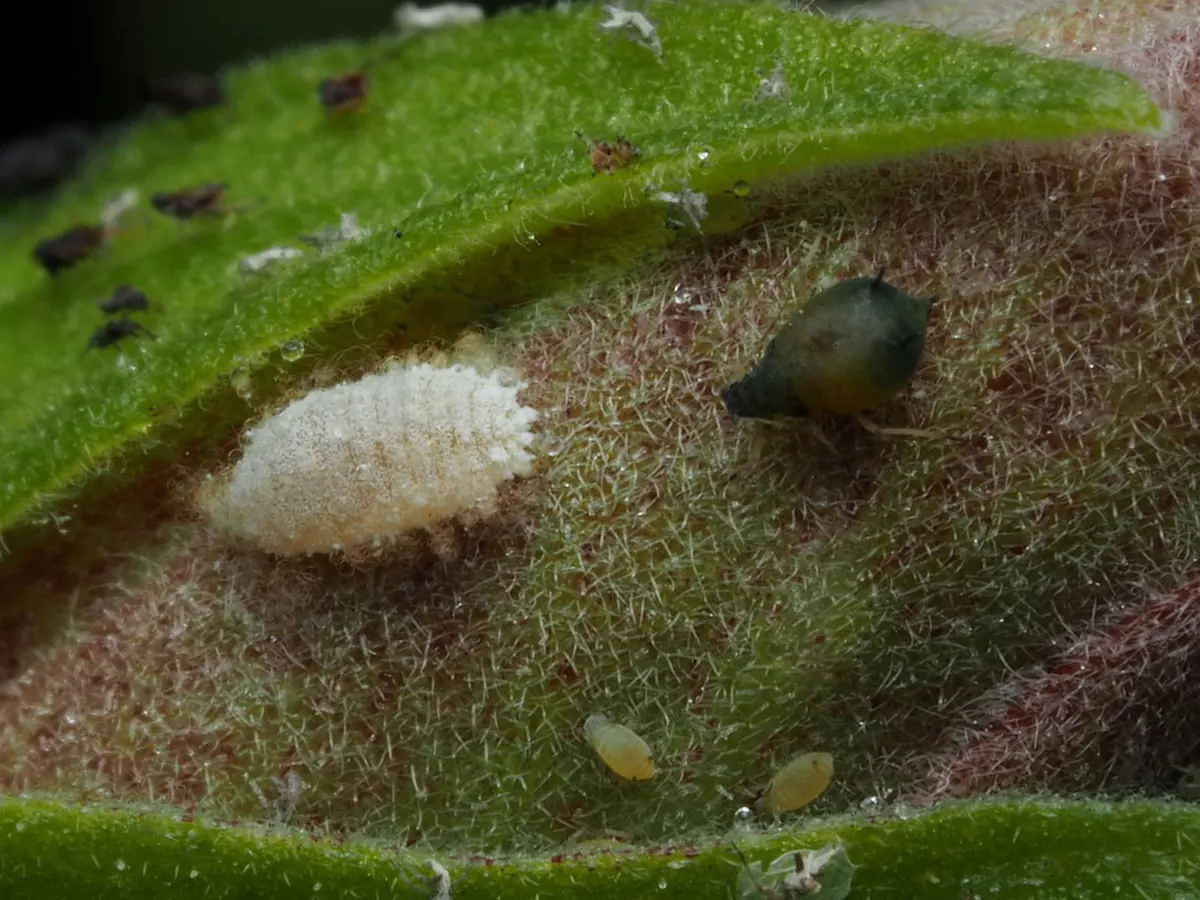
Mealybugs are soft sap-sucking insects coated in white waxy fluff that gather in leaf joints and on roots. They weaken plants, drip honeydew that grows sooty mould, and are common on citrus, tomatoes and anything grown under cover.
How to identify it
- Cottony white waxy clusters in leaf joints, stem crooks and under leaves
- Sticky honeydew and black sooty mould on leaves below
- Yellowing, wilting and stunted growth on infested plants
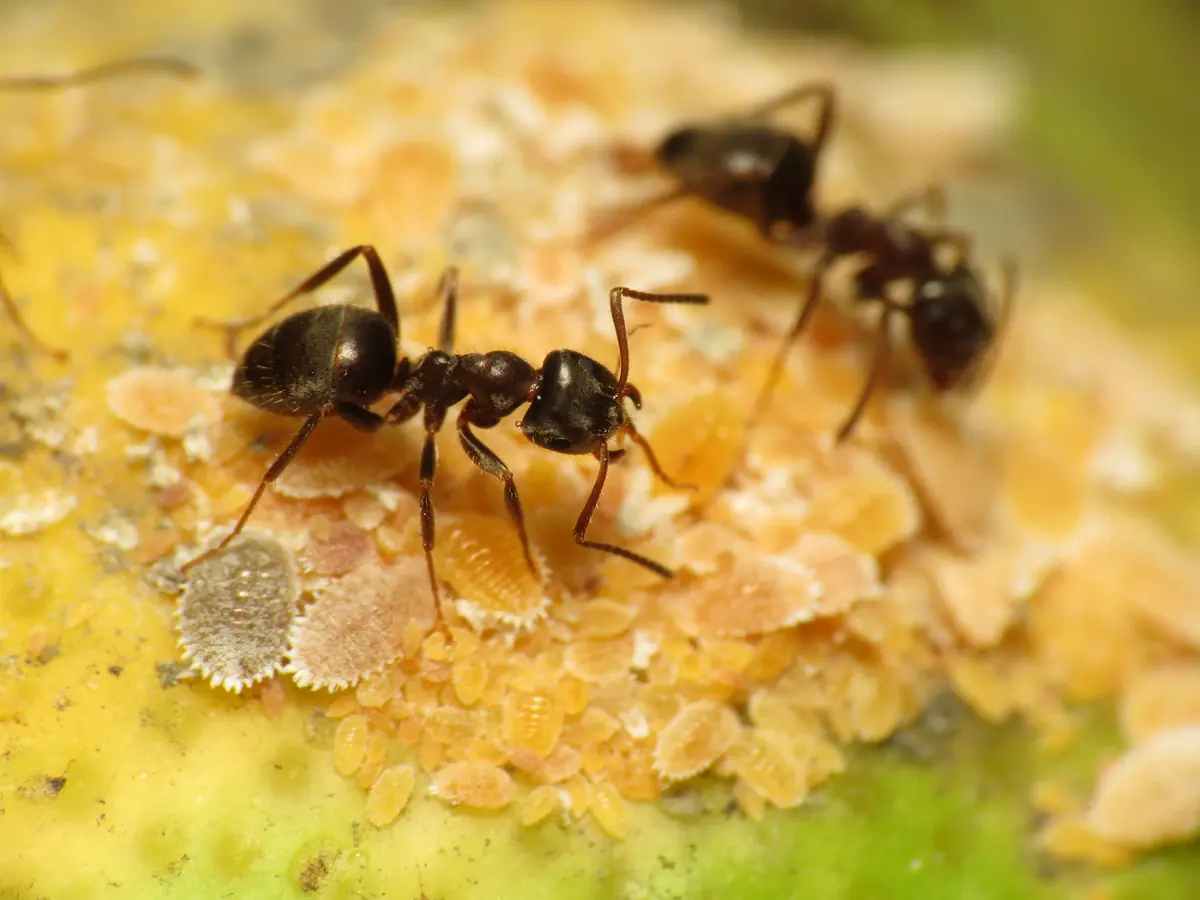
- Ants tending the colonies for honeydew
How to prevent it
- Inspect new plants closely, since mealybugs hide in tight crevices
- Avoid over-fertilising with nitrogen, which encourages soft growth
- Keep ants off plants with a sticky barrier so predators can work
- Prune to open up dense growth where mealybugs shelter
Organic control, step by step
- Dab colonies with a cotton bud dipped in methylated spirits to dissolve the wax
- Spray eco-oil thoroughly into crevices and leaf undersides
- Repeat the oil spray every 1 to 2 weeks to catch newly hatched crawlers
- Use eco-neem for heavier infestations to disrupt breeding
- Release or encourage mealybug ladybirds and lacewings, their main predators
- Prune out and bin badly infested growth
Plants it attacks
Track it in the app. The free Planting Season planner lists the pests and diseases to watch for on every plant in your garden, tuned to your region.