
Habanero Chilli: What It Is and How to Grow It in Australia
Updated November 2026
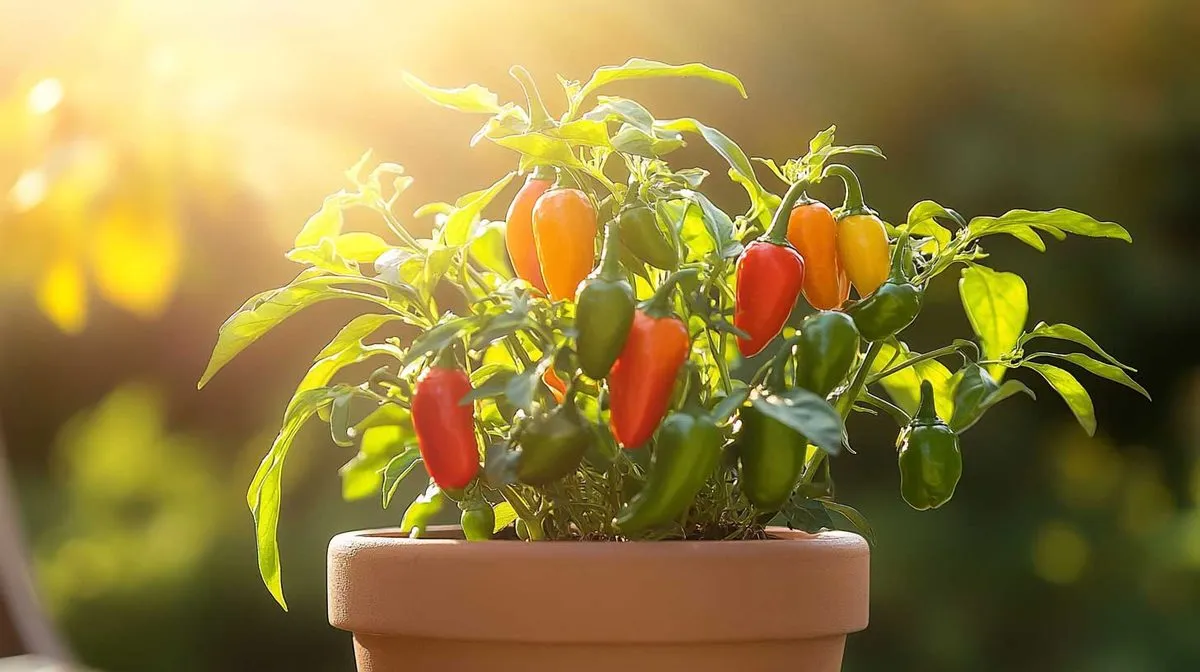
Heat, flavour, scotch bonnet comparison, sowing months, pots and varieties sold in Australia
A habanero is a small, lantern-shaped hot chilli of the species Capsicum chinense, rated at roughly 100,000 to 350,000 Scoville heat units, which is many times hotter than a jalapeno. It has a fruity, almost floral smell that sets it apart from other hot chillies, and it is a long-season, warmth-loving plant that Australian gardeners can grow well in a pot or a sunny bed.
Short answer: habanero is hot (100,000 to 350,000 SHU), ripens orange or red, takes 75 to 120 days depending on the seed seller, and needs the early end of the sowing window plus real warmth to germinate. Scotch bonnet is a close relative of the same species with a similar heat range.
What is a habanero?
Habanero belongs to Capsicum chinense, the same species as scotch bonnet, ghost chilli and Carolina Reaper. That matters for the gardener, because chinense plants are slower than the everyday Capsicum annuum chillies such as jalapeno and cayenne. They germinate more slowly, grow more slowly as seedlings and want a longer warm season before the first fruit turns colour.
The fruit is a wrinkled lantern or bell shape, usually 2 to 5 cm long. The Seed Collection describes its Habanero Red as a short, spreading plant with dark green, wrinkled fruit up to 5 cm that turns red when mature. Orange is the most common ripe colour worldwide, and red, yellow, white and chocolate brown types also exist.
How hot is a habanero?
Published ranges put habanero at about 100,000 to 350,000 Scoville heat units (SHU). Published Scoville charts give that range, and it matches the figure on our chilli heat scale. For comparison, a jalapeno is about 2,500 to 8,000 SHU and a serrano about 10,000 to 23,000 SHU. See the jalapeno chilli guide and the serrano chilli guide for those two.
Heat varies within the range. Warm, sunny conditions and a little dryness late in the season push a plant toward the top of its own range, while a plant kept cool, soft and well watered tends to produce milder fruit. The seeds and the white pith hold the most capsaicin, so removing them lowers the heat of a dish, although the whole fruit is still very hot.
Flavour and kitchen use
A ripe habanero has a bright, fruity, slightly floral flavour with a heat that arrives quickly and lingers. Cooks use it finely chopped or whole in fresh salsas, hot sauces, marinades and curries, where one small fruit is usually enough for a whole pot. Green fruit is grassier and a little less sweet than ripe orange or red fruit.
Habanero or scotch bonnet?
Both are Capsicum chinense and the heat ranges overlap, so many cooks swap one for the other. The usual differences are in shape and use. A scotch bonnet is squat and slightly flattened, said to resemble a tam o'shanter hat, and it is closely tied to Caribbean cooking such as jerk dishes. A habanero is more lantern-shaped and is associated with the Yucatan in Mexico. Growing the two is much the same, with the same warmth, the same long season and the same care. Check the seed listing for the variety you buy, because the names are sometimes used loosely.
When to sow habanero in Australia
Habanero is a chilli, so the sowing months below come from our chilli data, which covers all chillies. Because habaneros are slow, sow at the early end of the window for your region so the plant has the longest possible warm season, and start the seed indoors or on a heat mat if nights are still cool.
| Region | Sowing months |
|---|---|
| South East Queensland | Aug to Feb |
| Northern Rivers NSW | Sep to Feb |
| Sydney & Coastal NSW | Jul to Nov |
| Melbourne & Victoria | Oct to Dec |
| Adelaide & SA | Aug to Oct |
| Perth & WA | Aug to Sep |
| Tasmania | Sep to Oct |
| Canberra & ACT | Oct to Nov |
| North Queensland | Apr to Sep |
| Darwin & Top End | Apr to Aug |
Our data lists about 90 days to harvest for chillies in general. Seed sellers give habanero its own figure, so read the packet. The Seed Collection lists Habanero Red at about 75 days, while Seeds of Plenty gives a range of 90 to 120 days for its habanero listings. The gap shows how much the figure depends on whether it is counted from sowing or transplanting and on how warm the season is.
Germination and raising seedlings
Habanero seed is slow and fussy about temperature. Aim for a seed mix at about 25 to 30 degrees Celsius, the warm end of the 22 to 30 degree germination range in our data. The Seed Collection lists 7 to 21 days at 22 to 35 degrees, and in practice a cooler mix means the longer end or failure. A heat mat and a clear lid over a seed tray make a large difference in spring.
- Sow seed 5 mm deep in a fine, moist seed-raising mix. The seed raising guide covers the general method.
- Keep the mix evenly damp but never soggy, because damp, cool seedlings are prone to damping off.
- When seedlings have two to three pairs of true leaves, pot them on individually.
- Harden plants off for a week and plant out only when nights stay reliably warm and frost is no risk. Check your local risk on the frost dates page.
Plant size and spacing
Habanero plants are generally compact, commonly 60 to 90 cm tall and often as wide, and heavy fruit can bend branches, so a stake or small cage helps. The Seed Collection suggests 50 cm between plants for its Habanero Red. In pots, use one plant per pot in a container at least 30 cm wide. Our chillies in pots guide covers pot size, mix and watering in detail, and it suits habanero well because a pot can be moved into the warmest, most sheltered spot.
Feeding and watering
Water deeply when the top few centimetres of mix or soil have dried, and avoid letting a flowering plant wilt, because stress drops flowers. Feed lightly early on, then switch to a fertiliser higher in potassium once flowers appear, following the label. Too much nitrogen gives a large leafy plant with few fruit. A layer of mulch helps hold soil moisture and warmth in the bed. The fertilising guide sets out the general approach.
Picking green or red
Habanero fruit can be picked green, but it is much better and hotter once fully coloured, so be patient. A ripe fruit is firm, glossy and fully orange, red or its final colour. Cut the stalk with scissors rather than pulling, because branches snap easily. Regular picking encourages more flowers.
Overwintering in warm regions
Habanero is a frost-tender perennial that is usually grown as an annual in cool areas. In frost-free regions such as North Queensland, Darwin and the Top End and the warmest parts of South East Queensland, a plant can carry on for a second or third year if it is cut back lightly after the main crop and fed again in spring. Elsewhere, move a potted plant to a bright, frost-free spot under cover, keep it just damp and expect it to slow right down until spring.
Pests and diseases
Habanero shares chilli's problems. Watch for aphids, thrips, whitefly and spider mite, which build up on stressed plants, especially under cover. Powdery mildew can appear in humid weather, and waterlogged pots lead to root rot. Use a registered product, used to the label, if a pest gets out of hand.
Fruit fly can attack ripening fruit where it is established. Our fruit fly tracker lists the status for each region, and where it is a problem the safest approach is netting or bagging fruit and picking it promptly.
Saving habanero seed
Habanero is self-fertile but crosses with other chillies if bees move pollen between plants, so seed from a garden with several chillies may not come true. To save seed, let a healthy fruit ripen fully on the plant, even until slightly soft, then scoop out the seed, dry it on paper for a couple of weeks away from direct sun and store it in a labelled paper packet in a cool, dry place. If you grow only one chinense variety, or bag a few flowers before they open, the seed is more likely to come true. The seed saving guide covers the full method.
Handling hot chillies safely
Wear disposable gloves when cutting habaneros, because capsaicin stays on skin and spreads to eyes and lips for hours. Do not touch your face, wash tools and boards well afterwards, and do not cook hot fruit in a closed room, because the fumes irritate the eyes and throat. Keep fruit and seed away from small children and pets.
Habanero types sold in Australia
These listings were read on seller sites in November 2026. Stock changes, and some sellers do not post seed to Western Australia or Tasmania, so check each page before ordering.
| Seller | Listing | What it says |
|---|---|---|
| The Seed Collection | Chilli Habanero Red | Open pollinated, about 75 days, fruit up to 5 cm turning red, short spreading plant, 20 seeds. Showed as sold out when read. |
| Seeds of Plenty | Chilli Pepper Habanero Chocolate | A brown-fruited habanero type, with a 90 to 120 day range to harvest. |
| Mr Fothergill's | Chilli Habanero Giant Red | A Bunnings Trade listing named Chilli Habanero Giant Red turned up in search. Page not opened. |
Orange, yellow and white habanero types are often sold by specialist chilli growers rather than the large seed houses, so a search for habanero seed from an Australian chilli specialist is worthwhile if you want a particular colour.
Where habanero fits in the chilli family
If you are choosing between chillies, our chilli and pepper varieties guide compares the common types. For the general method, see how to grow chilli, growing hot peppers and the chilli plant page. If you would rather start with something gentler, the jalapeno is a far easier first chilli.
Questions
How hot is a habanero?
A habanero is about 100,000 to 350,000 Scoville heat units, according to published Scoville charts, which makes it many times hotter than a jalapeno at 2,500 to 8,000.
Is a scotch bonnet the same as a habanero?
They are not the same variety, but both are Capsicum chinense with overlapping heat. Scotch bonnet is squatter and flatter, and habanero is more lantern-shaped.
When should I sow habanero seed in Australia?
Use the early end of the sowing window for your region, with seed kept at 25 to 30 degrees Celsius. The region table on this page comes from our live chilli data.
How long do habaneros take to ripen?
Seed sellers list about 75 days for Habanero Red at The Seed Collection and 90 to 120 days at Seeds of Plenty, so allow three to four months in a warm season.
Can I grow habanero in a pot?
Yes. One plant in a pot at least 30 cm wide, in free-draining mix and full sun, suits habanero well and lets you move it to the warmest spot.
Why is my habanero not turning orange or red?
Cool weather slows ripening. Leave the fruit on the plant in full sun and wait, because green fruit is picked too early for full heat and flavour.
Sources
- Chili Pepper Madness, The Scoville Scale
- The Seed Collection, Chilli Habanero Red
- Seeds of Plenty, Chilli Pepper Habanero Chocolate
- Planting Season, Chilli heat scale
Plant profile
The chilli profile has sowing times for your region, companion plants and common pests.