Spider mite: identify, prevent, control
Updated June 2026
Worst in hot, dry summer conditions, December to March, and year-round in greenhouses.
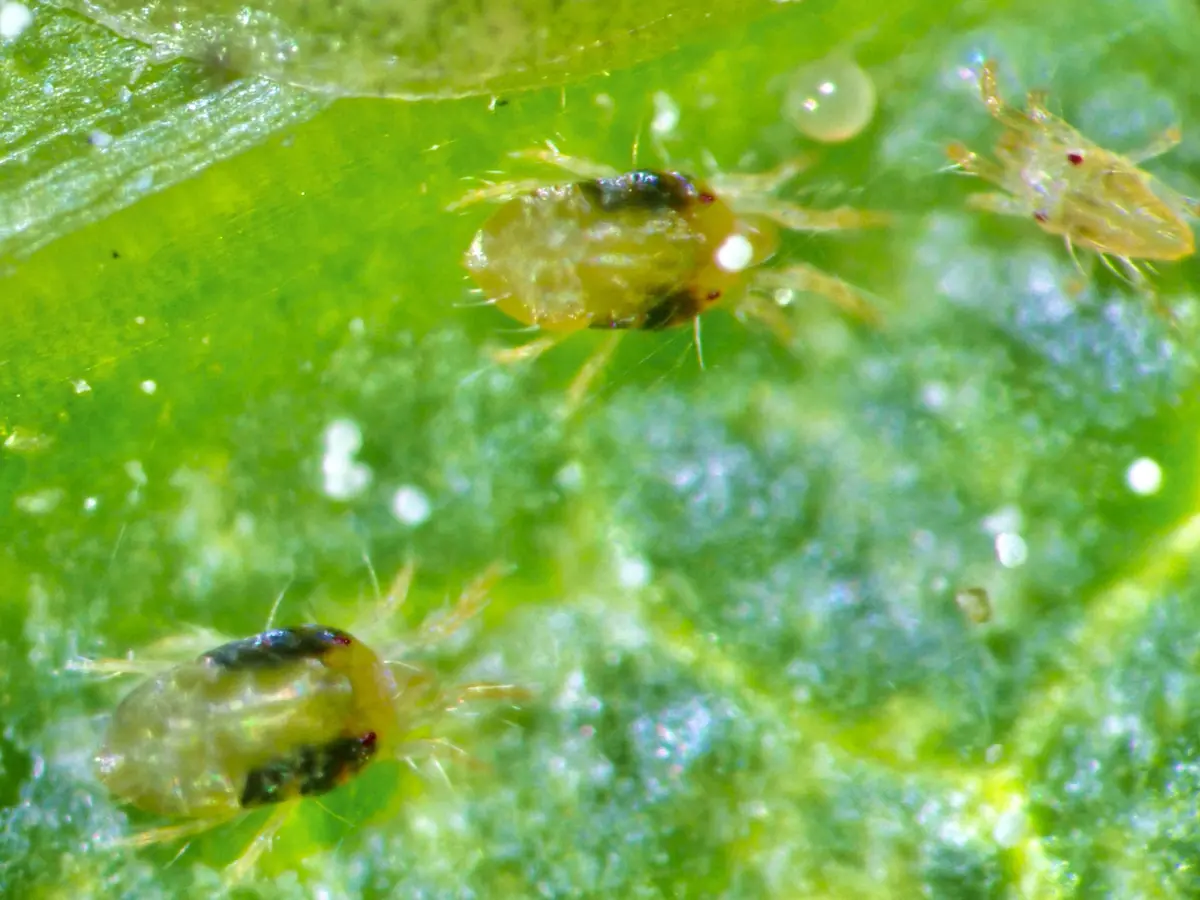
Two-spotted spider mites are tiny sap-sucking mites that thrive in hot, dry conditions and explode in numbers under glass or against warm walls. They drain leaves until they turn dull and bronzed, and heavy infestations can defoliate beans, tomatoes and cucurbits.
How to identify it
- Fine pale stippling or speckling on the upper leaf surface
- Leaves turning dull, bronzed or yellow and dropping
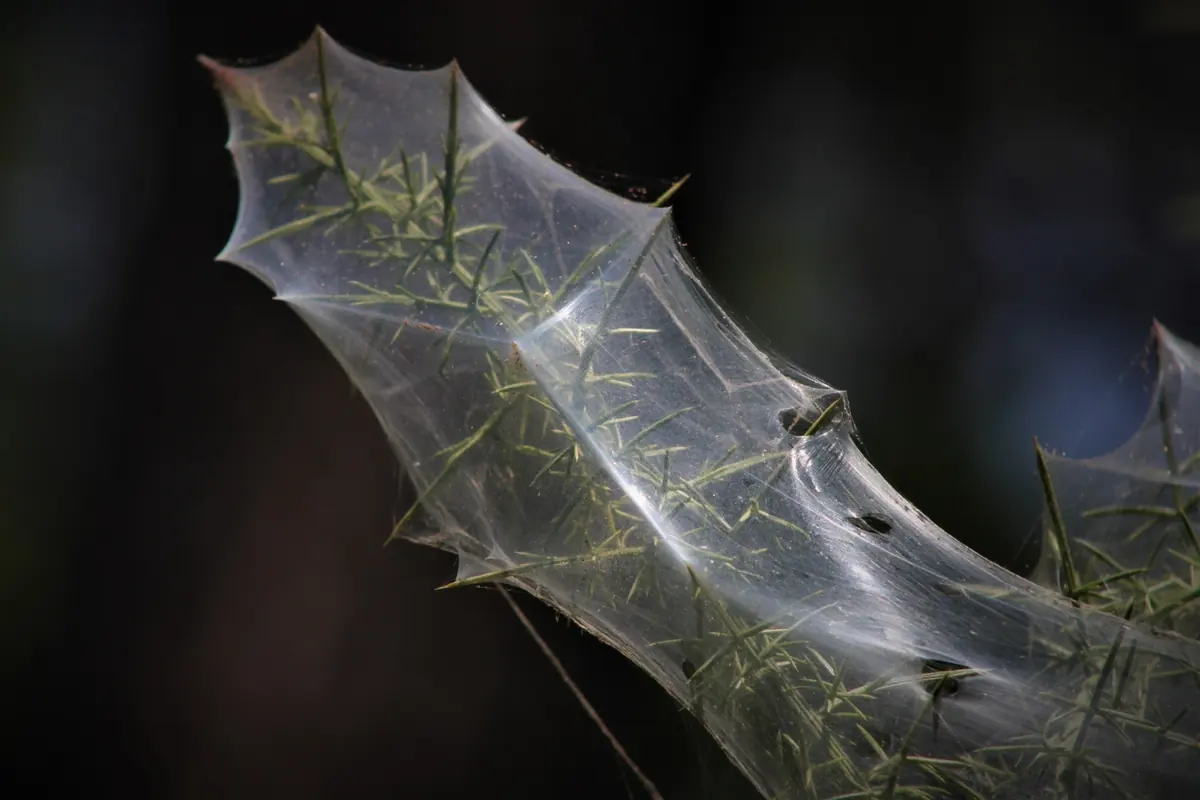
- Fine silken webbing on leaf undersides and shoot tips in bad cases
- Tiny moving specks on the underside, easier to see with a hand lens
Predatory mites eat spider mites. See both side by side in our Good Bugs vs Bad Bugs photo guide.
How to prevent it
- Keep humidity up by misting and watering well, since mites love hot dry air
- Avoid dusty, drought-stressed plants, which mites colonise fastest
- Inspect leaf undersides regularly in hot weather to catch them early
- Isolate and check new plants before adding them to the patch
Organic control, step by step
- Hose down leaf undersides regularly to knock off mites and raise humidity
- Spray eco-oil to smother mites and eggs, coating undersides thoroughly
- Repeat sprays every 5 to 7 days, as mites breed quickly in the heat
- Spray oils in cooler conditions under 30 degrees to avoid leaf scorch
- Release predatory mites in greenhouses for lasting biological control
- Remove and bin badly webbed leaves to cut the population fast
Plants it attacks
Track it in the app. The free Planting Season planner lists the pests and diseases to watch for on every plant in your garden, tuned to your region.