
Annual vs Perennial in Australia: What Are Perennials and Which Crops Plant Once
Updated November 2026
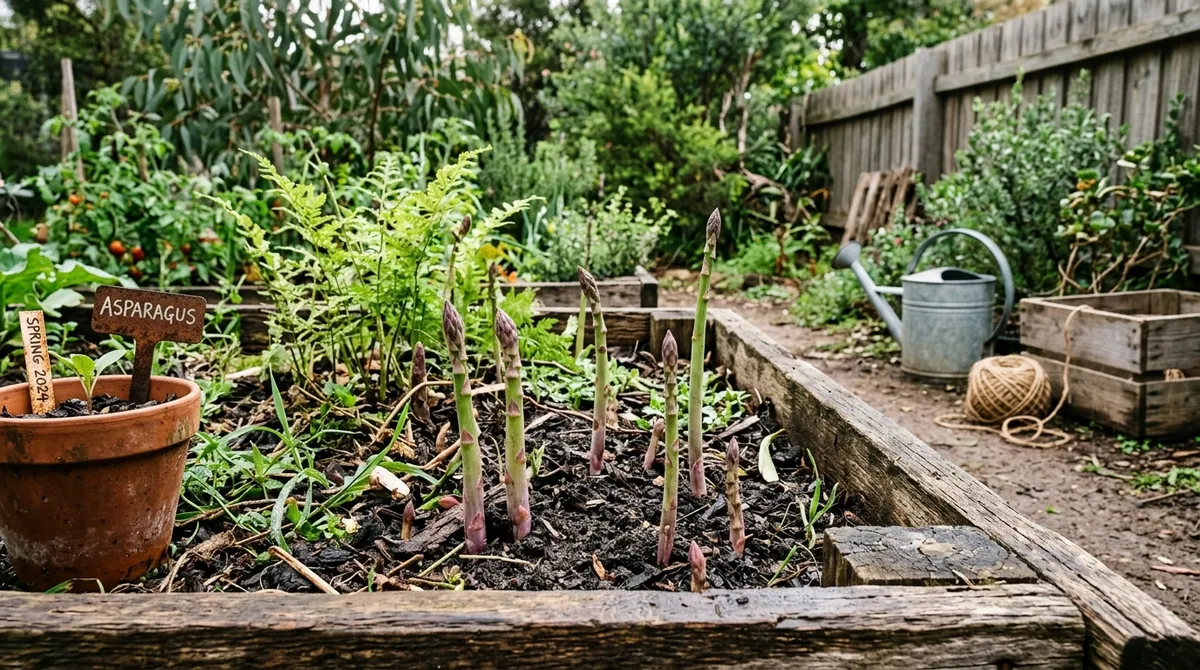
How climate changes the answer across Australia, from frost-free Darwin to cold Canberra.
Annuals live and die within one season, biennials take two seasons, and perennials live for three years or more. These are the three words behind most seed packets, and in Australia the answer for a given plant can shift with where you live. A chilli that dies after one cool season in Canberra can crop for five years in Darwin, because the difference between an annual and a perennial is often just whether the winter kills it.
Short answer: an annual completes its life in one growing season. A perennial regrows every year from the same roots or stems. A biennial grows in year one and flowers in year two. In frost-free parts of Australia many crops sold as annuals behave as perennials, and in the cold south the same plants are replanted each year.
What are perennials?
A perennial is a plant that keeps living year after year. Some, such as rosemary and lavender, hold their leaves and woody stems all year. Others, such as asparagus and rhubarb, die back to a crown in the cold or dry months and send up fresh growth in the next growing season. The edible perennials are valuable because you do the sowing and bed preparation once, then harvest for many seasons.
Annuals, by contrast, germinate, flower, set seed and die within a year. Lettuce, beans, corn, cucumbers and most pumpkins are annuals. Biennials, including carrot, beetroot, parsley, silverbeet and cabbage, store energy in a root or leaf rosette in the first year and flower in the second. We harvest them in the first year, so most gardeners treat them as annuals.
Climate decides the label in Australia
The Australian growing year splits into frost and frost-free regions. On our frost dates page, Darwin and the Top End, North Queensland, the Northern Rivers, Perth, South East Queensland and Sydney are listed as frost free in their regional midpoints. Adelaide has a typical last frost around 20 August, Melbourne around 10 September, Tasmania around 5 October and Canberra around 1 November.
- Frost-free regions (Darwin, North Queensland, Northern Rivers, South East Queensland, Perth, Sydney): tender perennials survive every winter. Heat, humidity and wet-season disease are the limit instead, and some cool-climate perennials such as rhubarb and asparagus struggle in the tropics.
- Frosty regions (Canberra, Hobart, Melbourne, Adelaide): frost kills tender plants, so these gardeners replant tomatoes, chillies, eggplant and basil each spring. The cool winters suit rhubarb, asparagus, horseradish and Jerusalem artichokes well.
Our guide to climate zones explains how these regions map to growing conditions, and why the American hardiness-zone system fits Australia badly.
Where chillies and eggplants live for years
Chilli and eggplant are short-lived perennials. In Darwin, North Queensland and similar frost-free country, a chilli bush that survives the wet season can crop for several years, growing woody and wide. The same plant in Melbourne or Canberra is cut down by the first hard frost. Gardeners in marginal areas, such as Sydney and the Northern Rivers, sometimes carry a pot of chilli through winter in a sheltered spot and get a head start the following spring.
Plants kept for years need a different routine from annuals. Prune them back after fruiting to encourage fresh shoots, feed them in spring, and replace them when yields decline after the third or fourth year. See our guides to chilli, eggplant and capsicum for details.
Perennial basil: what is sold in Australia
Ordinary sweet basil is an annual, and it dies with the first frost. Perennial basil is a group of basil-type plants that stay alive for years in frost-free gardens. The plants sold in Australia under names such as perennial basil, African blue basil and Ocimum x africanum are mostly hybrids or selections that are grown from cuttings. African blue basil is generally described as a cross between camphor basil (Ocimum kilimandscharicum) and a purple sweet basil, and the Royal Horticultural Society lists it as a cultivar propagated vegetatively.
Daleys Fruit lists a perennial basil as a vigorous, bushy evergreen that grows all year only in frost-free areas, grown from cuttings and not offered as seed. Herb Cottage lists perennial basils among its basil plants. The practical points are these.
- The leaves are more strongly scented, with a camphor edge, and are less like the sweet basil of pesto than your supermarket bunch.
- The plants flower heavily, which bees love, and the flowers are edible.
- Frost damages them. In frosty regions take cuttings in autumn and keep them indoors, or treat the plant as an annual.
- Do not expect seed sold under these names to produce the same plant, because named hybrids are often sterile or do not breed true.
For regular basil, see our basil guide and Thai basil, which is also grown as a short-lived plant in the warm north.
Plant-once crops that suit Australia
- Asparagus. The standard perennial vegetable for the cool and temperate south. Crowns go in Jul to Sep in Sydney and Jul to Sep in Melbourne on our calendars, and the bed is left alone for two years before harvest. See asparagus.
- Rhubarb. Plant crowns in Mar to Aug in Melbourne or Jun to Sep in Tasmania. Rhubarb sulks in humid heat. See rhubarb.
- Warrigal greens. A coastal Australian native with tough, spreading growth and leaves you pick for years. Our data gives Sep to Mar for sowing in Sydney. See warrigal greens.
- Brazilian spinach. A creeping perennial green for the warm north, sown Sep to Mar in South East Queensland. See Brazilian spinach.
- Choko. A vigorous perennial vine for warm country, planted Sep to Nov in Sydney. See choko.
- Jerusalem artichoke, horseradish and globe artichoke. Hardy plants for cooler gardens. Guides: Jerusalem artichokes, horseradish, globe artichoke.
- Walking onions. A perennial onion that makes bulbils at the top of the stem. See walking onions.
- Herbs. Chives, oregano, thyme, rosemary, sage, mint and lemongrass.
Biennials: what happens if you leave them
Carrots, beetroot, silverbeet and parsley are biennials. Left in the soil past their first growing season, a carrot sends up a tall stem with white flower heads in the second spring, and the root turns hard and woody. Silverbeet does the same and keeps cropping leaves until it flowers. Parsley produces a flower stalk with bitter leaves, so most gardeners replant each year. The exception is when you want seed, which our seed saving guide covers.
A first-season plant that runs to seed early has bolted because of heat or a sharp cold snap and is not behaving as a biennial. Check the timing against your region on the grow hub.
Annual, biennial and perennial at a glance
| Plant | Life cycle | Where it suits | What to expect |
|---|---|---|---|
| Asparagus | Perennial | Cool and temperate south; weaker in the humid tropics | Spears from the third year |
| Rhubarb | Perennial | Likes cool winters; struggles in the tropics | Stalks from the second year |
| Warrigal greens | Perennial, native | Coastal and frost-light areas; tolerates salt | Leaves picked for years |
| Brazilian spinach | Perennial | Warm and frost-free areas | Leaves picked all year in the warm north |
| Choko | Perennial vine | Warm, frost-free to light frost | Fruit in autumn, vine regrows |
| Jerusalem artichoke | Perennial | Cool to temperate; spreads | Tubers dug in autumn and winter |
| Globe artichoke | Perennial | Cool to mild areas | Buds in spring |
| Horseradish | Perennial | Cool to temperate | Roots dug in winter |
| Chives | Perennial | Nearly everywhere | Cut for most of the year |
| Oregano | Perennial | Nearly everywhere | Cut all year |
| Thyme | Perennial | Needs drainage; poor in humid tropics | Cut all year |
| Rosemary | Perennial shrub | Cool to warm; humid tropics are hard | Evergreen |
| Mint | Perennial | Everywhere; keep in a pot | Cut all year |
| Lemongrass | Perennial grass | Warm; dies back in cold frost | Cut stalks all year |
| Perennial basil (Ocimum x africanum) | Perennial in frost-free areas | Warm and frost-free areas | Leaves all year, replace from cuttings |
| Chilli | Short-lived perennial | Lives for years in the tropics, annual in frost | Fruit for several seasons in the north |
| Eggplant | Short-lived perennial | Lives for years in the tropics, annual in frost | Cut back in late winter |
| Tomato | Tender perennial grown as an annual | Killed by frost, struggles in heavy tropical rain | Replant each season |
| Carrot | Biennial | Grown as an annual for the root | Root in the first season |
| Beetroot | Biennial | Grown as an annual for the root | Root in the first season |
| Parsley | Biennial | Hardy; flowers in the second year | Replace every year |
| Silverbeet | Biennial | Hardy through most winters | Leaves for 12 to 18 months |
| Cabbage | Biennial | Grown as an annual for the head | Head in the first season |
Planning beds around perennials
- Keep perennials together. A dedicated bed or border for asparagus, rhubarb and herbs lets you dig and rotate the annual beds without disturbing roots.
- Allow for size. Choko vines, warrigal greens and Brazilian spinach spread widely, so give them a fence or a corner and the room to roam.
- Control the runners. Mint and Jerusalem artichokes escape. Grow mint in a pot, and put artichokes where a few stray tubers will not matter.
- Match plant to water. Mediterranean herbs such as rosemary and thyme want drainage and little summer water, while rhubarb and choko want regular moisture. Group them by water needs. Our mulching guide helps with both.
- Replace short-lived plants. Chillies, eggplants and perennial basil lose vigour after a few years, so take cuttings or sow replacements before the old plants fail.
Questions
What are perennials?
Perennials are plants that live for three years or more and regrow from the same roots, crown or stems. In the garden the group includes asparagus, rhubarb, most herbs such as thyme and chives, berries and fruit trees.
What is the difference between annual and perennial plants?
An annual finishes its life cycle in one season and then dies, so you must sow it again. A perennial survives from year to year. A biennial grows in year one and flowers in year two.
Is perennial basil a real plant?
Yes. Perennial basil is sold in Australia for frost-free gardens, often as plants grown from cuttings, under names such as perennial basil, African blue basil and Ocimum x africanum. Frost damages it, so in cold regions treat it as an annual or keep cuttings indoors.
Can chillies and eggplants live for more than one year in Australia?
Yes, in frost-free regions such as Darwin and North Queensland they behave as short-lived perennials and can crop for several years. In places with frost, such as Canberra and Melbourne, they are killed in winter and replanted each spring.
Which perennial vegetables suit Australian gardens?
Asparagus and rhubarb suit the cool south, while warrigal greens, Brazilian spinach and choko suit warmer areas. Jerusalem artichokes, horseradish and globe artichokes suit cooler gardens, and herbs such as chives, oregano and mint grow nearly everywhere.
What happens if I leave a carrot or silverbeet in the ground over winter?
A carrot is a biennial and flowers in its second year, sending up a tall stem and turning woody. Silverbeet does the same. Leave them only if you want to save seed.