
Beneficial Insects in Australian Gardens
Updated November 2026
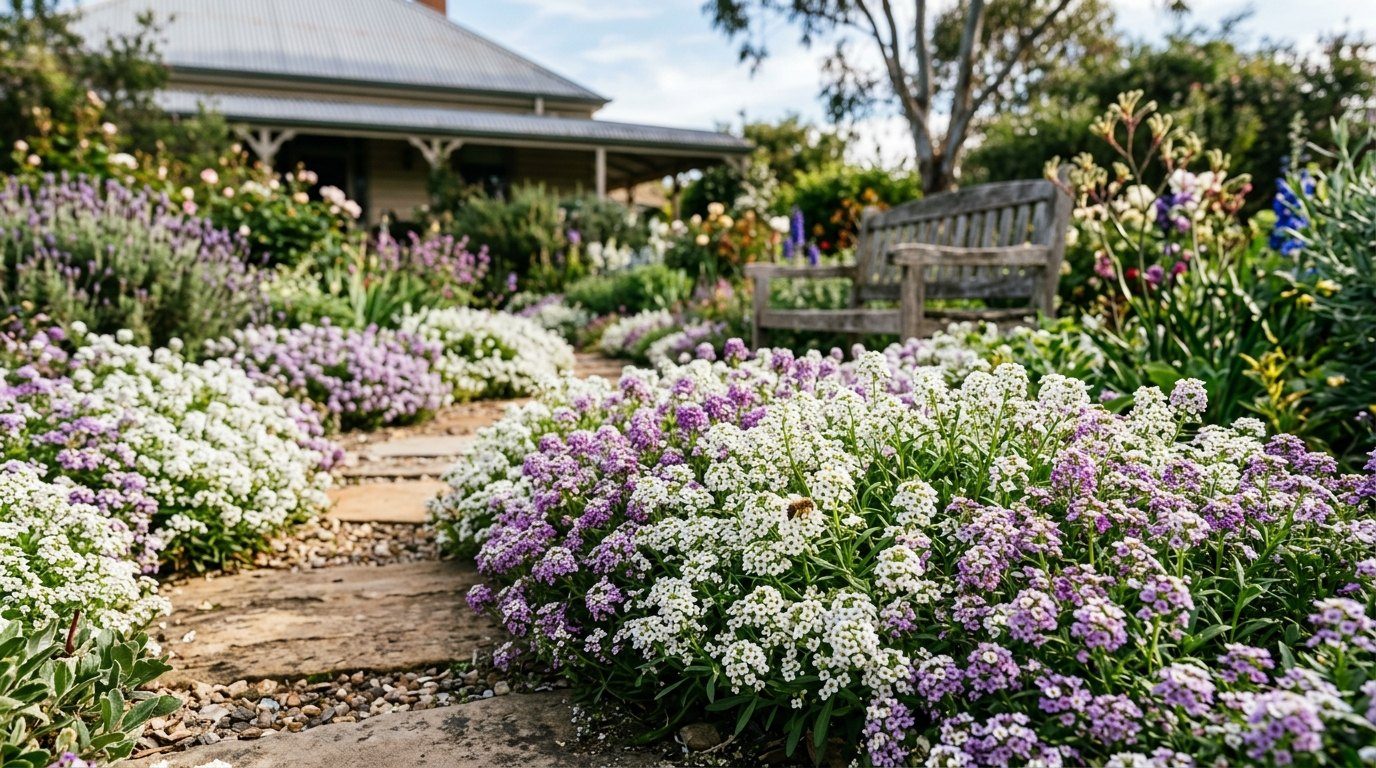
Identify the helpers, protect their eggs and larvae, and keep them in your garden.
Beneficial insects are the insects, mites and spiders that eat or parasitise garden pests. The main ones are ladybird beetles and their larvae, lacewings, hoverflies, parasitic wasps, predatory mites, praying mantises and ground beetles. Learn what their eggs and young look like, plant a few flowers for them and spray as little as possible, and you will get free pest control most seasons.
Short answer: most ladybirds, lacewings, hoverflies and tiny parasitic wasps are helpful. Do not squash the odd-looking larvae and eggs of these insects, because they are the hungry stage. The one big exception in Australia is the 28-spotted ladybird, which eats plants and is a pest.
The helpers and what they eat
| Helper | What it eats | Recognise it |
|---|---|---|
| Ladybird beetles (adults and larvae) | Aphids, scale, mealybug, mites and mildew, depending on the species | Small, shiny domes; larvae are dark and spiky, often with orange or yellow marks |
| Green and brown lacewings | Larvae eat aphids, thrips, mites and moth eggs; adults feed on nectar and pollen | Adults have lacy, see-through wings; larvae are tiny grey-brown alligator shapes |
| Hoverflies | The larvae eat aphids; adults visit flowers | Adults are striped flies that hover still; larvae are pale, slug-like maggots with no legs |
| Parasitic wasps | Lay eggs in aphids, caterpillars, whitefly and scale, which the young then consume | Tiny and harmless to people; look for bloated, tan aphid mummies |
| Predatory mites | Spider mites and thrips | Too small to see clearly; they are fast moving and pear-shaped compared with slow spider mites |
| Praying mantises | Any insect they can catch, helpers included | Long, green or brown, with grasping front legs; egg cases look like foam |
| Ground beetles and spiders | Slugs, caterpillars, grubs and many soil pests | Dark, fast beetles under mulch, logs and stones |
Australian examples include the transverse ladybird (Coccinella transversalis), the large spotted ladybird (Harmonia conformis), the steelblue ladybird, which feeds on scale, and the mealybug ladybird (Cryptolaemus montrouzieri). Lacewings, hoverflies and parasitic wasps are found across the whole country. Green Adelaide, the GRDC and Cesar Australia all have good guides to the common species.
Eggs and larvae: do not squash these
Many people kill the young of helpful insects because they look unfamiliar. Look closely before you act.
- Ladybird larvae are dark and alligator-shaped, with orange or yellow spots. They eat more aphids than the adult beetles do. Leave them.
- Ladybird eggs are small yellow clusters standing on end on leaves, usually near aphids. The pest 28-spotted ladybird also lays yellow egg clusters, so see the section below.
- Lacewing eggs are tiny, pale green and each one sits on the tip of a hair-thin stalk, often in small groups on leaves. The larvae that hatch are small, grey-brown and spiny.
- Hoverfly larvae are translucent green or brown maggots, tapered at the head, crawling slowly among aphids. Hoverfly eggs are tiny white grains.
- Aphid mummies are swollen, tan or bronze, stationary aphids with a round exit hole. They show that parasitic wasps are at work, so hold off any spray.
- Mantis egg cases are foam-like, tan or brown, and hardened on twigs and stems. Leave them where they are.
Our good bugs and bad bugs photo guide puts the common mix-ups side by side.
The pest ladybird: 28-spotted ladybird
Not every ladybird is a helper. The 28-spotted ladybird (Henosepilachna vigintioctopunctata) eats leaves instead of aphids. It is larger and duller than the helpful ladybirds, orange-brown with 28 black spots, and its spiny yellow larvae graze leaf undersides on potatoes, tomatoes, beans and pumpkins, leaving a lacy skeleton. Helpful ladybirds are smaller and shinier and sit among aphids. If the damage is lacy leaf grazing, read our 28-spotted ladybird page and hand-pick it.
Which pests the helpers keep down
A healthy mix of helpers keeps these pests in check most years:
- Aphids, the favourite food of ladybirds, lacewings, hoverflies and parasitic wasps.
- Whitefly, targeted by parasitic wasps and lacewings.
- Spider mites, eaten by predatory mites and ladybirds.
- Scale and mealybug, eaten by specialist ladybirds and wasps.
- Caterpillars, whose eggs are parasitised by tiny wasps.
Helpers do not control fruit fly, so see our fruit fly page for that.
How to attract beneficial insects
Helpers stay where there is food, water and shelter, and where nobody spraying wipes them out. Adult hoverflies, lacewings and parasitic wasps live on nectar and pollen, so flowers are the most useful thing you can plant. Their young then feed on your pests.
- Plant small, open flowers. Sweet alyssum (alyssum guide), coriander and dill left to flower, plus buckwheat, phacelia, calendula and marigold, suit tiny wasps and hoverflies that cannot reach deep flowers.
- Keep something in flower all year. Lacewing and hoverfly adults need nectar before they breed, so a gap in flowering is a gap in help.
- Tolerate a few aphids. If you remove every aphid, the predators that arrive have nothing to eat and move on. A small colony on a rose bud or a brassica leaf is the signal that brings them in.
- Give them water. A shallow dish with pebbles or marbles above the waterline gives insects a safe place to land and drink. Refill it often in summer.
- Leave some mess. A patch of leaf litter, a log, a clump of long grass and bare soil give ground beetles, spiders and overwintering ladybirds somewhere to shelter.
- Skip the broad-spectrum sprays described below.
Our companion planting guide shows which of these flowers sit well beside which vegetables.
How to build a bug hotel
A bug hotel (called an insect hotel in New Zealand) is a stack of nesting and sheltering materials. It mainly suits solitary bees and wasps, which are gentle, do not live in hives and do not defend a nest, and it gives lacewings, ladybirds and other insects a dry place to spend winter.
Materials
- Drilled blocks: untreated hardwood offcuts with holes 2 to 10 mm wide and 10 to 15 cm deep, drilled across the grain, not into end grain. Use a sharp bit and sand the entrances so they do not splinter. Never use treated pine.
- Hollow stems: bamboo canes, reeds or dry plant stems cut to about 15 to 20 cm, with the back closed by a node or by the box, so each tube is a dead end.
- Dry shelter material: bark, pine cones and rolled corrugated cardboard for ladybirds and lacewings, kept dry at the back.
- A frame with a roof: a small wooden box with a slightly sloping roof that overhangs, so the nest tubes stay dry.
Where to put it
- Fix it firmly about 1 metre off the ground so it does not swing in the wind.
- Face it towards the morning sun, which is the north or north-east in Australia, and keep it sheltered from the prevailing wind and rain.
- Put it within a few metres of flowers and a water dish.
Looking after it
- Do not open the tubes while they are full. Once the young have emerged and the tubes are empty, usually after summer, you can clean or swap them.
- Replace hollow stems every year or two, because old tubes collect mould, mites and parasites that can wipe out the next brood. Drilled blocks can be re-drilled or replaced.
- Keep the hotel dry and do not paint or treat it.
What a bug hotel will not do
A bug hotel is not a pest control device. Most tubes are taken by solitary bees and wasps, not by ladybirds and lacewings, and a hotel in a bare garden with no flowers nearby will stay empty. Overcrowded hotels can also help parasites and earwigs. Planting flowers, leaving ground cover and not spraying do far more for your pests than any hotel. Think of it as a nice extra for pollination and a way to watch wildlife.
Which sprays harm beneficial insects
The sprays that do the most damage are the broad-spectrum insecticides, which kill almost any insect they touch, including the helpers. That includes many sold for use in the home garden and some of those sold as organic or natural. Check the label and avoid anything that lists many pest insects at once.
- Spray only when you need to. Look first for helpers, eggs and larvae. A small pest population with helpers present usually falls on its own within a week or two.
- Use a registered product, to the label. The label tells you which pest, which plants, how much and what to wear. Follow the label, including any bee warnings and the harvest wait.
- Spray late in the day. Bees and most hoverflies are not flying then, so fewer are hit. Never spray open flowers.
- Treat only the infested part. Spot treating a single shoot is better than drenching the whole garden.
- Try a gentler step first. A strong jet of water knocks aphids off, and hand picking works for caterpillars and bigger pests.
The only kitchen mix we suggest anywhere on this site is milk spray for powdery mildew, at 1 part milk to 9 parts water. It does not harm insects. For other problems, see our pests and diseases section and the pest management guide.
Questions
What are the most useful beneficial insects in an Australian garden?
Ladybird beetles and their larvae, lacewings, hoverflies and tiny parasitic wasps do most of the work against aphids and other soft-bodied pests. Predatory mites, ground beetles, spiders and praying mantises also help.
What do lacewing eggs look like?
Each egg is tiny and pale green and sits on the tip of a very fine stalk, usually on a leaf near aphids. The larvae that hatch are small, grey-brown and spiny.
Is the 28-spotted ladybird a beneficial insect?
No. It eats leaves of potatoes, tomatoes, beans and pumpkins instead of aphids, so it is a pest. It is larger and duller than helpful ladybirds.
How big should the holes in a bug hotel be?
Drill holes of 2 to 10 mm across and 10 to 15 cm deep into untreated hardwood, and use hollow canes with one closed end. Replace hollow stems every year or two.
Which sprays kill beneficial insects?
Broad-spectrum insecticides, including some sold as organic. Spray only when needed, use a registered product to the label and apply it late in the day, never onto open flowers.
Which flowers attract beneficial insects?
Sweet alyssum, coriander and dill left to flower, buckwheat, phacelia, calendula and marigold. Small, open flowers suit hoverflies and tiny wasps best.