28-spotted ladybird: identify, prevent, control
Updated June 2026
Active through the warm growing season, October to April, peaking in mid to late summer.
The 28-spotted ladybird is the rare plant-eating ladybird, unlike its helpful spotted cousins. Both adults and larvae graze the leaves of potatoes, tomatoes, beans and cucurbits, leaving a distinctive lacy skeleton of damage.
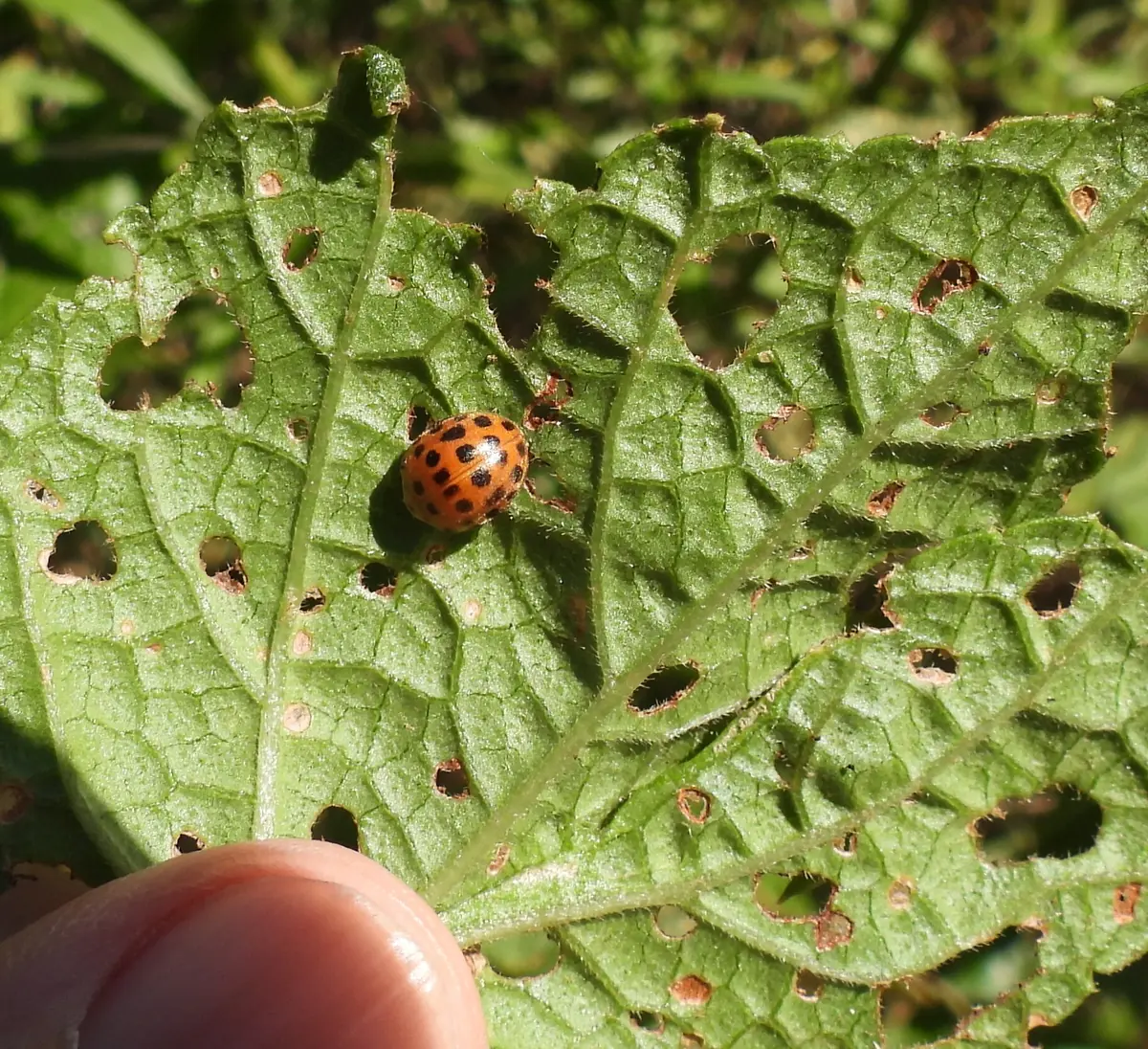
How to identify it
- Dome-shaped orange-brown beetle with 28 black spots, larger and duller than helpful ladybirds
- Lacy, skeletonised patches where leaf tissue is grazed between the veins
- Spiky yellowish larvae feeding on leaf undersides
- Damage concentrated on potatoes, tomatoes, beans and pumpkins
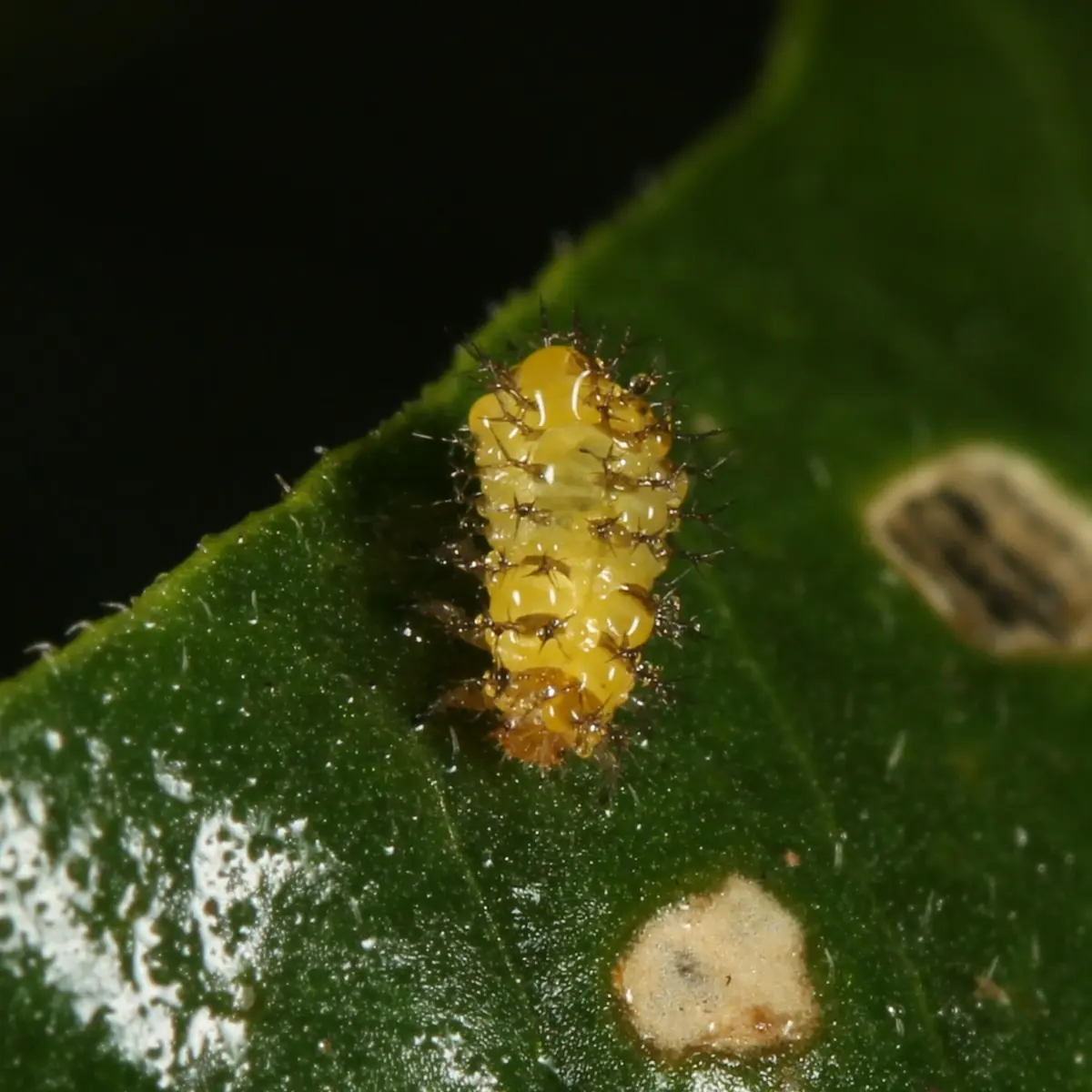
Not sure whether you have a pest or a helper? Compare the 28-spotted ladybird and its larvae with the helpful ladybirds in our Good Bugs vs Bad Bugs photo guide.
How to prevent it
- Learn to tell them from beneficial ladybirds, which are smaller, shinier and have fewer spots
- Remove old solanum weeds like blackberry nightshade that host them
- Cover vulnerable crops with fine netting in peak season
- Clear up spent cucurbit and potato plants where they overwinter
Organic control, step by step
- Hand-pick adults and larvae and squash the yellow egg clusters on leaf undersides
- Spray eco-neem to deter feeding on heavily attacked plants, repeating weekly
- Use pyrethrum at dusk for a knockdown when numbers are high
- Check leaf undersides regularly through the growing season to stay ahead of breeding
- Remove the worst-affected leaves to slow the population
Plants it attacks
Track it in the app. The free Planting Season planner lists the pests and diseases to watch for on every plant in your garden, tuned to your region.