Growing Okra in Australia: Planting Okra, Care and Harvest
Updated October 2026
A heat-loving summer crop with pods ready about 75 days from sowing
What it looks like as it grows


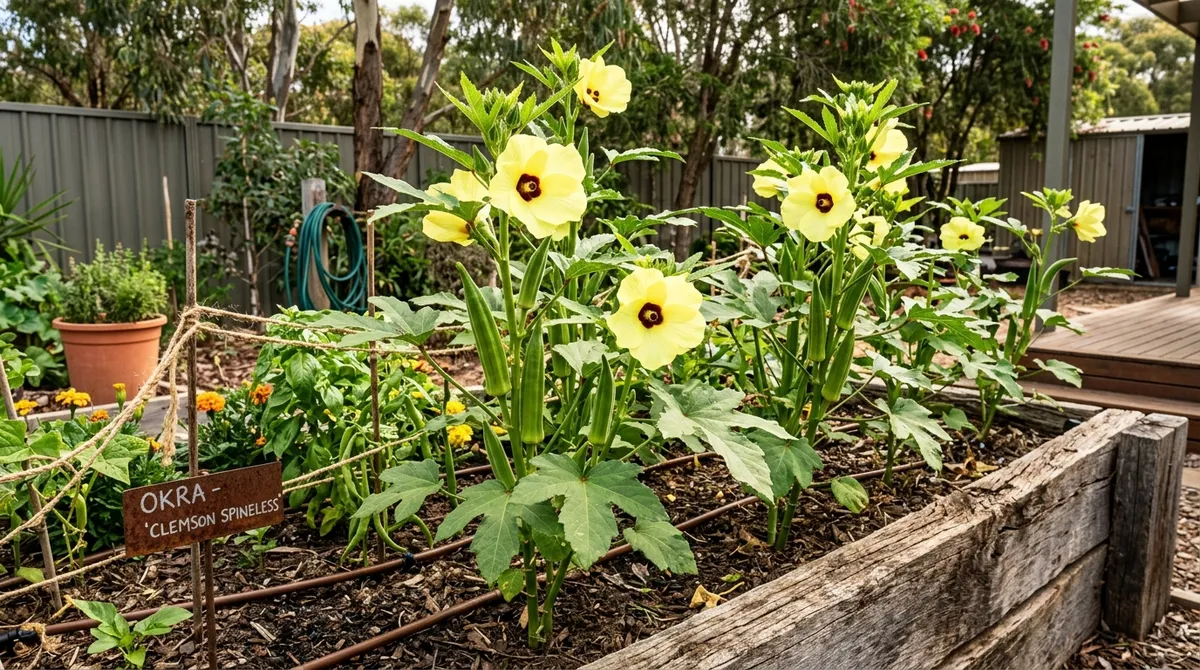
Okra is a warm-season crop that thrives in the hottest parts of the Australian summer. It is a staple in African, Indian, Middle Eastern, and Southern US cooking, and it grows well in tropical, subtropical, and warm-temperate regions across Australia. The plants are tall, productive, and surprisingly ornamental, with large hibiscus-like flowers that open fresh each morning.
The key to growing okra is heat. Seeds need soil temperatures above 25 degrees to germinate, and the plants produce best in sustained warm conditions. Gardeners in cooler regions can still grow okra by choosing compact varieties and giving plants the warmest spot available.
🌱 Plant profile: Okra, with sowing times for your region, companion plants and common pests.
Okra Climate Suitability and Sowing Selector
Pick your climate zone
Okra needs soil above 25 degrees Celsius to germinate. Use a soil thermometer if you are sowing early.
When to Plant Okra in Your Region
Okra needs warm soil to get going. Wait until the ground has warmed above 25 degrees before sowing directly, or start seeds indoors 4 to 6 weeks earlier.
- Tropical (Darwin, Cairns, Townsville): Plant from September to February. Okra grows year-round in the tropics but produces best in the build-up and wet season.
- Subtropical (Brisbane, Gold Coast, Sunshine Coast, Northern Rivers): Plant from September to February. SEQ summers provide ideal conditions for heavy cropping.
- Warm temperate (Sydney, Perth): Sydney sows from October to December and Perth from September to December, once the soil passes 20 degrees. Choose a north-facing wall or fence for extra heat.
- Cool temperate (Melbourne, Adelaide): Melbourne sows from October to December once nights stay above 10 degrees, and Adelaide in October and November once the soil passes 20 degrees. Select early-maturing varieties like Cajun Delight. A warm microclimate is essential.
- Cool climate (Hobart, Canberra): Our data rates okra unsuitable for Tasmania and Canberra, because it needs sustained heat and the warm window is too short. If you want to experiment, start seeds indoors on a heat mat and grow a compact variety in a large pot against a sunny wall.
Okra sowing months in every region
Okra is sown once the soil is properly warm. These are the sowing months for every region from our planting data. Each region links to its full vegetable planting calendar, and the Okra plant page has spacing, companions and care notes for your region.
| Region | Sow seed | Local note |
|---|---|---|
| South East Queensland | September to February | |
| Northern Rivers NSW | September to February | |
| Sydney & Coastal NSW | October to December | Warm-season annual that suits Sydney summers, especially the hot west. Sow once soil passes 20°C; frost-sensitive. |
| Melbourne & Victoria | October to December | Very frost tender. Sow Oct to Dec once nights stay above 10°C; it dies in the Melbourne winter. |
| Adelaide & SA | October and November | Sow Oct to Nov once soil passes 20C. Loves Adelaide summer heat with deep watering. Pick pods young and often. |
| Perth & WA | September to December | Sow Sep to Dec once soil passes 20C. December sowings still crop on the warm plain and coast; okra loves the long dry summer. |
| Tasmania | Not recommended outdoors | Unsuitable. Needs sustained heat above 25C. Tasmanian summers are too cool even under cover. |
| Canberra & ACT | Not recommended outdoors | Okra unsuitable for Canberra: tropical/warm-season only, frost-intolerant. Short warm window insufficient. |
| North Queensland | September to February | Late dry/wet season Sep to Feb. Okra is tropical staple; thrives in heat and humidity. Perfect for wet season. |
| Darwin & Top End | September to February | Late dry/wet season Sep to Feb. Okra is tropical staple; thrives in heat and humidity. Perfect for wet season. |
Best Varieties
Clemson Spineless
The standard okra variety in Australia. Reliable, productive, and widely available. Spineless pods are easy to handle. Plants grow 1.2 to 1.5 metres tall. A proven performer in subtropical and tropical gardens.
Star of David
An heirloom variety with short, fat, ribbed pods. Stays tender at a larger size than most varieties. Excellent flavour. Plants are vigorous growers reaching 1.5 to 2 metres. A favourite among gardeners who find standard okra too slimy.
Red Burgundy
Striking red stems and pods that add colour to the garden. The pods turn green during cooking. Flavour is the same as green varieties. Slightly slower to produce than Clemson Spineless but worth growing for its ornamental value.
Cajun Delight
A compact, early-maturing variety that reaches only 1 to 1.2 metres tall. Produces pods 5 to 7 days earlier than standard varieties. The best choice for cooler regions, shorter seasons, and container growing.
Planting Okra Seeds: Soaking, Sowing and Spacing
Okra seeds have a hard outer coat that slows water absorption. Soaking seeds overnight in warm water before planting dramatically improves germination rates. Some gardeners nick the seed coat with a file or sandpaper for even faster results.
Direct sowing
Sow seeds 2 cm deep and 30 to 40 cm apart in rows 60 to 80 cm apart. Okra has a deep taproot and does not transplant well once established, so direct sowing is the preferred method. Germination takes 7 to 14 days in warm soil. Cool soil below 20 degrees can delay germination to 3 weeks or longer.
Starting indoors
Use biodegradable pots or deep tubes to minimise root disturbance at transplanting. Sow 2 cm deep and keep the soil warm (25 to 30 degrees). A heat mat speeds germination. Transplant seedlings at the 3 to 4 leaf stage, handling the root ball carefully. Harden off for a week before planting outside.
Soil and Position
Full sun is essential. Okra needs at least 6 to 8 hours of direct sunlight daily. A north-facing position against a wall or fence provides extra reflected heat, which makes a real difference in temperate regions.
Okra grows in most soil types but produces best in well-drained, fertile ground with a pH of 6.0 to 7.0. Dig in plenty of compost before planting. The plants develop a deep taproot, so loosen the soil to at least 30 cm depth.
Mulch around the base of plants once the soil has warmed up. Mulching too early in spring can keep the soil cooler than okra likes. Wait until plants are established and the soil is consistently warm.
Feeding and Watering
Feed monthly with a complete organic fertiliser through the growing season. Avoid heavy nitrogen feeding, which encourages leafy growth at the expense of pods. A balanced fertiliser or one slightly higher in potassium promotes flowering and pod production.
Water deeply once or twice a week rather than lightly every day. Okra is more drought-tolerant than most vegetables once established, thanks to its deep taproot. Consistent moisture during flowering and pod set produces the best harvest.
Growing and Maintenance
Okra plants grow quickly once the heat arrives. Standard varieties reach 1.2 to 2 metres tall. The plants are sturdy and self-supporting, so staking is usually unnecessary. Compact varieties like Cajun Delight stay below 1.2 metres.
- Space plants 30 to 40 cm apart with 60 to 80 cm between rows
- Remove lower leaves as the plant grows to improve airflow
- The plants produce attractive yellow flowers with dark centres, similar to hibiscus
- Each flower opens for one day, then a pod develops in its place
- Wear gloves and long sleeves for harvesting, as the leaves and stems have fine spines that can irritate skin
How Long Does Okra Take to Grow?
Our plant data allows about 75 days from sowing to the first pods, and seedlings appear in about 10 days when the soil is warm. That makes timing easy in the tropics and subtropics, where the season is long, and important in the south, where a late sowing can run out of warm weather before the plants hit their stride. Sow early in your window, use a compact, early variety in cooler regions, and the plants keep producing for 8 to 12 weeks once they start.
Harvesting
Harvest pods at 7 to 10 cm long while they are still tender. This is the most important thing to get right with okra. Pods grow fast in warm weather, sometimes adding 2 to 3 cm in a single day. Check plants daily during peak season and harvest every 1 to 2 days.
Test a pod by bending the tip. A tender pod will snap cleanly. A tough pod will bend without breaking. Cut pods from the stem with secateurs or a sharp knife, leaving a short stub.
Harvesting regularly encourages the plant to keep producing. Plants that carry mature pods slow down or stop flowering. Remove any pods that have grown too large and become woody, even if you don't intend to eat them, to keep production going.
Cooking with Okra
Okra has a distinctive mucilaginous texture that thickens soups and stews. This quality is prized in gumbo and many Indian and Middle Eastern dishes. Roasting, grilling, or frying at high heat reduces the sliminess for those who prefer a drier texture.
Common preparations include gumbo, bhindi masala (Indian spiced okra), roasted with olive oil and spices, pickled okra, added to curries and tagines, or sliced and fried until crispy. Young pods can also be eaten raw in salads.
Common Problems
Slow germination in cool soil
This is the most common issue. Okra seeds sit dormant in cold ground and can rot before germinating. Wait until soil temperatures are reliably above 25 degrees. Soak seeds overnight and use a soil thermometer to check conditions before sowing.
Aphids on growing tips
Aphids often cluster on the soft growing tips and flower buds. A strong jet of water from the hose knocks most of them off. Neem oil spray controls persistent infestations. Read our full pest management guide for more options. Encourage ladybirds and lacewings by planting flowering herbs nearby.
Tough, woody pods
Pods left on the plant too long become fibrous and inedible. The solution is simple: harvest more often. Check plants daily during warm weather. Pods at 7 to 10 cm are tender. Pods above 12 cm are usually past their best.
Poor fruit set
Okra needs sustained heat for flowers to set pods. Cool nights below 15 degrees can cause flowers to drop. Inconsistent watering during flowering also reduces pod set. In cooler regions, growing against a thermal mass (brick wall, concrete path) helps maintain warmth through the night.
Growing Okra in Pots
Okra can be grown in pots, but it needs a large container. Use a pot at least 40 cm wide and 40 cm deep to accommodate the taproot. Compact varieties like Cajun Delight are the best choice for container growing.
Use a premium potting mix and position the pot in full sun, ideally against a north-facing wall for reflected heat. Feed fortnightly with a liquid fertiliser during the growing season. Water deeply when the top 3 cm of soil feels dry.
Frequently Asked Questions
When should I plant okra in Australia?
Plant okra once the soil is properly warm. Our planting data has South East Queensland, the Northern Rivers, North Queensland and Darwin sowing from September to February, Perth from September to December, Sydney and Melbourne from October to December, and Adelaide in October and November. Okra is not suited to Tasmania or Canberra. In cooler areas, choose an early-maturing variety like Cajun Delight.
How long does okra take to grow?
Our plant data allows about 75 days from sowing to the first harvest, a little under 11 weeks, with seedlings up in about 10 days in warm soil. Once the pods start, the plants keep cropping for 8 to 12 weeks through summer and into autumn in warm regions, as long as you pick every day or two.
Why are my okra pods tough and stringy?
Tough pods are almost always the result of harvesting too late. Okra pods grow fast in warm weather and can go from tender to woody in 2 to 3 days. Pick pods at 7 to 10 cm long. Check plants daily during peak production and harvest every 1 to 2 days.
Can I grow okra in pots?
Yes, but use a large container. Okra has a deep taproot and grows 1 to 2 metres tall. Choose a pot at least 40 cm wide and 40 cm deep. Compact varieties like Cajun Delight are the best choice for containers. Full sun and consistent watering are essential.
Why is my okra not flowering or setting pods?
Okra needs sustained heat to flower and set pods. Cool nights below 15 degrees can cause flowers to drop, and excess nitrogen pushes leafy growth instead of flowers. Feed with a balanced or potassium-rich fertiliser, keep watering consistent during flowering, and in cooler regions grow against a brick wall or concrete path that holds warmth overnight.
Do I need to soak okra seeds before planting?
Soaking is not essential but it helps a lot. Okra seeds have a hard coat that slows water absorption. Soaking overnight in warm water, or nicking the coat with a file, can cut germination time roughly in half. Sow the swollen seeds and discard any that stay hard after soaking.
How far apart should I plant okra?
Sow seeds 2 cm deep and 30 to 40 cm apart, in rows 60 to 80 cm apart. Our plant data uses 40 cm between plants, which gives the tall stems good airflow and makes picking easier.
Can I grow okra in Melbourne?
Yes, in a warm spot. Our Melbourne calendar has okra sown from October to December, once nights are reliably above 10 degrees. It is very frost tender and dies in the Melbourne winter, so choose an early variety like Cajun Delight and grow it against a north-facing wall.
Does okra need full sun?
Yes. Okra needs at least 6 to 8 hours of direct sun a day and as much heat as you can give it. A north-facing position against a wall or fence adds reflected warmth, which helps most in temperate regions.
See also: Okra in the Plant Library
Plant profile
The okra profile has sowing times for your region, companion plants and common pests.