Rouen Ducks in Australia: Size, Eggs and Care
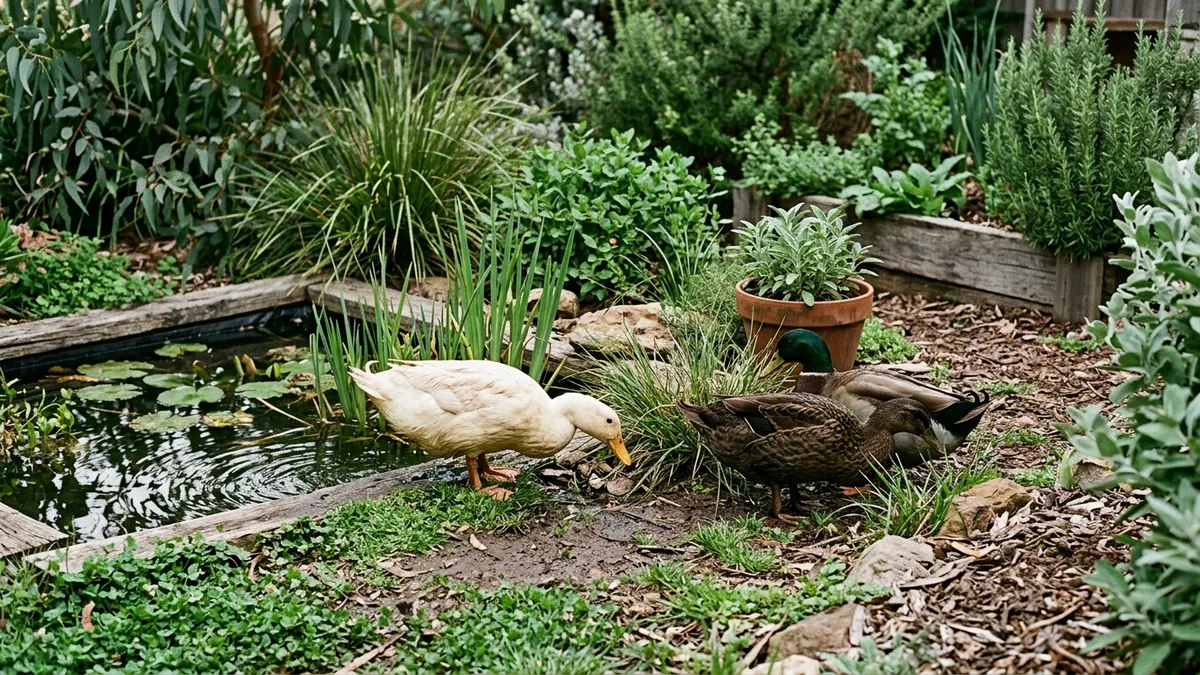
The Rouen looks like a large wild mallard, with a green head on the drake and brown pencilled feathers on the duck. The Australian Poultry Standards class the Rouen, and the related Rouen Clair, as heavy ducks. The Livestock Conservancy lists traditional Rouens at about 4.5 kg for drakes and 3.6 kg for ducks, with 30 to 125 eggs a year.
Fact panel
- Class
- Heavy
- Adult weight
- drakes about 4.5 kg, ducks about 3.6 kg for the traditional type
- Eggs a year
- About 30 to 125 eggs a year, fewer than the light layers
- Egg colour
- White, often with a blue tint
- Noise
- Moderate, females quack
- Flight
- Too heavy to fly
- Temperament
- Docile
- Mothering
- Poor to good
- Best for
- Meat, ornamental and some eggs
Rouens in Australian conditions
Rouens handle cool, wet weather without trouble, but they are heavy and feel the heat. Give them dense shade, cool water and a hose-down on hot days, and avoid hot bare ground.
Breeders are not as easy to find as for Pekins, so try state poultry clubs and shows where heavy waterfowl are judged. Ask about fertility if you want to breed them, since the traditional type needs a pool to mate well.
Care notes
- Feed waterfowl pellets with niacin, and keep water next to the feed.
- Give a ramp for any raised house because heavy ducks can injure their legs.
- Lock them up at night against foxes and dogs.
How the Rouen compares
| Breed | Adult weight | Eggs | Noise | Best for |
|---|---|---|---|---|
| Call duck | about 450 to 700 g | A modest number of small eggs, mostly in spring and summer | Very loud, especially the females | Pets and exhibition |
| Pekin duck | about 3.6 to 4.1 kg | About 150 to 200 large eggs in a good year | Loud, females quack heavily | Eggs, meat and pets |
| Muscovy duck | drakes 4.5 to 5.4 kg, ducks 2.3 to 2.7 kg | Seasonal laying in clutches, fewer eggs than the best layers | Quiet, hisses and low trills | Pest control, meat and broody mothers |
| Indian Runner duck | drakes about 2 kg, ducks about 1.8 kg | 200 or more eggs a year in good strains | Females quack, drakes only rasp | Eggs and slug patrol |
| Cayuga duck | drakes about 3.6 kg, ducks about 3.2 kg | About 100 to 150 large eggs a year | Moderate, females quack | Eggs, meat and ornamental |
| Rouen duck | drakes about 4.5 kg, ducks about 3.6 kg for the traditional type | About 30 to 125 eggs a year, fewer than the light layers | Moderate, females quack | Meat, ornamental and some eggs |
Common questions
How many eggs do Rouen ducks lay?
About 30 to 125 a year, according to The Livestock Conservancy, so they are not the breed for eggs.
Can Rouens fly?
No, they are too heavy.
Are Rouens good for meat?
They are an old table breed and large, but slow to grow. The Conservancy lists them as an excellent table bird.
Do Rouens need a pool?
The Conservancy says the traditional type needs a pool to mate properly, which matters if you want fertile eggs.
- The Livestock Conservancy, Quick Reference Guide to Heritage Ducks, for weights, egg numbers and egg colours of the Cayuga, Rouen and Indian Runner.
- eXtension, Selecting a duck breed for small or backyard poultry flocks, for Pekin, Muscovy, Rouen and Indian Runner facts on growth, weight, flight and noise.
- Mississippi State University Extension, Care and Incubation of Hatching Eggs (Dr Tom W. Smith), for incubation periods.
- Australian Poultry Standards (2nd edition, 2011, Victorian Poultry Fanciers Association), for breed classes, and the Rare Breeds Trust of Australia, rare duck list, for breed classes and status in Australia.
Weights and egg numbers are typical ranges and vary by strain, feed and daylight.
Keep reading
All duck breedsKeeping ducksWhat ducks can eatDuck keeping guideIncubating eggsHow to keep ducks