How to Keep Ducks: Water, Housing and Feeding
Get the water and the mud sorted and ducks are easier than chickens.
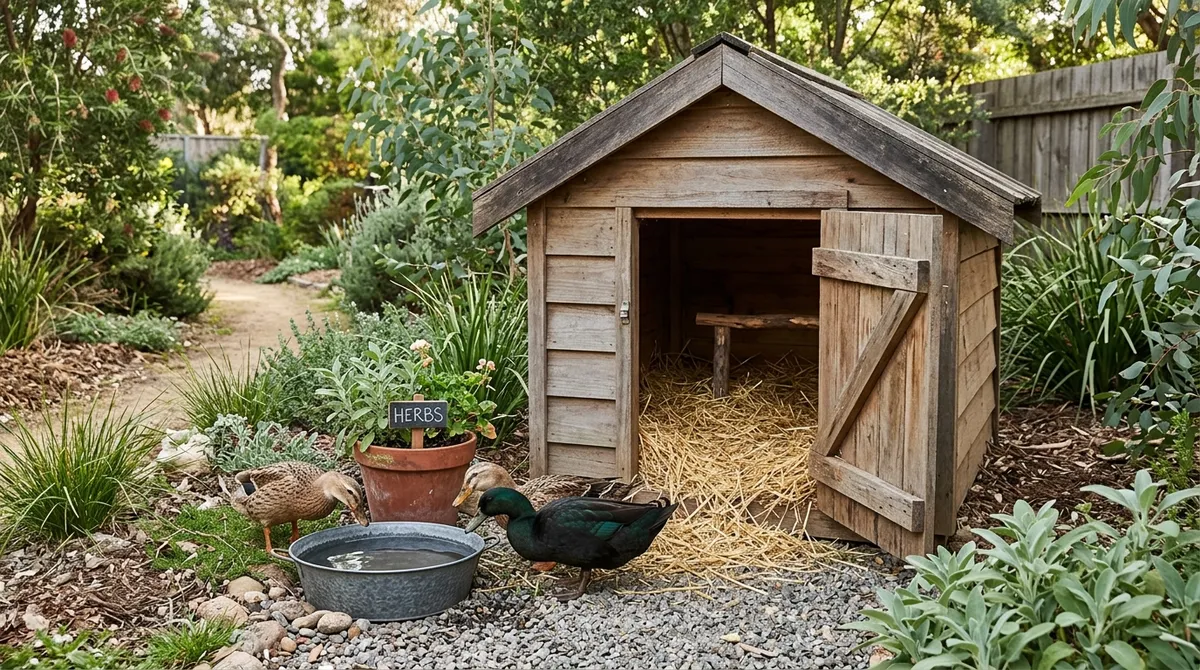
Water, without a swamp
Ducks do not need a pond, but they must be able to submerge their whole head to clean their eyes and nostrils, and they want to splash. A tub, builder’s trug or hard kiddie pool works. The trick is siting it on gravel, pavers or a wicking spot so the daily spillage drains away instead of creating mud. Tip and refresh it daily; ducks foul water fast. Keep drinking water separate and clean.
Housing
Ducks need predator-proof night shelter but, unlike chickens, no perches and no raised nest boxes, they sleep and lay on the ground. A simple floor-level house with deep clean straw, good ventilation and a secure door is all it takes. Foxes, dogs and quolls are the threat, so lock them up at dusk every night and bury or apron the mesh against diggers. A low ramp helps heavy breeds.
Feeding
- Duck or waterfowl pellets as the base. Ducks need more niacin (vitamin B3) than chickens, and ducklings short of it develop leg problems. If you can only get chicken feed, add a niacin source such as brewer’s yeast, and never give ducklings medicated chick starter.
- Skip the bread. A diet heavy in bread leaves ducks short of protein and vitamins, and soggy leftovers rot in the water, which can feed the bacteria behind botulism. See what ducks can eat for the full list.
- They forage hard: slugs, snails, worms, weeds and insects make up a big part of a free-ranging duck’s diet, which is exactly why the garden loves them.
- Feed wet or beside water, ducks need to drink while they eat to swallow.
- Grit and shell for digestion and strong eggshells, same as chickens.
Eggs
Ducks usually lay early in the morning and often drop eggs anywhere, so let them out late or check the house and favourite corners. Duck eggs are larger, richer and higher in fat than hen eggs, prized for baking and custards. Collect daily and the float test works just the same as for hen eggs.
Managing the mud
Mud is the one real downside. Keep water on free-draining ground, rotate where they range, use deep litter or coarse bark in wet runs, and the homestead loop helps: that rich, wet duck manure is superb for the compost heap.
What to plant, flock and hive jobs for the month, in one short email. No spam.
Unsubscribe any time.