Composting at Home, the Australian Way
Turn kitchen scraps and garden waste into the best free soil improver there is.
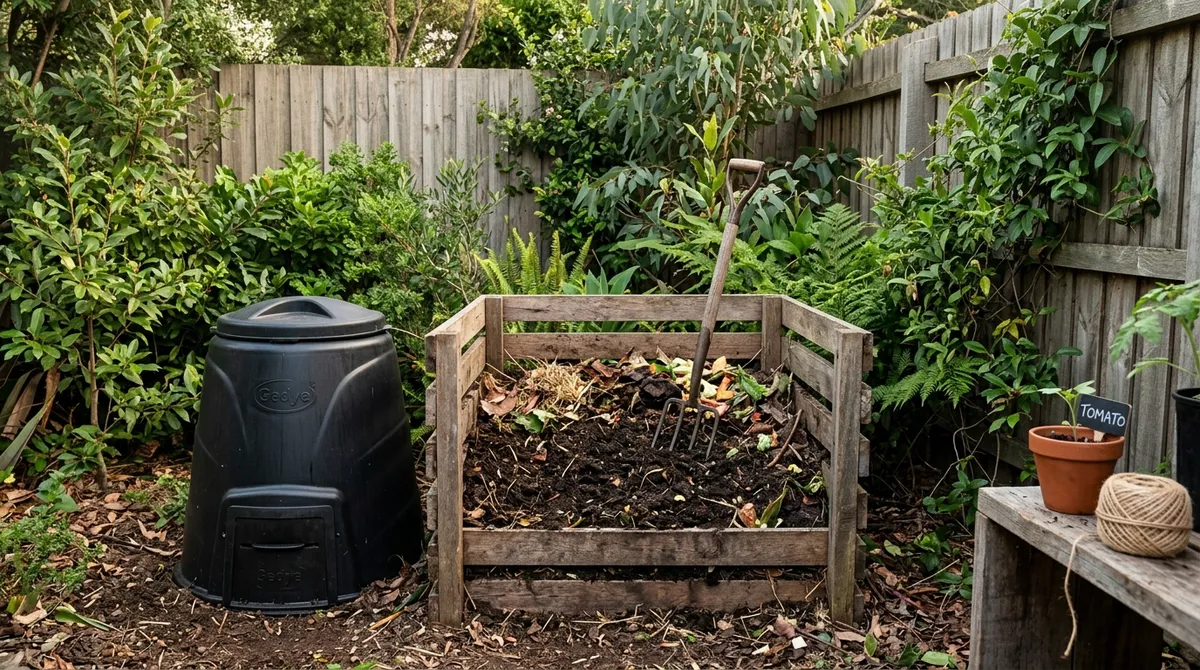
Compost is where the whole backyard loop begins. Every peeling, lawn clipping and spent plant can become dark, sweet-smelling humus that holds water, feeds soil life and grows better vegetables, for nothing. Most Australians start composting before they keep worms, chickens or bees, because it is the simplest way to stop throwing money in the bin and start building soil instead.
Start here
Cold heap, hot heap, tumbler, bin or Bokashi. Pick the one that fits your space and patience.
Greens, browns, the never list, and a searchable checker for anything you are unsure about.
It smells, it will not heat up, it is full of flies, it is too wet. Every common fault, fixed.
Enter your greens and browns and see if the heap is balanced, with how much to add to fix it.
The one rule that makes compost work
Balance. Compost needs roughly equal parts greens (wet, nitrogen-rich: food scraps, fresh clippings, manure) and browns (dry, carbon-rich: dead leaves, cardboard, straw). Too many greens and it turns into a stinking slop. Too many browns and it sits there doing nothing for a year. Get the mix near even, keep it as damp as a wrung-out sponge, and biology does the rest.
Where it fits the homestead
- Feeds the garden with free fertiliser and water-holding humus.
- Takes the overflow a worm farm cannot handle: woody prunings, citrus, onion, big volumes.
- Eats the chicken bedding and aged manure, turning a waste problem into garden gold.
- Closes the loop: garden grows food, kitchen makes scraps, compost returns them to the garden.
What to plant, flock and hive jobs for the month, in one short email. No spam.
Unsubscribe any time.