Which Composting Method Suits You?
Five ways to compost in an Australian backyard, from no-effort to fast and hot.
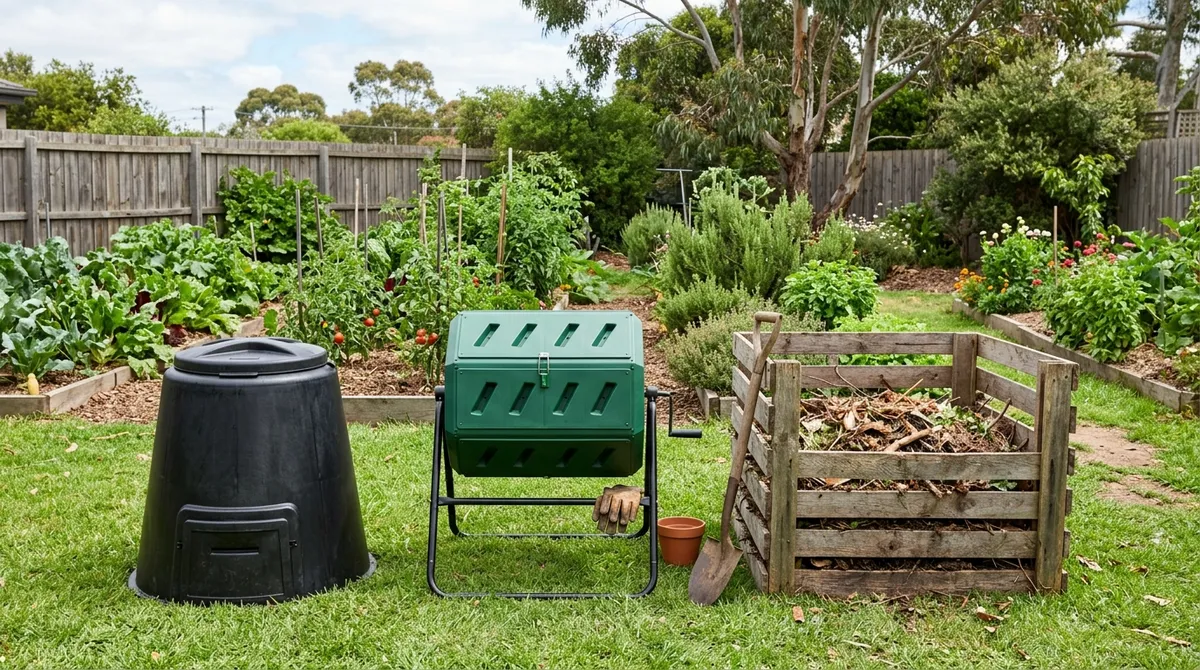
There is no single right way to compost. The best method is the one that matches your space, your patience and how much material you produce. Here are the five most Australians use, fastest payoff to least effort.
1. Cold (slow) heap or bin
Pile material in a corner or a standard plastic compost bin (the black "Gedye" cone from Bunnings) and add to it as you go. No turning, no fuss. It takes 6-12 months but needs almost no work. Best for: most home gardeners, small yards, anyone who wants it simple. The black cone bins are often subsidised by councils, ask yours.
2. Hot (active) heap
Build a cubic-metre pile all at once with balanced greens and browns, keep it damp, and turn it every week or two. It heats to 55-65C, kills weed seeds and pathogens, and finishes in 6-8 weeks. Best for: bigger gardens, lots of material at once, gardeners who want compost fast and do not mind the work of turning.
3. Tumbler
A barrel on a frame you spin to mix. Cleaner, rodent-proof and easier to turn than a heap, but limited in size and pricier ($120-300). Best for: courtyards, neat gardeners, anyone wanting a tidy enclosed unit that keeps rats out.
4. Bokashi
Not really composting but fermenting. A sealed kitchen bench bin where you layer scraps with inoculated bran; it pickles the waste (and uniquely will take meat, dairy and cooked food). After a couple of weeks you bury the ferment in the garden or add it to a compost bin to finish. Drains a tangy "Bokashi juice" you dilute for plants. Best for: flats with no garden, winter, and anyone wanting to compost cooked food and meat that a heap or worm farm cannot take.
5. In-ground / trench / direct
Dig a trench or pit, bury scraps, cover with soil and let the soil life do it in place. Invisible, free, no smell. Best for: filling new beds, between crop rows, gardeners who want zero infrastructure.
How they compare
| Method | Speed | Effort | Cost | Space |
|---|---|---|---|---|
| Cold bin | Slow | Very low | $0-90 | Small |
| Hot heap | Fast | High | $0 | Large |
| Tumbler | Medium | Low | $120-300 | Small |
| Bokashi | Fast ferment | Low | $60-90 | Tiny |
| In-ground | Medium | Low | $0 | In beds |
What to plant, flock and hive jobs for the month, in one short email. No spam.
Unsubscribe any time.