Storing a Glut of Eggs
Spring brings more eggs than most families can eat. Here is how to store them safely, following Australian food safety advice.
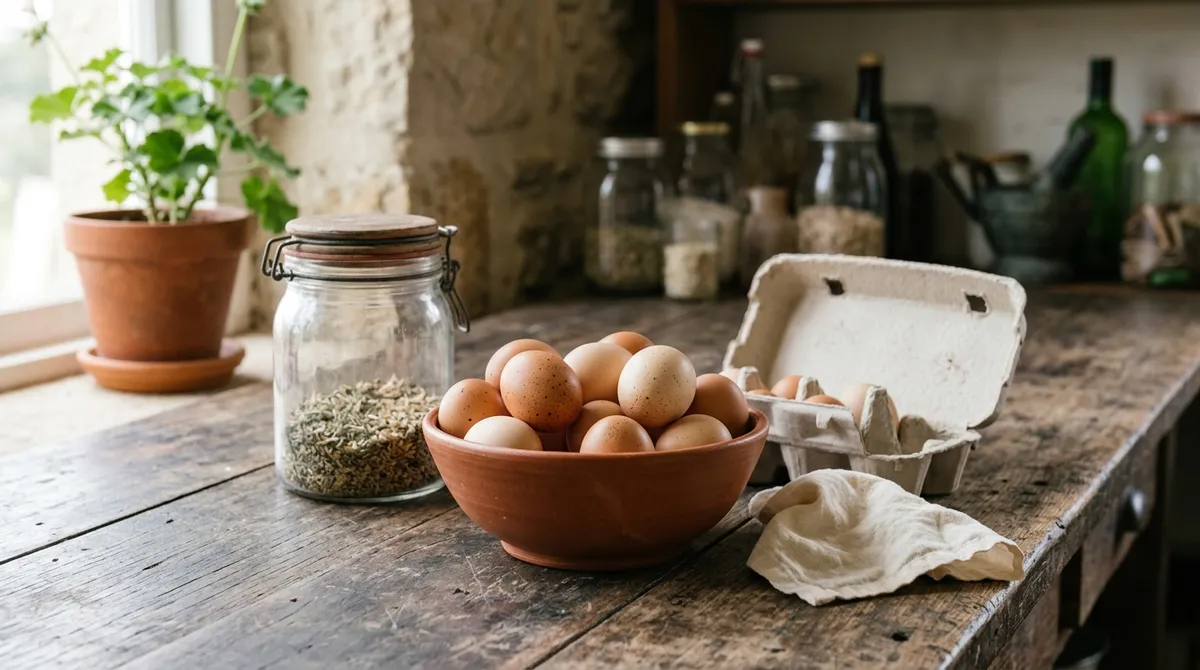
A backyard flock lays hardest in spring and slows right down in winter, so most keepers swing from too many eggs to too few. Eggs can carry Salmonella on the shell or inside, even from healthy hens, so storing them is a food safety question as much as a freshness one. The advice from Australian food safety authorities is short and the same for home-laid and shop eggs.
Keep eggs in the fridge
The NSW Food Authority advises keeping eggs in the fridge, in their carton, and SA Health notes that refrigeration keeps eggs fresh and also minimises the risk of Salmonella growing. That goes for your own hens' eggs too. Collect them often, especially in warm weather, and put them in the fridge as soon as they come inside. Write the collection date on the carton so you use the oldest first, and use fresh cartons rather than old ones, which the NSW Food Authority flags as a disease risk. Food meant to be kept in the fridge should not be eaten if it has been left out for more than 2 hours.
Do not wash them
Washing looks like the clean thing to do, but a wet shell becomes more porous and lets bacteria on the surface get inside the egg. The NSW Food Authority says never to wash eggs with water. Wipe a lightly soiled egg with a dry cloth or paper towel instead, and throw out any egg that is cracked, damaged or heavily soiled. Clean, dry nesting material means fewer dirty eggs to begin with. Wash your hands after handling the hens or their eggs.
The float test checks age, not safety
Pop an egg in a glass of water. A fresh egg sinks and lies on its side, and an older one tilts upright as its air cell grows. That tells you roughly how old the egg is, which helps when a batch has lost its date. It is not a safety check: SA Health points out that the float test cannot show whether Salmonella is present, and an egg that sinks can carry it too. Keep eggs in the fridge and cook them until the white is firm and the yolk begins to thicken.
Using the surplus
- Fridge first: the carton in the fridge is the store Australian food safety advice supports. Date each batch and use the oldest first.
- Cook and bake: a glut is a good reason for quiches, frittatas, cakes and biscuits. Cooking eggs until the white is completely firm kills most harmful bacteria, including Salmonella (SA Health).
- Share them: neighbours rarely turn down fresh eggs. Selling is different: in NSW anyone who sells eggs is a food business and must notify the NSW Food Authority, and the other states have their own rules, so check with your state food authority first.
- Long-term methods: no Australian food safety authority publishes a tested method for keeping raw eggs for months, such as waterglassing in pickling lime, so we do not recommend it.
Common questions
How long do fresh eggs last?
Australian food safety authorities do not give a keeping time for home-laid eggs. Their advice is to keep eggs in the fridge, in the carton. Date each batch, use the oldest first, and follow the date on the carton for shop eggs.
Can I keep backyard eggs on the bench?
Food safety advice says no. The NSW Food Authority advises keeping eggs in the fridge, and SA Health notes that refrigeration keeps eggs fresh and minimises the risk of Salmonella growing. That applies to eggs from your own hens as well as shop eggs.
Should I wash my fresh eggs?
No. A wet shell becomes more porous and lets bacteria on the surface get inside the egg, so the NSW Food Authority says never to wash eggs with water. Wipe a lightly soiled egg with a dry cloth or paper towel, and throw out cracked, damaged or heavily soiled eggs.
Is the float test a safety check?
No. The float test shows roughly how old an egg is, because the air cell grows with age. SA Health points out that it cannot tell you whether Salmonella is present: an egg that sinks can carry it too.
Can I waterglass eggs to keep them for a year?
No Australian food safety authority publishes a tested method for keeping raw eggs for months, including waterglassing in pickling lime, so we do not recommend it. Keep eggs in the fridge and use the surplus in cooking.
Sources we checked (12 October 2026): NSW Food Authority, Eggs: enjoy safely and Backyard chickens; SA Health, Keeping your own chickens and Myths and facts about eggs; Food Standards Australia New Zealand, Salmonella Enteritidis linked to eggs.
What to plant, flock and hive jobs for the month, in one short email. No spam.
Unsubscribe any time.