Pekin Ducks in Australia: Eggs, Size, Noise and Care
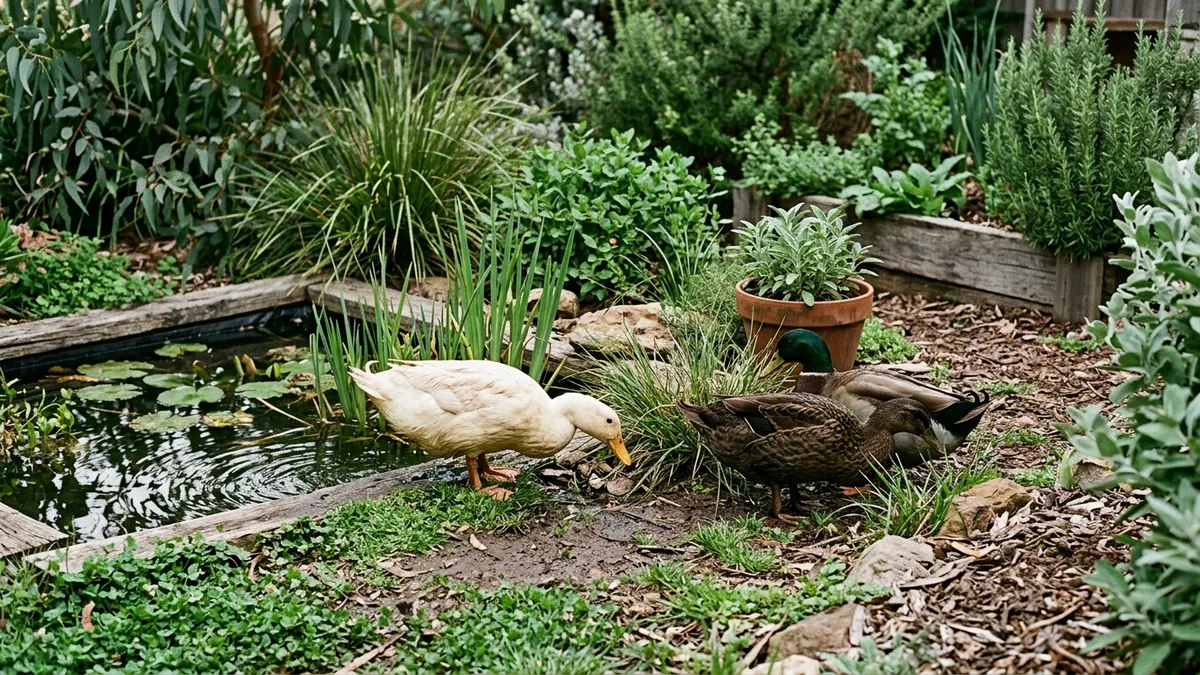
The Pekin is the large white duck with an orange bill that most Australians picture when they think of a farm duck. It is calm, friendly with children and lays a good number of large white eggs, which is why it is the usual first duck for backyard keepers. Our general duck breed guide lists the Pekin as the classic dual-purpose breed, and this page covers it in more detail.
Fact panel
- Class
- Heavy
- Adult weight
- about 3.6 to 4.1 kg
- Eggs a year
- About 150 to 200 large eggs in a good year
- Egg colour
- White
- Noise
- Loud, females quack heavily
- Flight
- Too heavy to fly
- Temperament
- Calm and tame
- Mothering
- Poor, rarely broody
- Best for
- Eggs, meat and pets
Pekins in Australian conditions
Pekins handle cool and wet weather well but struggle in heat. Give them deep shade, cool water to dunk in and a hose-down on days above 35°C, and keep the run out of the afternoon sun. A white duck in a hot north-facing yard can also sunburn around the bill.
Pekin ducklings are the easiest to find. Poultry clubs, stock and produce stores and community auctions sell them, and they are recognised in the Australian Poultry Standards as a heavy breed. Foxes are the main predator, so lock the house every night.
Care notes
- Feed waterfowl pellets or a duck ration with enough niacin, and keep drinking water close to the feed because ducks need to wet their food to swallow it.
- Keep the water on gravel or pavers so the mud stays away from the house. Pekins make a lot of mess, so tip and refill the tub daily.
- Pekins are heavy and do not fly, so a low fence is enough. A ramp helps for any raised house.
How the Pekin compares
| Breed | Adult weight | Eggs | Noise | Best for |
|---|---|---|---|---|
| Call duck | about 450 to 700 g | A modest number of small eggs, mostly in spring and summer | Very loud, especially the females | Pets and exhibition |
| Pekin duck | about 3.6 to 4.1 kg | About 150 to 200 large eggs in a good year | Loud, females quack heavily | Eggs, meat and pets |
| Muscovy duck | drakes 4.5 to 5.4 kg, ducks 2.3 to 2.7 kg | Seasonal laying in clutches, fewer eggs than the best layers | Quiet, hisses and low trills | Pest control, meat and broody mothers |
| Indian Runner duck | drakes about 2 kg, ducks about 1.8 kg | 200 or more eggs a year in good strains | Females quack, drakes only rasp | Eggs and slug patrol |
| Cayuga duck | drakes about 3.6 kg, ducks about 3.2 kg | About 100 to 150 large eggs a year | Moderate, females quack | Eggs, meat and ornamental |
| Rouen duck | drakes about 4.5 kg, ducks about 3.6 kg for the traditional type | About 30 to 125 eggs a year, fewer than the light layers | Moderate, females quack | Meat, ornamental and some eggs |
Common questions
How many eggs does a Pekin duck lay?
A healthy Pekin lays roughly 150 to 200 large white eggs a year. Production drops through winter and in the bird's third or fourth year.
Are Pekin ducks noisy?
The females are, quacking loudly at dawn and dusk. Drakes make a soft rasp. For quieter neighbours, a Muscovy is a better choice.
Can Pekin ducks fly?
No, they are too heavy to fly, which makes fencing easy.
Do Pekin ducks like the heat?
Not much. They need shade, cool water and good airflow in an Australian summer, and you should watch for panting.
- The Livestock Conservancy, Quick Reference Guide to Heritage Ducks, for weights, egg numbers and egg colours of the Cayuga, Rouen and Indian Runner.
- eXtension, Selecting a duck breed for small or backyard poultry flocks, for Pekin, Muscovy, Rouen and Indian Runner facts on growth, weight, flight and noise.
- Mississippi State University Extension, Care and Incubation of Hatching Eggs (Dr Tom W. Smith), for incubation periods.
- Australian Poultry Standards (2nd edition, 2011, Victorian Poultry Fanciers Association), for breed classes, and the Rare Breeds Trust of Australia, rare duck list, for breed classes and status in Australia.
Weights and egg numbers are typical ranges and vary by strain, feed and daylight.
Keep reading
All duck breedsKeeping ducksWhat ducks can eatDuck keeping guideIncubating eggsHow to keep ducks