Best Duck Breeds for Australian Backyards
Six breeds that suit a suburban yard, from record-breaking layers to near-silent foragers.
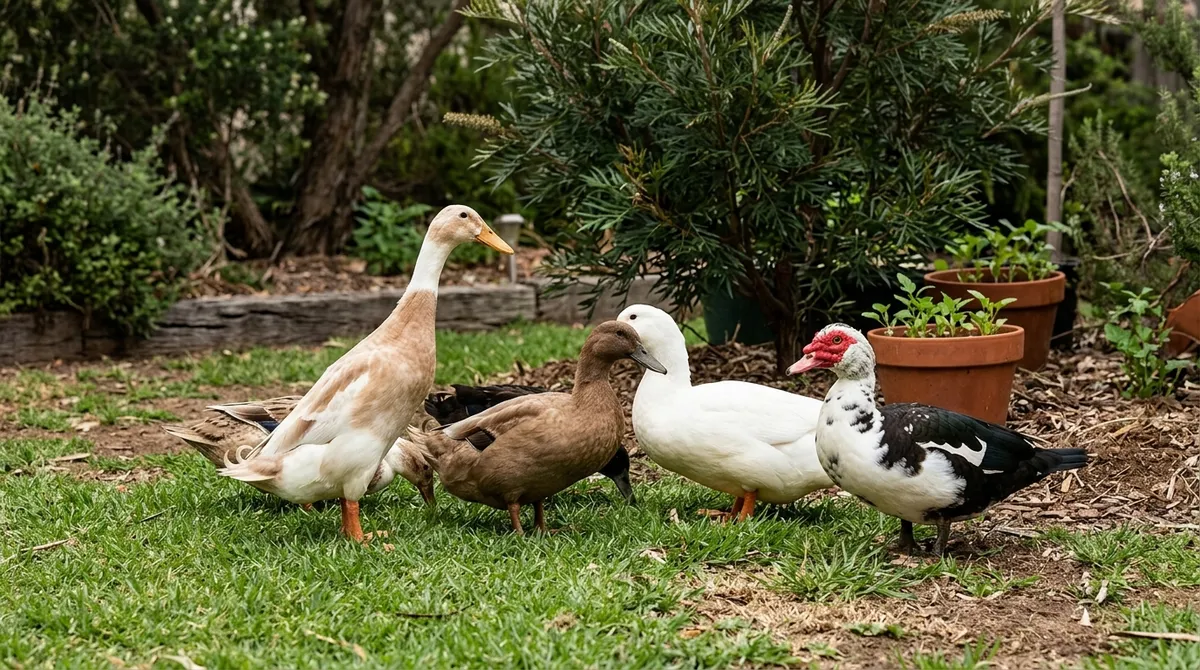
Khaki Campbell
The egg machine: 280-300+ eggs a year, more than almost any chicken, and they lay through winter. Active, hardy foragers that suit free-ranging. Plain khaki-brown and a little flighty, but unbeatable if eggs are the goal. Eggs: 280-300/yr. Best for: maximum eggs.
Indian Runner
The upright, bowling-pin duck that runs rather than waddles. Superb layers (250-300 eggs) and the keenest slug-hunters of the lot, ranging widely without flying. Comical, endearing and great in a garden. Eggs: 250-300/yr. Best for: pest control plus eggs.
Pekin (Aylesbury-type white duck)
The big friendly white duck everyone pictures. Calm, heavy and tame, decent layers (150-200 eggs) and the classic dual-purpose breed. Their size makes them less flighty and very child-friendly. Eggs: 150-200/yr. Best for: a gentle family duck.
Muscovy
The odd one out: a different species, near-silent (no quack, just soft hisses and head-bobbing), brilliant foragers and fly-catchers, and excellent mothers. They can fly and roost, and the red facial caruncles divide opinion, but for a quiet block they are ideal. Eggs: 100-180/yr, seasonal. Best for: quiet suburbs, foraging.
Welsh Harlequin
A beautiful, calm, dual-purpose breed and a strong layer (240-300 eggs). Friendlier and less flighty than Campbells, with the same productivity. Increasingly popular with Australian backyarders who want looks and eggs. Eggs: 240-300/yr. Best for: the all-rounder.
Call duck
The miniature: tiny, adorable, and kept as pets and ornamentals rather than for eggs. Be warned, the females are extremely loud (the breed was bred as living duck callers for hunters), so they are a poor choice where noise matters. Eggs: 50-150/yr. Best for: pets, if noise is no issue.
What to plant, flock and hive jobs for the month, in one short email. No spam.
Unsubscribe any time.