
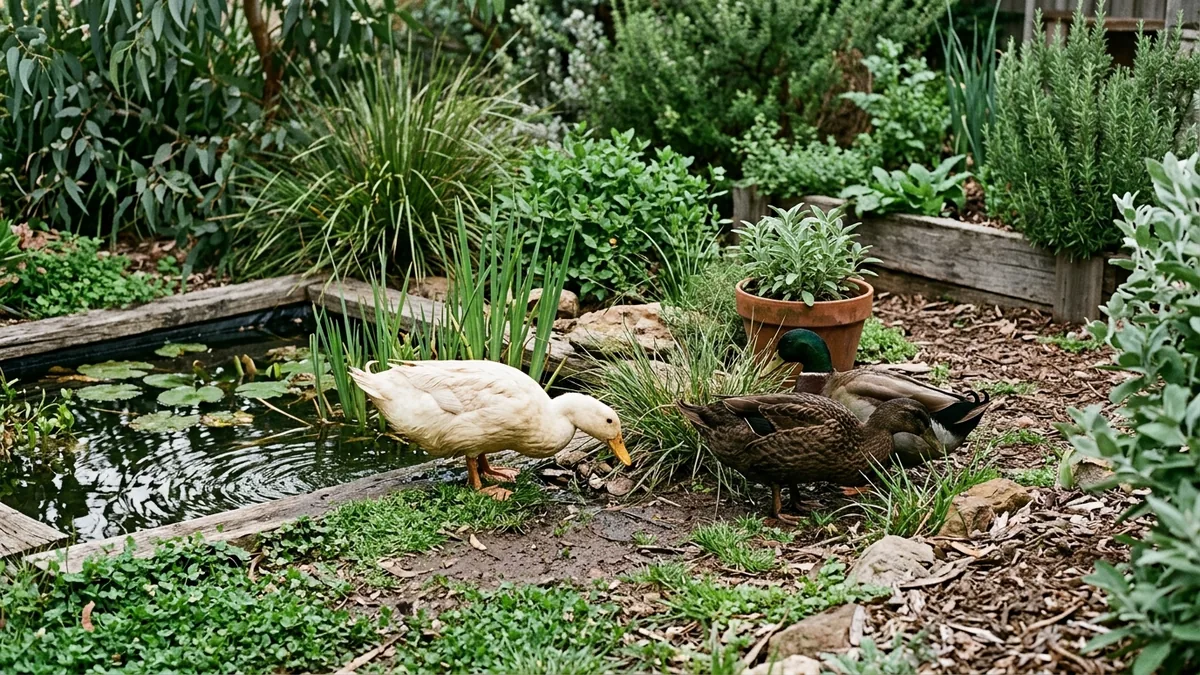
Ducks are hardy, friendly, brilliant slug patrol and lay rich eggs right through winter. They are not just chickens that swim, though. Here is what they actually need, and an honest ducks versus chickens comparison.
Ducks earn their keep. They lay more reliably than hens through the cold months, hoover up slugs, snails and mosquito larvae, and are calm, comic company in the garden. They are also genuinely easier to keep healthy than chickens in many ways, as they are hardier and far less prone to the mites and respiratory bugs that trouble hens.
The trade-off is water and mud. Ducks must have water deep enough to dunk their heads, they splash constantly, and they turn a soggy corner into a quagmire faster than you would believe. Get the water set-up right and most of the work disappears. This guide walks through housing, water, feed, eggs, mud and predators, with a tool to compare them honestly against chickens.
Tap any trait to focus on it, or leave them all on to see the full picture side by side. Nothing is saved, and it works offline.
Ducks need a secure shelter to lock up at night, but it is simpler than a chicken coop. The golden rules:
Ducks will happily share with chickens by day, but at night they prefer the floor while hens want to roost, so a divided or separate sleeping space keeps both content.
This is the single most misunderstood thing about ducks. They do not need a pond. They do need water deep enough to submerge their whole head, which keeps their eyes, nostrils and bill clean and lets them preen properly. A bucket, tub or trough about 20 to 30 cm deep does the job.
What they love beyond that is a tub big enough to climb into and splash, which keeps their feathers in good waterproof condition. A cheap plastic tub or an old laundry trough is ideal because you can tip and refill it. Keep a constant supply of clean drinking water too, and never give ducklings access to deep water they cannot easily climb out of, as young ducklings lack the oil to stay waterproof and can chill or drown.
Adult ducks thrive on a good quality poultry layer pellet, supplemented with greens, scraps and whatever they forage. Two waterfowl-specific points matter:
Ducks eat wet and dabble, so they will dunk every mouthful and foul their water. Keep feed and water a little apart, and serve feed dry. Crushed shell or grit free-choice supports strong eggshells, and a scatter of leafy greens keeps them busy.
Duck eggs are larger than hen eggs, with a bigger, richer yolk and more protein and fat. That makes them outstanding for baking, where they give cakes more lift and moisture, pastry more shortness and custards a deeper colour and silkier set. Many keen bakers swap to duck eggs and never look back.
Good laying breeds such as Khaki Campbells and Indian Runners out-lay most hens over a year and keep going through winter, when many chickens stop. Ducks almost always lay early in the morning, so a quick before-breakfast collection from the shelter usually finds the lot.
Five reliable choices for a home flock, with realistic first-to-second-year laying and what each is best at.
| Breed | Eggs/year | Best for |
|---|---|---|
| Pekin | 150 to 200 | Friendly, fast-growing all-rounder and the classic table duck. Calm and good with kids. |
| Khaki Campbell | 250 to 320 | The egg machine. Out-lays almost any hen and keeps going in winter. Active forager. |
| Indian Runner | 200 to 300 | Upright, comic and tireless slug patrol. Excellent layer, ranges widely, rarely flies. |
| Muscovy | 60 to 120 | The quietest duck, hisses rather than quacks. Hardy, broody, good meat, perches and roosts unlike other ducks. |
| Welsh Harlequin | 240 to 330 | Calm, pretty, dual-purpose layer with excellent winter production. A friendly, productive choice. |
Ducks and water make mud, but a few habits keep it manageable:
Ducks are ground birds and poor fliers, which makes them easy prey. In Australia the fox is the main threat, along with roaming dogs, hawks, goannas, pythons and quolls depending on where you live. Protect them the way you would chickens, only more so:
The free Planting Season app and its Poultry and Flock tracker handle ducks alongside hens and quail. Log each bird, record eggs, set reminders for water changes and bedding, and watch your duck eggs stack up through winter when the hens have stopped.
No. Ducks do not need a pond, but they do need water deep enough to dip their whole head and clean their eyes and nostrils. A tub or trough about 20 to 30 cm deep is plenty. A pond is nice for them but it is not a requirement, and shallow tubs are far easier to keep clean.
Yes, ducks need a secure, predator-proof shelter to lock up at night, but it differs from a chicken coop. Ducks do not roost, so they need no perches. They sleep on the ground, so give them a soft, dry bed of straw and low or floor-level nest spaces. The shelter mainly needs to be dry, well ventilated and lockable.
Adult ducks can eat a good quality layer pellet, but ducklings should not eat medicated chick starter and they need more niacin than chicks. Feed ducklings a waterfowl or unmedicated game-bird starter, or add brewer's yeast as a niacin source. Without enough niacin, ducklings can develop weak, bowed legs.
Duck eggs are excellent for baking. They are larger, with a higher proportion of rich yolk and more protein, which gives cakes, pastry and custards extra lift, moisture and a deeper colour. Many bakers prefer them. They lay reliably, including through winter when many hens slow down.
It depends on the breed and sex. Female ducks of laying breeds can be loud and chatty, especially Khaki Campbells. Drakes are much quieter with a soft raspy call. Muscovies are the quietest of all and only hiss rather than quack, which makes them a good choice where neighbours are close.
Ducks splash water and turn bare ground to mud fast. Put their water tub on a gravel pad, paver or wire platform so spills drain away, move it occasionally, and use deep wood chip, coarse sand or gravel in wet areas. Keeping the flock small for your space is the single biggest help.
Foxes are the main threat in Australia, along with dogs, hawks, goannas, pythons and quolls in some areas. Ducks are heavy fliers at best and easy to catch on the ground, so a secure night shelter with a solid floor and a fox-proof run matters even more than it does for chickens.
Ducks are social and should never be kept alone. Two or three females is a comfortable starter flock for a backyard. Avoid keeping a single drake with only one or two females, as drakes can over-mate and injure them. If you keep a drake, give him four or more females.
Log ducks, hens and quail, record eggs and set care reminders in the free Poultry module.