Get the feed right and most of the work of keeping healthy, productive hens is done. This guide covers what each feed is for, when to switch, how calcium and grit differ, and which foods to keep off the menu.
A good quality complete feed is about 90 percent of the job. Commercial chick starter, grower and layer feeds are formulated to meet a bird's full needs at each life stage, with the right balance of protein, energy, vitamins and minerals. If the base feed is correct and fresh water is always available, everything else is a small adjustment around the edges.
The most common feeding mistakes come from drifting away from that base: too many treats, the wrong feed for the bird's age, or scraps replacing a balanced ration. Get the core feed right first, then think about treats, calcium and grit.
Chickens move through three feeds as they grow. The protein and calcium levels change to match what the bird's body is doing.
Day one to about 6 weeks. A fine crumble at roughly 18 to 20 percent protein with no added calcium. Often available medicated to help prevent coccidiosis.
About 6 weeks to point of lay. Around 15 to 16 percent protein and low calcium, so growing kidneys are not overloaded before laying begins.
From point of lay onward, about 18 weeks or the first egg. Around 16 to 17 percent protein with 3.5 to 4 percent calcium for strong eggshells.
The key rule is timing the switch to layer feed. Do not move birds onto high calcium layer feed until they are actually at point of lay. Switch too early and the excess calcium is hard on developing kidneys; switch too late and laying hens run short on the calcium they need for shells.
Layer feed comes as pellets or mash. Pellets cut waste because birds cannot pick through them, while mash can be easier for some birds to eat and lets you wet it into a warm feed in winter. Both are complete feeds, so pick whichever your flock eats with the least mess. To mix your own ration at home, see homemade chicken feed.
These three get confused constantly, but they do different jobs and are not interchangeable.
The simple way to remember it: shell is for the egg, grit is for the gut. Free ranging birds often pick up enough natural grit, but confined birds need it offered. Never rely on shell grit to do the grinding job, and never rely on stone grit to provide calcium.
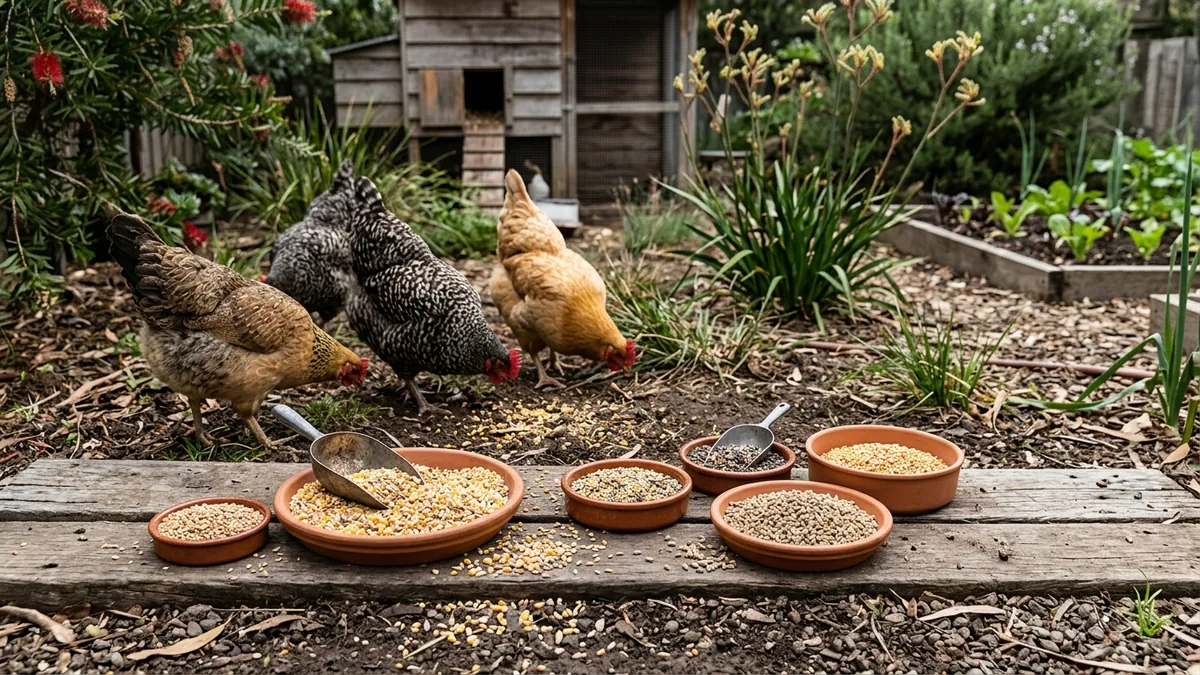
Treats and scraps are fine in small amounts, and they keep birds active and entertained. The rule of thumb is to keep all treats and scraps to about 10 percent of the daily diet. Beyond that, they dilute the balanced feed and hens start missing the protein, calcium and vitamins they need to lay well and stay healthy.
Good options in moderation: leafy greens, vegetable peels and trimmings, cooked pumpkin, berries, cracked corn and scratch grain as a small scatter, mealworms and other insects, and herbs.
Poor options to limit: bread, pasta and rice (fillers with little nutrition), very fatty or fried scraps, and sugary fruit in large amounts. These are not toxic, but they crowd out better food.
Scratch grain in particular is a snack, not a meal. A small handful scattered late in the day gives birds something to forage for, but it is low in protein and should never replace a complete feed.
Some foods are genuinely risky and should be kept away from the flock entirely.
Green or sprouted potato, and green tomato or potato foliage, contain solanine and are risky, so keep them off the menu. Plain cooked potato flesh in small amounts is fine.
Water is the one thing that must always be available, clean and fresh. A laying hen drinks more than you might expect, and intake rises sharply in hot weather. Even a short period without water can knock laying back for days.
Check and refill drinkers daily, scrub them regularly to stop algae and slime, and in summer add extra drinkers in shade so no bird has to travel far or wait in the heat. In a heatwave, cool water and shade matter as much as the feed itself.
Pick a life stage to see the right feed type, target protein, what to give and what to watch.
| Life stage | Feed type | Protein | Calcium | Notes |
|---|---|---|---|---|
| Chick (0 to 6 weeks) | Chick starter crumble | 18 to 20% | Low, none added | Medicated optional for coccidiosis. Fresh water always. Grit only if eating anything besides starter. |
| Grower / pullet (6 to 18 weeks) | Grower or pullet feed | 15 to 16% | Low | Too much calcium harms growing kidneys. Switch to layer only at point of lay. |
| Layer (point of lay onward) | Layer pellet or mash | 16 to 17% | 3.5 to 4% | Offer crushed shell free choice. Fresh water always. |
| Rooster / non-layer | Maintenance or grower-type feed | 14 to 16% | Low | Avoid long-term high-calcium layer feed, or offer calcium free choice so birds self select. |
| Moult / broody | Higher protein feed or starter | 18 to 20% | Keep up for any still laying | Feathers are about 85% protein. Extra water and easy access to feed. |
The free Planting Season app includes a Poultry module with a Flock tracker, so you can record each bird's age and life stage, log feed and treats, and track eggs over time. It is a simple way to see when a pullet is due to switch to layer feed, or when a hen has gone off the lay.
Everything works offline, with no App Store needed. Open the app and add your flock to get started.
A standard laying hen eats roughly 100 to 150 g of complete feed per day. Bantams eat less, larger breeds more, and birds eat more in cold weather. Let the feed level guide you rather than a fixed number, and always have feed available.
No. Layer feed has about 3.5 to 4 percent calcium, which is far too much for growing birds and can damage the kidneys of pullets that are not yet laying. Keep them on grower feed until point of lay, around 18 weeks or the first egg.
Free ranging birds pick up small stones naturally, so they usually get enough insoluble grit on their own. Confined birds, or any bird eating grain, scraps or greens, need grit offered free choice so they can grind food in the gizzard.
No. Scraps are not nutritionally balanced and will leave hens short on protein and calcium, leading to poor laying and health problems. A complete feed should be the base of the diet, with scraps and treats kept to about 10 percent.
Oyster shell and crushed shell are soluble calcium that hens use to build eggshells, offered free choice. Grit is small insoluble stones that sit in the gizzard to grind food. They do different jobs and one cannot replace the other.
No. Scratch grain is a snack, not a balanced diet, and is low in the protein, vitamins and minerals hens need. Mealworms are a high protein treat. Keep both to a small share of the diet and feed a complete feed as the staple.
In small amounts of plain cooked food, yes, but these are fillers with little nutrition. Keep them as an occasional treat within the 10 percent treat limit and never as a staple. Avoid mouldy bread entirely.
It is optional. Medicated starter usually contains a coccidiostat to help prevent coccidiosis in young chicks. It is helpful in warm, damp brooders, but should not be fed to chicks already vaccinated against coccidiosis.
Log what your flock eats, record eggs, and keep an eye on each bird's life stage with the free Poultry module in the Planting Season app.