Muscovy Ducks in Australia: Quiet Foragers and Fly Hunters
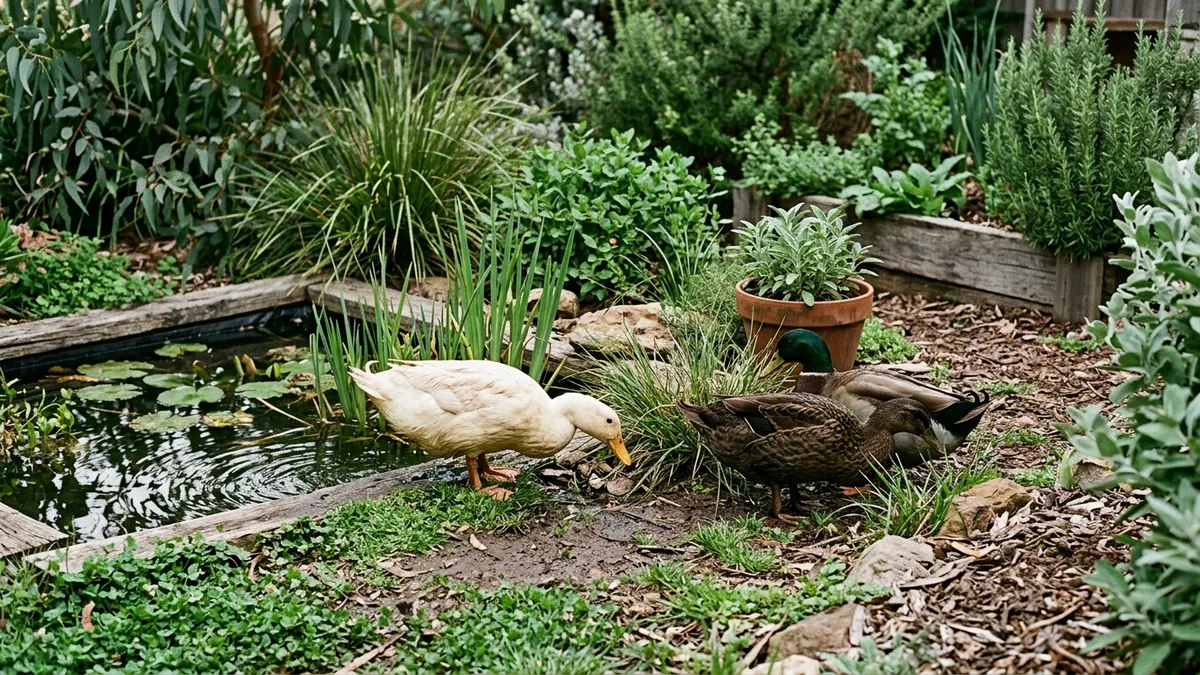
The Muscovy is a different species from every other backyard duck. It hisses and trills instead of quacking, roosts and flies short distances, and the hens sit reliably and bring up ducklings well. Our existing breed guide describes Muscovies as the ideal duck for a quiet block, and this page adds the detail.
Fact panel
- Class
- Heavy (different species)
- Adult weight
- drakes 4.5 to 5.4 kg, ducks 2.3 to 2.7 kg
- Eggs a year
- Seasonal laying in clutches, fewer eggs than the best layers
- Egg colour
- White to cream
- Noise
- Quiet, hisses and low trills
- Flight
- Can fly short distances and roost
- Temperament
- Calm but drakes can be pushy
- Mothering
- Excellent
- Best for
- Pest control, meat and broody mothers
Muscovies in Australian backyards
Muscovies take Australian heat better than many ducks, and they are strong fly and insect hunters around a yard. Their size is the catch. Drakes reach 4.5 to 5.4 kg and can dominate a small area, so the breed suits a larger block more than a small courtyard.
Ducklings come from poultry clubs, produce stores and local breeders. Because Muscovies roost and fly short distances, they may wander or perch on a neighbour's fence, so a covered run helps keep good relations.
Care notes
- Offer waterfowl pellets with greens and foraging, and keep fresh water beside the feed.
- House them at ground level or with a low roost. Muscovies like to perch, and they are happier with a sheltered roost than on the ground in cold weather.
- Keep one drake to four or five hens, because drakes can be rough with hens.
How the Muscovy compares
| Breed | Adult weight | Eggs | Noise | Best for |
|---|---|---|---|---|
| Call duck | about 450 to 700 g | A modest number of small eggs, mostly in spring and summer | Very loud, especially the females | Pets and exhibition |
| Pekin duck | about 3.6 to 4.1 kg | About 150 to 200 large eggs in a good year | Loud, females quack heavily | Eggs, meat and pets |
| Muscovy duck | drakes 4.5 to 5.4 kg, ducks 2.3 to 2.7 kg | Seasonal laying in clutches, fewer eggs than the best layers | Quiet, hisses and low trills | Pest control, meat and broody mothers |
| Indian Runner duck | drakes about 2 kg, ducks about 1.8 kg | 200 or more eggs a year in good strains | Females quack, drakes only rasp | Eggs and slug patrol |
| Cayuga duck | drakes about 3.6 kg, ducks about 3.2 kg | About 100 to 150 large eggs a year | Moderate, females quack | Eggs, meat and ornamental |
| Rouen duck | drakes about 4.5 kg, ducks about 3.6 kg for the traditional type | About 30 to 125 eggs a year, fewer than the light layers | Moderate, females quack | Meat, ornamental and some eggs |
Common questions
Are Muscovy ducks quiet?
Yes. They hiss and trill rather than quack, so they suit a quiet suburban block.
How long do Muscovy eggs take to hatch?
35 to 37 days, according to Mississippi State University Extension, compared with 28 days for other ducks.
Can Muscovies fly?
Short distances, and they like to roost. A covered run or tall fence keeps them home.
Do Muscovies need a pond?
No. A tub deep enough for them to dip their heads is enough.
- The Livestock Conservancy, Quick Reference Guide to Heritage Ducks, for weights, egg numbers and egg colours of the Cayuga, Rouen and Indian Runner.
- eXtension, Selecting a duck breed for small or backyard poultry flocks, for Pekin, Muscovy, Rouen and Indian Runner facts on growth, weight, flight and noise.
- Mississippi State University Extension, Care and Incubation of Hatching Eggs (Dr Tom W. Smith), for incubation periods.
- Australian Poultry Standards (2nd edition, 2011, Victorian Poultry Fanciers Association), for breed classes, and the Rare Breeds Trust of Australia, rare duck list, for breed classes and status in Australia.
Weights and egg numbers are typical ranges and vary by strain, feed and daylight.
Keep reading
All duck breedsKeeping ducksWhat ducks can eatDuck keeping guideIncubating eggsHow to keep ducks