Indian Runner Ducks in Australia: Eggs, Slugs and Care
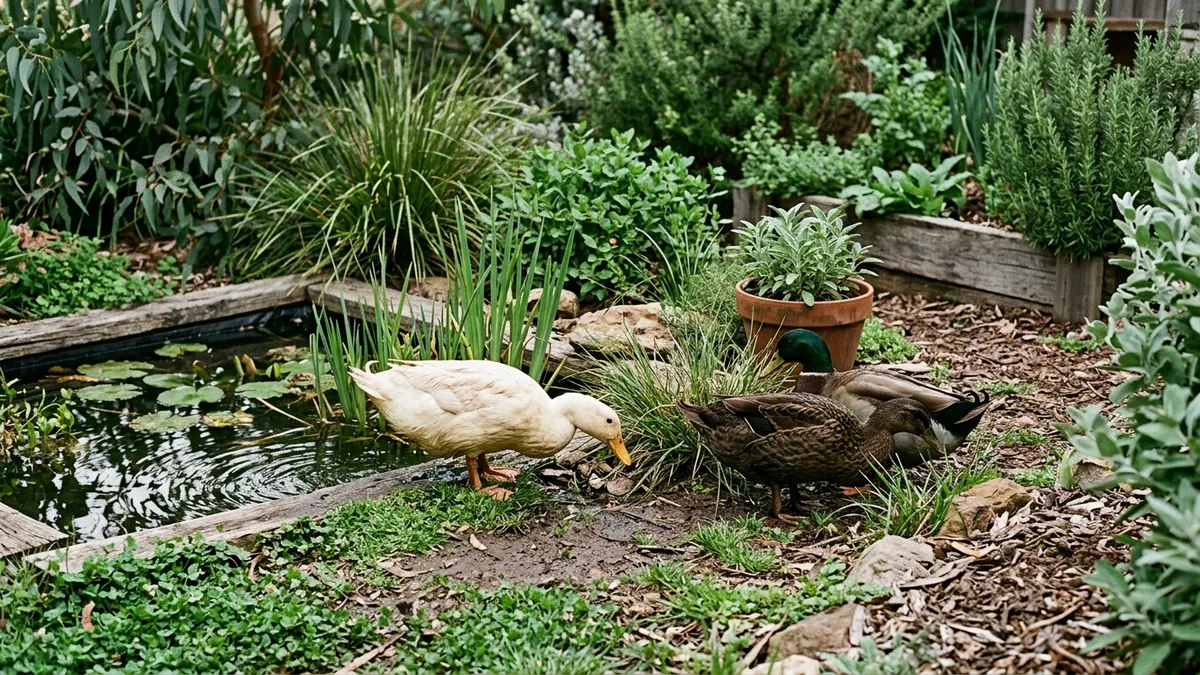
Indian Runners are the upright, bottle-shaped ducks that run across a garden rather than waddle. Good strains lay more than 200 eggs a year according to The Livestock Conservancy, and they are tireless slug and snail hunters. Our general Australian duck breeds page describes them as the keenest slug hunters of the lot.
Fact panel
- Class
- Light
- Adult weight
- drakes about 2 kg, ducks about 1.8 kg
- Eggs a year
- 200 or more eggs a year in good strains
- Egg colour
- White to blue-green
- Noise
- Females quack, drakes only rasp
- Flight
- Cannot fly
- Temperament
- Active and easily startled
- Mothering
- Poor, rarely nests
- Best for
- Eggs and slug patrol
Runners in Australian gardens
Runners suit most Australian conditions because they are light and active. Give them shade and cool water in summer heat, and a dry shelter in winter. They cover a lot of ground, so let them forage through the vegetable patch, but keep them out when seedlings are tender.
Runners are common at poultry clubs and local sales. Foxes are the main danger at night, so a locked house with buried or aproned mesh is essential.
Care notes
- Feed waterfowl pellets with a niacin source, and keep water near feed.
- Runners cannot fly but are quick, so use a fence that is solid enough to turn a startled flock. They are easily frightened.
- Eggs are laid in the early morning, often anywhere, so let them out after they have laid.
How the Indian Runner compares
| Breed | Adult weight | Eggs | Noise | Best for |
|---|---|---|---|---|
| Call duck | about 450 to 700 g | A modest number of small eggs, mostly in spring and summer | Very loud, especially the females | Pets and exhibition |
| Pekin duck | about 3.6 to 4.1 kg | About 150 to 200 large eggs in a good year | Loud, females quack heavily | Eggs, meat and pets |
| Muscovy duck | drakes 4.5 to 5.4 kg, ducks 2.3 to 2.7 kg | Seasonal laying in clutches, fewer eggs than the best layers | Quiet, hisses and low trills | Pest control, meat and broody mothers |
| Indian Runner duck | drakes about 2 kg, ducks about 1.8 kg | 200 or more eggs a year in good strains | Females quack, drakes only rasp | Eggs and slug patrol |
| Cayuga duck | drakes about 3.6 kg, ducks about 3.2 kg | About 100 to 150 large eggs a year | Moderate, females quack | Eggs, meat and ornamental |
| Rouen duck | drakes about 4.5 kg, ducks about 3.6 kg for the traditional type | About 30 to 125 eggs a year, fewer than the light layers | Moderate, females quack | Meat, ornamental and some eggs |
Common questions
How many eggs do Indian Runners lay?
Good strains lay over 200 eggs a year, according to The Livestock Conservancy. Some utility strains have produced over 300.
Can Indian Runner ducks fly?
No, but they run fast and startle easily.
Are Indian Runners noisy?
Only the females quack, and the drakes make a hoarse whisper.
Do Runners eat slugs?
Yes, they are among the best ducks for slugs and snails.
- The Livestock Conservancy, Quick Reference Guide to Heritage Ducks, for weights, egg numbers and egg colours of the Cayuga, Rouen and Indian Runner.
- eXtension, Selecting a duck breed for small or backyard poultry flocks, for Pekin, Muscovy, Rouen and Indian Runner facts on growth, weight, flight and noise.
- Mississippi State University Extension, Care and Incubation of Hatching Eggs (Dr Tom W. Smith), for incubation periods.
- Australian Poultry Standards (2nd edition, 2011, Victorian Poultry Fanciers Association), for breed classes, and the Rare Breeds Trust of Australia, rare duck list, for breed classes and status in Australia.
Weights and egg numbers are typical ranges and vary by strain, feed and daylight.
Keep reading
All duck breedsKeeping ducksWhat ducks can eatDuck keeping guideIncubating eggsHow to keep ducks