
Native Plants for Bees in the Veggie Garden
Updated November 2026
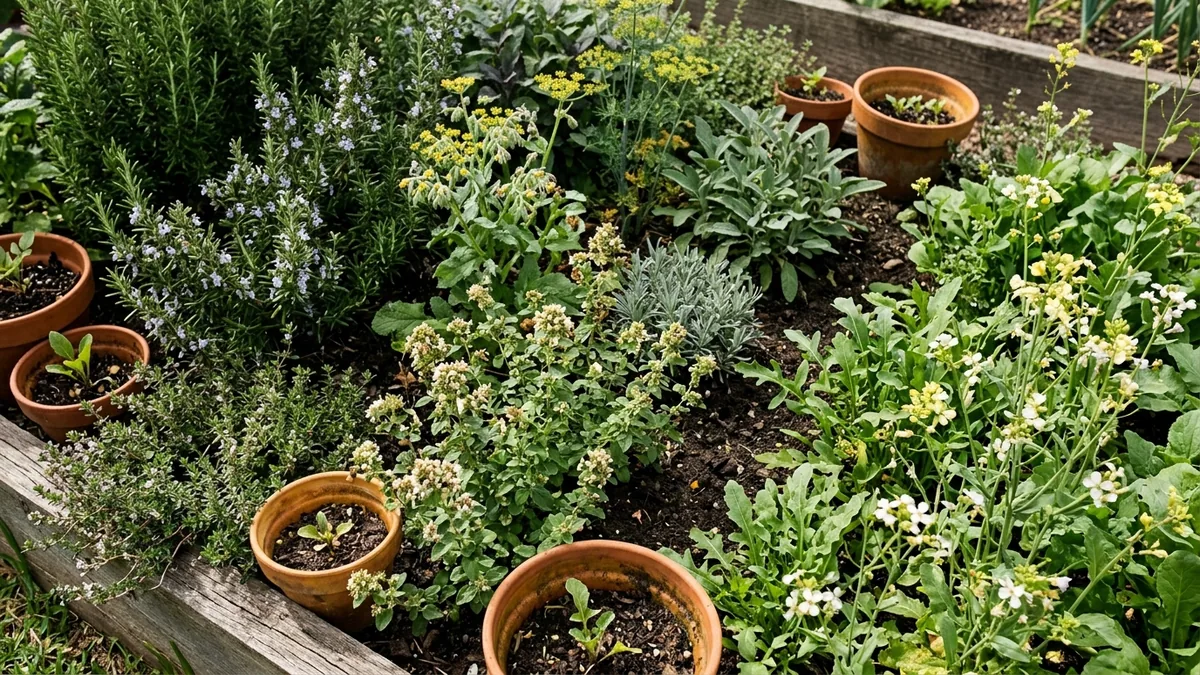
Which Australian natives keep pollinators near your crops, and when they flower.
Native flowers for bees work best in a food garden when they keep pollinators nearby all year, so the bees are already on your block when the pumpkins, zucchini and passionfruit open. Pick shrubs and ground covers with open, easy-to-reach flowers, space their flowering through the seasons, and plant them within a few metres of the beds. This page covers the native side of the job. For the general bee-friendly planting list see bee-friendly planting and the bee-friendly vegetable garden.
Which crops actually need pollinators
Not every vegetable needs a visitor. Tomatoes, beans, lettuce and most leafy crops will set a harvest with little help. The crops that really depend on insects are the ones with separate male and female flowers, where pollen has to be carried from one flower to another.
BeeAware, the national biosecurity and pollination site, lists pumpkin, squash, zucchini and cucumber among the vegetables that require insect pollination to produce a crop, with honey bees the main visitors. It also notes that carrots, cauliflower, cabbage, broccoli and beetroot need pollinators only if you let them flower for seed. In practice that gives the home gardener a short list:
- Pumpkin, squash and zucchini: female flowers that are not visited drop their tiny fruit. If your zucchini keeps shrivelling, read why zucchini are not fruiting. The growing guides for pumpkin and squash cover hand pollination as a backup.
- Melons: rockmelon, watermelon and honeydew also set fruit from insect visits. See how to grow rockmelon.
- Passionfruit: BeeAware says the purple types are mostly self-incompatible and the yellow type almost entirely so, and that wind does not move the pollen, so fruit set depends on insects or hand pollination. See how to grow passionfruit.
- Fruit trees: needs vary by species and variety, so check the requirements for the tree you are planting, and note that a cross-pollinating partner may be needed.
- Tomato and eggplant: the flowers hold pollen in small capsules that release best when shaken. Wind and a good bee visit both help.
Honey bees and Australian native bees
European honey bees do most of the commercial pollination in Australia and they visit cucurbit flowers heavily. They forage well beyond the hive, so a neighbour's hive can serve your patch, but they work best when nectar and pollen are available all year close to the crop.
Australia also has about 1,700 species of native bees, and the Australian Native Bee Research Centre (aussiebee.com.au) is the best single source on them. A few are useful in a food garden:
- Blue banded bees (Amegilla): they can buzz a flower with their flight muscles to shake pollen loose, which honey bees cannot do. Aussie Bee describes research in which blue banded bees lifted greenhouse tomato yields by 20 to 24 per cent compared with an electric vibration wand, and calls them potential buzz pollinators of eggplant and sweet pepper. Those trials were in greenhouses, so treat the figure as evidence that they are good tomato visitors, not as a promise for an outdoor bed.
- Small solitary bees: many tiny native bees visit small, open flowers. They nest in the ground or in small holes and tunnels, so bare patches of soil and a bit of dead wood matter.
- Stingless bees: social native bees that live in the warmer parts of the country. Gardeners in the subtropics and tropics can keep them in a hive. See stingless bees and the native bee hive guide.
Nothing here replaces seeing the bees yourself. Spend ten minutes beside the pumpkin flowers on a warm morning. If you see no visitors, your planting is too thin or too far away, and hand pollination will cover the gap in the meantime.
What makes a native flower useful to bees
Bees do not care whether a plant is native, but many natives suit them well, and they keep flowering through dry spells that wilt soft flowers. A few traits help you choose:
- Open, shallow or brush-like flowers. Tea tree, bottlebrush and small daisies are easy for short-tongued bees. Tube flowers such as many correas are built for birds, though bees still work some of them.
- Flowers in dense masses. A bee does better on one shrub with thousands of flowers than on a dozen plants with a few each.
- A long season. The aim is a food source in every month, so there is never a gap near the crops.
- Single over double flowers. Heavily doubled flowers often hide the pollen and nectar.
It also helps to plant in groups rather than single plants. A clump of three of the same plant is easier for bees to find than three different plants scattered about.
Natives for bees by plant group
This table shows plant groups rather than a shopping list. Species within each group flower at different times, and local conditions shift the dates, so check the species and its local flowering time before you plant. The pages in this section go into detail on grevillea, bottlebrush, tea tree, westringia and correa.
| Plant group | Typical flowering | Subtropical and tropical regions | Temperate and cool regions | Mediterranean regions |
|---|---|---|---|---|
| Grevillea | Many species flower in winter and spring, and some flower on and off through the year | Useful through the dry season | A key winter and early spring food source | Reliable in dry, sunny spots |
| Bottlebrush (Callistemon) | Mostly spring to early summer, often with a second flush | Wide choice, including species that tolerate wet feet | Good for early summer, when pumpkins and zucchini start | Choose drought-tolerant forms |
| Tea tree (Leptospermum) | Spring to summer | Local species preferred | Good for spring and early summer | Check weed status first |
| Westringia | A long season, with a peak in spring | Fine on the coast | Needs frost care in the coolest areas | Excellent in dry gardens |
| Correa | Autumn to winter in many species | Best in part shade | Fills a quiet winter gap | Needs part shade in summer |
| Native daisies and everlastings | Spring to summer, and often into autumn | Choose local species | Excellent for small bees in spring | Superb in full sun |
| Native violet and small ground covers | Spring and summer, with some flowers in other months | Good as a living path edge | Good in shade and moist spots | Needs summer water |
Edible natives can do double duty. Riberry, a lilly pilly, is covered in the riberry guide, and lemon myrtle is another tree that bees visit. Check each species against your council's weed list before planting.
Flowering through the year, so the bees stay
The trick for a food garden is not the number of plants but the gaps between flowering seasons. A blank month sends the bees to the next street, and they may not be back when your zucchini flowers open.
- Late winter and early spring: plant grevilleas and wattles that flower in this window. They feed the first bees of the season, which is when the first broad beans and brassicas flower.
- Spring: native daisies, westringia and tea trees carry the main flush and hold the bees while your cucurbits are still seedlings.
- Early summer: bottlebrush and tea tree come on as the pumpkin, zucchini, melon and passionfruit flowers open. This is the time that matters most, so plant for it first.
- Late summer and autumn: long-season plants such as westringia and some grevilleas keep going. Let a few herbs flower, such as basil and borage.
- Winter: correas and winter-flowering grevilleas feed any bees that are active on warm days. Where winters are cold the bees are fewer, and this matters less than in the subtropics.
In the Mediterranean climates of Adelaide and Perth, the long dry summer is the thin time, so choose plants that flower on without much watering. In the tropical wet and dry climates of Darwin and North Queensland, the wet season (November to April) is the hard time for bees, since rain keeps them in the nest, so make sure a few plants flower in the dry months as well.
Where to plant them in relation to the beds
Put the bee plants within 5 to 10 metres of the beds where possible, so that bees working them are already close when they find the crop. Plant them along the sunny edge of the patch, not in the middle of the beds, where roots and shade cause trouble. Larger shrubs should sit at least 2 to 3 metres from the bed edge, because roots will reach into good soil and take water. A low hedge of westringia or a clump of native daisies by the gate works well. See native windbreaks and hedges for spacing, and natives for birds and beneficial insects for the shelter side.
Do not spray flowering plants, and do not spray the crop while its flowers are open. A registered product, used to the label and applied in the evening when bees are not flying, is the safest option if you must treat a pest. The good bugs guide shows what to protect first.
Honest limits
- Bees will visit whatever is nearest and richest. A big flowering tree next door can draw bees away from your pumpkins on the day it flowers.
- Native flowers do not guarantee fruit set. Cool, wet or windy weather stops bees flying, and only hand pollination fixes that.
- Some natives are weeds outside their home range. Coast tea tree (Leptospermum laevigatum), for example, has become an environmental weed in parts of southern Australia. Choose plants native to your own area, and check your council's environmental weed list before planting.
- Honey bees and native bees compete for flowers in some places, so planting plenty of flowers helps both.
For the forage plants honey bees prefer, see bee forage plants.
Questions
Which native plants attract the most bees?
Plants with masses of open flowers, such as tea trees, bottlebrushes, westringia, native daisies and many grevilleas. The right choice depends on your region and the time of year the plant flowers, so choose species native to your area.
Do pumpkins and zucchini need bees?
Pumpkins, squash and zucchini need insects to carry pollen from male to female flowers. BeeAware lists them as vegetables that require insect pollination, and hand pollination is the backup when few bees visit.
Do native bees pollinate tomatoes?
Blue banded bees can buzz tomato flowers, and Aussie Bee reports greenhouse trials in which they raised tomato yields by 20 to 24 per cent compared with a vibration wand. Honey bees cannot buzz pollinate.
How close should native bee plants be to the veggie beds?
Within about 5 to 10 metres is a sensible aim, with larger shrubs kept 2 to 3 metres from the bed edge so roots and shade do not compete with the crop.
Can I keep native bees in my veggie garden?
Stingless bees can be kept in a hive in the warmer parts of Australia. In cooler regions you can still support wild native bees with flowers, bare soil and small nesting holes.
Are any native bee plants weeds?
Some are. Coast tea tree is an environmental weed in parts of southern Australia, and other natives can spread from seed outside their home range. Check your council's environmental weed list and choose local species.