
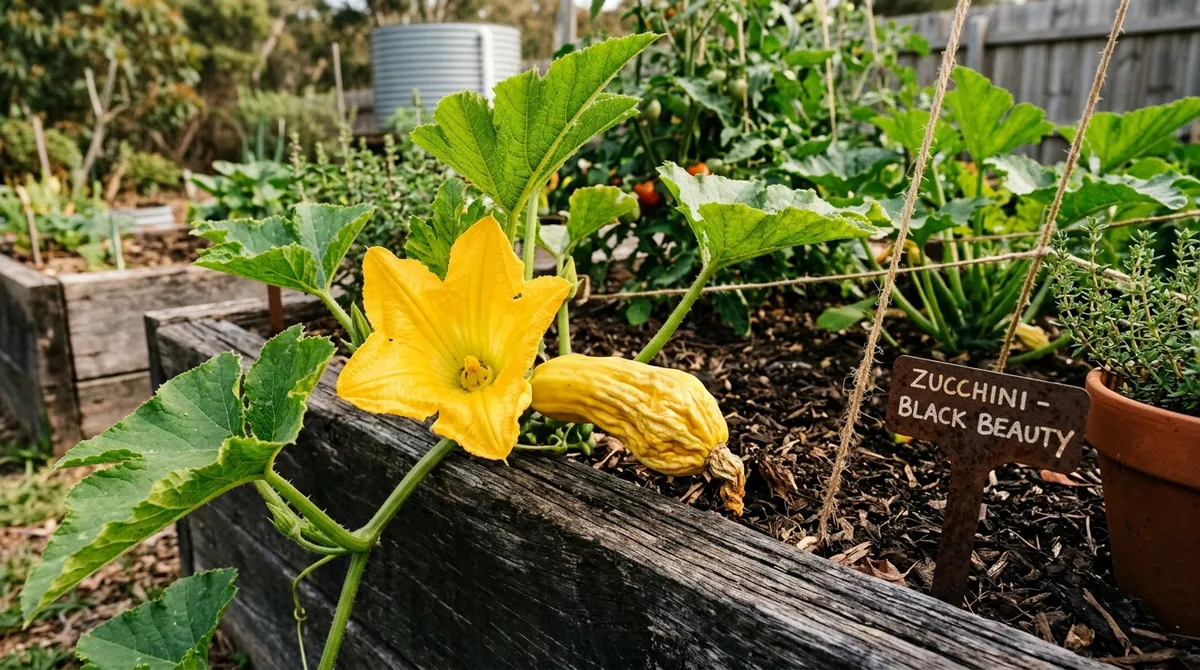
Why Your Zucchini Has Flowers But No Fruit
Updated June 2026
It's almost always a pollination problem, and the fix takes about 30 seconds
You've done everything right. The zucchini plant is enormous, covered in bright yellow flowers, and looks incredibly healthy. But instead of producing fruit, the flowers are falling off and the tiny zucchini behind them are turning yellow and rotting. This is one of the most common frustrations in Australian vegetable gardens and the answer is almost always the same: poor pollination.
The good news is it's easy to fix, either by bringing more bees to your garden or by doing the job yourself with a paintbrush. This guide will walk you through exactly what's happening, how to tell male flowers from female flowers, and how to hand-pollinate so you never lose another zucchini to a missing bee.
🌱 Plant profile: Zucchini, with sowing times for your region, companion plants and common pests.
Understanding Zucchini Flowers (Male vs Female)
Zucchini plants produce separate male and female flowers on the same plant. Both are bright yellow and look similar at a glance, but they play very different roles and they're easy to tell apart once you know what to look for.
Male flowers appear first. They grow on a long, thin, straight stem with no swelling or bulge behind the petals. If you look inside, there's a single central stamen covered in yellow pollen. These flowers open for one day, release their pollen, and then drop off the plant. That's their entire job.
Female flowers have a telltale giveaway: a small, cylindrical bulge right behind the petals that looks like a miniature zucchini. Because that's exactly what it is. The stem is shorter and thicker than the male flower's stem. Inside the flower, instead of a pollen-covered stamen, you'll find a multi-lobed sticky stigma. That stigma is where pollen needs to land for fruit to develop.
It's completely normal for a plant to produce only male flowers for the first week or two. Those early "fruitless" flowers aren't a problem. They're the pollen source. The plant needs to reach a certain size and level of energy reserves before it starts investing in fruit production. The issue only starts when female flowers do appear but don't get pollinated.
Why Pollination Fails
Pollination in zucchini relies on insects, usually bees, carrying pollen from a male flower to a female flower. It sounds simple, but several things can go wrong.
- Not enough bees visiting. New gardens, balconies, high-rise apartments, and areas without nearby flowering plants often have low bee populations. If there are no bees in the area, there's nobody to do the job.
- Bad weather. Bees don't fly in cold, wet, or very windy conditions. Early spring plantings are particularly vulnerable because the weather is still unpredictable. A run of rainy mornings can mean days of missed pollination.
- Timing. Zucchini flowers open in the morning and only stay receptive for a few hours. If bees don't visit in that narrow window, the female flower closes unpollinated and the tiny fruit behind it will yellow and rot within days.
- Pesticide use. Spraying anything during flowering hours, even organic pesticides like pyrethrum, can kill or repel pollinators. If you need to spray, do it in the late evening when flowers are closed and bees have gone home.
- Only one plant. A single zucchini plant can pollinate itself (it has both male and female flowers), but having at least two plants increases the odds of male and female flowers being open on the same day. More flowers means more chances for bees to make the connection.
How to Hand-Pollinate Zucchini (Step by Step)
Hand-pollination is the fastest and most reliable fix. It takes about 30 seconds once you get the hang of it, and the success rate is very high.
- Go out in the morning, ideally between 7am and 10am. This is when flowers are freshly open and pollen is at its most viable. By afternoon, the flowers start closing and the pollen dries out.
- Find a male flower and pluck it from the plant. Remember: male flowers grow on thin, straight stems with no swelling behind the petals. Picking a male flower does no harm to the plant. It has already done its growing and will fall off on its own by the end of the day.
- Peel back the petals to expose the stamen. You'll see a central column covered in bright yellow pollen. It should look dusty and feel slightly sticky to the touch.
- Find an open female flower. Look for the miniature zucchini behind the petals. The flower needs to be freshly open that morning for best results.
- Dab the male stamen directly onto the stigma in the centre of the female flower. Press gently and rotate the stamen to transfer as much pollen as possible. You want good contact across the whole surface of the stigma.
- Repeat with other female flowers. One male flower has enough pollen for 2 to 3 female flowers, so you can move from one to the next.
- Watch for results. A successfully pollinated fruit should start growing noticeably within 2 to 3 days. If the fruit yellows and rots instead, pollination didn't take. Don't worry, just try again with the next flower.
You can also use a small paintbrush or cotton bud instead of plucking the male flower. Dab the brush inside the male flower to pick up pollen, then transfer it to the stigma of the female flower. This method works well if you only have one male flower open and want to keep it on the plant.
The Long-Term Fix: Attract More Pollinators
Hand-pollination works, but it's a band-aid. You have to go out every morning, check flowers, and do the work yourself. The real solution is making your garden attractive to bees so they do the pollinating for you, every day, all season long.
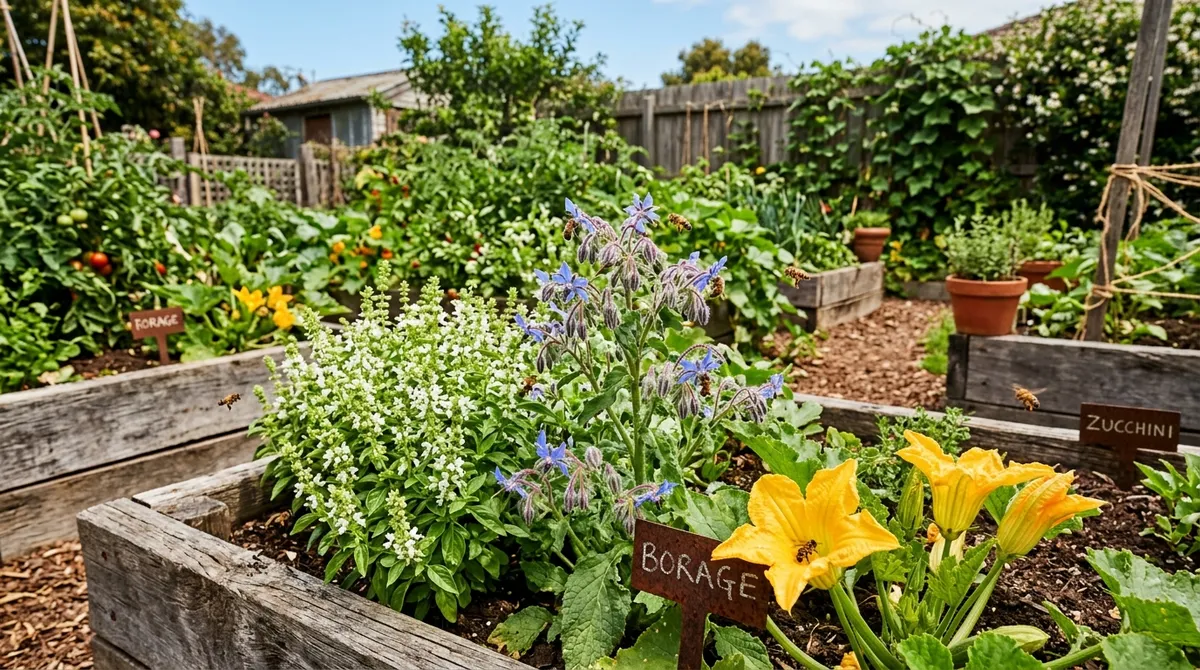
The single best companion plant for zucchini pollination is borage. Bees are extraordinarily attracted to borage flowers and can detect them from hundreds of metres away. Plant borage directly next to your zucchini, not across the garden, so that bees visiting the borage will naturally stumble into your zucchini flowers while they're there.
Other effective pollinator plants include marigolds and cosmos planted at the ends of rows, sunflowers as tall beacons that bees can see from a distance, and herbs that you allow to go to flower. A single basil plant left to bloom or a dill plant gone to seed will attract hoverflies and native bees that also pollinate zucchini.
For a permanent solution, consider building a dedicated pollinator border with lavender, rosemary, and salvia. These plants flower for months and keep bees coming back to your garden throughout the year, not just during zucchini season.
For the full guide on building a pollinator-friendly food garden, see our bee-friendly veggie patch guide.
Other Reasons for Poor Zucchini Fruit Set
Pollination is the cause in the vast majority of cases, but a few other factors can contribute to poor fruit set or flower drop.
- Overwatering. Zucchini likes consistent moisture but soggy soil stresses the roots and can cause flower drop. Water deeply 2 to 3 times a week rather than a light sprinkle every day. Mulch around the base to keep moisture even.
- Excess nitrogen. Too much nitrogen fertiliser pushes the plant into producing enormous leaves at the expense of flowers and fruit. If your zucchini is all leaf and very few flowers, ease off the fertiliser and let the plant redirect its energy. A side-dress of potassium-rich fertiliser (like wood ash or sulphate of potash) can help shift the balance toward fruiting.
- Heat stress. Above 35 degrees Celsius, pollen viability drops significantly. This is common during peak Australian summer. The pollen essentially cooks before bees can deliver it. In extreme heat, try hand-pollinating very early in the morning or provide afternoon shade with a temporary shade cloth.
- Overcrowding. Zucchini plants need airflow and space. Each plant wants about 1 metre squared. Overcrowded plants compete for light and nutrients, and the reduced airflow increases humidity around the flowers, making pollination less effective.
One important distinction: if the fruit IS setting and growing to a few centimetres but then rotting at the blossom end (the tip), that's blossom end rot. It's a calcium uptake issue caused by inconsistent watering, not a pollination problem. Keep your watering schedule regular and mulch well to prevent it.
Frequently Asked Questions
Why does my zucchini plant have flowers but no fruit?
Your zucchini has separate male and female flowers. Male flowers appear first, often a week or two before any female flowers, and drop off without producing fruit. This is normal. Once female flowers appear, they need pollen transferred from a male flower by bees or by hand. If pollination doesn't happen within a few hours of the female flower opening, the tiny fruit behind it will yellow and rot.
How do I tell the difference between male and female zucchini flowers?
Male flowers grow on a thin, straight stem with no swelling behind the petals. Female flowers have a small, cylindrical bulge behind the petals that looks like a miniature zucchini. This bulge is the unfertilised fruit. Male flowers usually appear a week or two before the first female flowers.
How do I hand-pollinate zucchini?
Pick a freshly opened male flower in the morning, peel back the petals to expose the pollen-covered stamen, and dab it directly onto the sticky stigma in the centre of an open female flower. You can also use a small paintbrush or cotton bud to transfer pollen. One male flower has enough pollen for 2 to 3 female flowers.
What flowers attract bees to a zucchini patch?
Borage is the best single companion plant for attracting pollinators to cucurbits. Other effective options include marigolds, cosmos, zinnias, sunflowers, and herbs allowed to flower like basil, dill, and oregano. Plant them close to your zucchini, not on the other side of the garden.
Plant profile
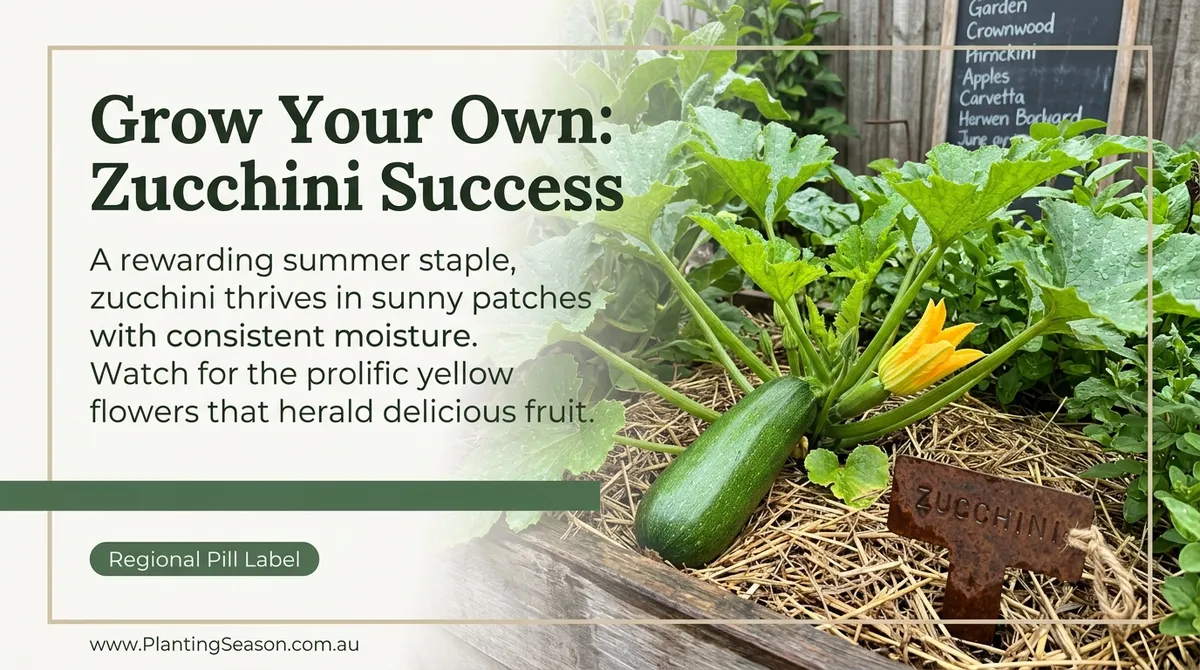
The zucchini profile has sowing times for your region, companion plants and common pests.
Free Monthly Planting Calendar
Get a personalised email each month with what to plant, seasonal tips, and harvest reminders for your region.
We send one email per month. Unsubscribe any time.