
The Bee-Friendly Veggie Patch: A Guide for Australian Gardeners
Updated June 2026
How to attract pollinators to your food garden and why it matters more than you think
Most gardeners think about soil, water, and sunlight. Few think about the insects that turn flowers into food. Your zucchini, cucumber, pumpkin, capsicum, beans, strawberry, passionfruit, and eggplant all need pollination to set fruit. If you are getting plenty of flowers but nothing is forming behind them, the problem is almost certainly a shortage of pollinators, not your gardening skills.
The fix is simpler than people expect. Plant the right flowers among your food crops and you create a garden that feeds you and the bees at the same time. This is not about sacrificing food-growing space for a pretty flower border. The best pollinator plants also repel pests, improve soil, or are edible themselves. A few well-chosen companion flowers tucked between your veggie rows can transform a frustrating garden into a productive one.
Which Vegetables Actually Need Pollinators?
Vegetable crops fall into two broad groups when it comes to pollination. The first group is completely dependent on insect visitors. Cucurbits (zucchini, pumpkin, cucumber, watermelon, squash) have separate male and female flowers on the same plant, and pollen must physically travel from one to the other. No bee visit, no fruit. Nightshades like capsicum, chilli, and eggplant also rely heavily on insect pollination. Legumes including beans and peas need bees to trip the flower mechanism that releases pollen. Strawberries produce larger, better-shaped fruit with good pollination, and passionfruit is almost entirely dependent on large-bodied bees to work its complex flowers.
The second group is technically self-pollinating but still benefits from bee activity. Tomatoes are the classic example. They are wind-pollinated and self-fertile, but when a bee lands on a tomato flower and vibrates its flight muscles (called buzz-pollination), it shakes loose far more pollen than the wind alone. The result is bigger fruit, more even shape, and heavier yields.
Then there are the crops that do not need pollination at all. Leafy greens like lettuce, spinach, silverbeet, and kale are harvested before they flower. Root vegetables (carrots, beetroot, radish, potatoes) produce the part you eat underground. Herbs harvested for their leaves (basil, parsley, coriander, mint) are picked before flowering. These crops grow perfectly well without a single bee visit.
The practical takeaway: if you are growing zucchini, pumpkin, cucumber, watermelon, capsicum, chilli, eggplant, beans, peas, strawberries, or passionfruit, you need pollinators. Full stop.
The Best Pollinator Plants for Australian Veggie Gardens
The good news is that many of the best pollinator-attracting plants are things you probably already grow, or would grow if someone told you to let them flower.
Herbs that do double duty
Herbs are the backbone of a bee-friendly veggie patch because they earn their space twice: once as something you harvest and again as a pollinator magnet when they flower. Basil is the obvious starting point. Let a few plants bolt to flower rather than pinching every flower spike, and bees will find them within days. Coriander bolts so fast in warm weather that most gardeners consider it a problem, but those white flower heads are one of the best bee attractors in the garden. Lean into the bolt. Dill, oregano, and thyme all produce small flowers that are perfect for smaller bee species and beneficial wasps. Rosemary flowers through winter in most of Australia, providing nectar when very little else is blooming. Lavender is a bee favourite that doubles as a pest deterrent along garden borders.
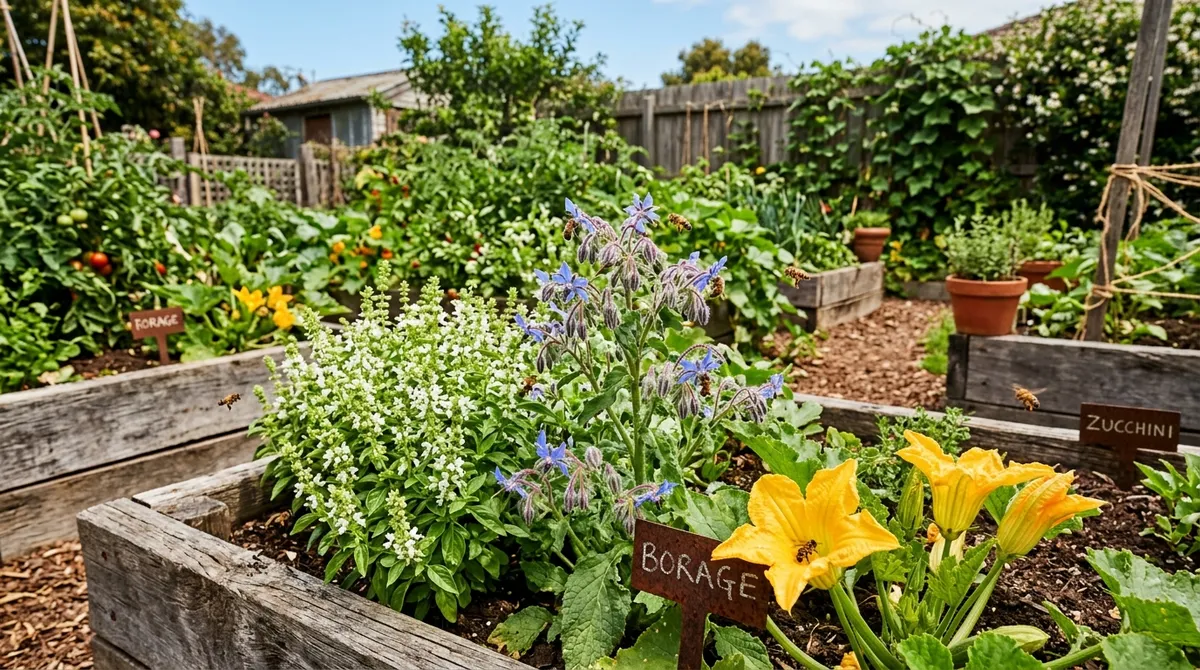
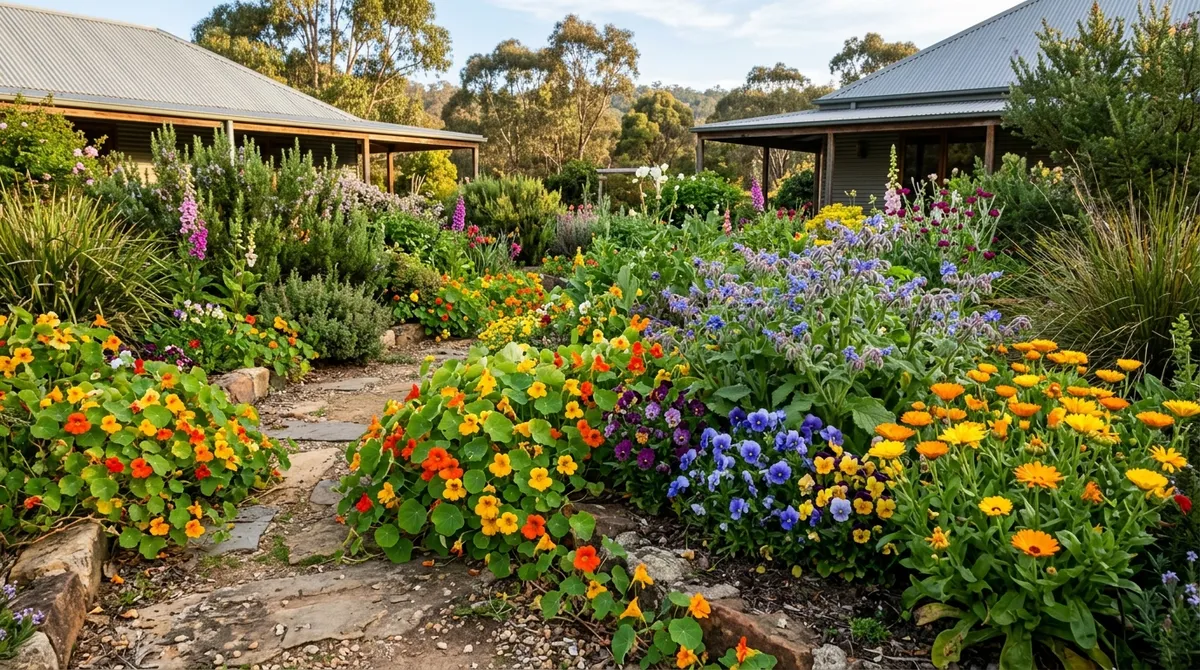
Borage deserves its own mention. It produces bright blue star-shaped flowers for months on end. Bees will cross a suburb to reach a borage patch. It self-seeds freely so you plant it once and have it forever, the flowers are edible (they taste faintly of cucumber), and it grows happily among tomatoes and cucurbits without competing for space. If you plant one pollinator companion in your veggie garden, make it borage.
Annual flowers to interplant
Annual flowers are easy to tuck between vegetable rows and they provide a burst of colour while pulling in pollinators. Cosmos is one of the easiest to grow from seed and flowers for months. Zinnias come in every colour and hold up well in heat. French and African marigolds repel whitefly and root-knot nematodes while attracting hoverflies and bees. Sunflowers are a vertical beacon that pollinators can spot from a distance, and they also attract seed-eating birds that help with pest control. Nasturtiums are edible, act as a trap crop for aphids, and produce nectar-rich flowers that bees love. Calendula (pot marigold) is another edible flower that blooms prolifically and self-seeds. Sweet alyssum is a low-growing ground cover that attracts lacewings and parasitic wasps alongside bees, making it useful for pest control and pollination at the same time.
Australian natives for permanent borders
Native flowering plants are the long game. They take a season or two to establish, but once they are in, they provide reliable nectar for years with minimal care. Grevillea varieties flower through autumn and winter when European honeybees are less active, supporting native bee species year-round. Callistemon (bottlebrush) is an absolute magnet for every type of bee and honeyeater. Westringia (native rosemary) provides small flowers over a long season and makes a tidy hedge along garden edges. Leptospermum (tea tree) flowers heavily in spring and early summer and is particularly good for native bee species. Planting a permanent strip of natives along the boundary of your veggie garden gives pollinators a home base right next to the crops that need them.
Planting for Year-Round Bee Food
Bees need flowers every month of the year. If your garden has a "flower gap" in autumn or winter, local pollinator populations decline or relocate. By the time your spring crops start flowering and need pollination, the bees may not be there. The goal is a continuous chain of blooms so that pollinators establish permanent territories that overlap with your food garden.
Winter
This is the hardest season for flowers in the veggie garden, but native plants fill the gap beautifully. Grevillea, callistemon, and banksia all flower through the cooler months in most of Australia. Rosemary is at its flowering best in winter and early spring. Winter-flowering peas (if you let some bloom rather than picking every pod) also offer nectar. A few pots of winter-flowering herbs on a sunny patio will keep a surprising number of bees fed.
Spring
Spring is when everything kicks off and your fruiting crops start flowering. Borage, nasturtium, and calendula all begin blooming in early spring. Herb flowers from coriander, dill, and parsley join in as temperatures rise. This is when pollinator numbers are building, so every early flower source counts.
Summer
The easiest season for bee food. Basil left to flower, sunflowers, zinnias, cosmos, and oregano all bloom heavily through summer. Your vegetable crops are also flowering, so the garden is a buffet. The key in summer is making sure pollinator plants are scattered through the veggie beds, not confined to one corner.
Autumn
Many gardeners clean up their garden in autumn and remove spent plants, which creates a flower gap right when pollinators are preparing for winter. Marigolds will keep flowering until the first frost. Dill going to seed provides late-season nectar. Late cosmos continues into mid-autumn. Rosemary begins its next flowering cycle. Leave some herbs standing rather than cutting everything back.
Cool-climate gardeners in Melbourne, Tasmania, and the Adelaide Hills should shift these timings later by about four to six weeks. Your spring comes later, your winter starts earlier, and native plants become even more important for filling the cold-weather gap.
How to Lay Out a Bee-Friendly Veggie Patch
There are three practical approaches to arranging pollinator plants in a food garden, and the best gardens use all three together.
First, create a permanent pollinator border strip along one edge of your garden. This is where your perennial plants go: lavender, rosemary, borage, and one or two native species like grevillea or callistemon. A strip about 50 cm wide is plenty. These plants stay in the ground year-round and provide a constant draw for pollinators right next to your annual veggie beds. Put the border on the southern side if possible, so the taller plants do not shade your vegetables.
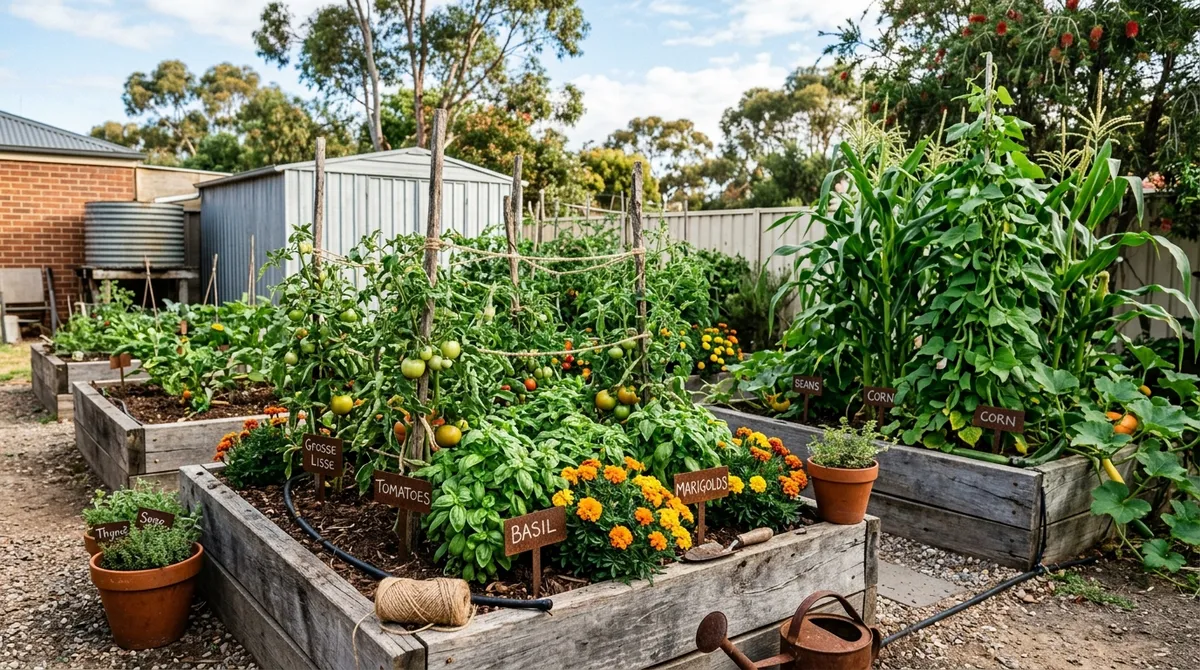
Second, scatter annual companion flowers through the beds themselves. Tuck a marigold at the end of each row. Sow sweet alyssum as a living groundcover between rows of capsicum or eggplant. Plant a sunflower at the northern end of each bed for vertical interest and a beacon that draws pollinators from a distance. Interplanting flowers directly among your vegetables puts the bees exactly where you need them, right next to the flowers that need pollinating.
Third, let some herbs bolt deliberately. Instead of pulling out every coriander plant the moment it starts to go to seed, leave a few to flower. Let a couple of basil plants go unpinched. Allow dill to form its big yellow flower heads. These bolted herbs take up almost no extra space because they are already in the bed, and their flowers are extremely attractive to bees and beneficial insects.
One layout note: be careful about planting dense flower borders right next to brassicas (cabbage, broccoli, cauliflower) if cabbage white butterfly is a problem in your area. The same flowers that attract bees also attract butterflies, including the ones you do not want. Keep your pollinator plants closer to fruiting crops (tomatoes, zucchini, cucumbers, capsicum) and use pest-deterrent herbs like rosemary and thyme near brassicas instead.
Hand-Pollination: The Backup Plan
Sometimes the bees just are not there. Cool, wet weather keeps them grounded. Early and late in the season, numbers may be low. Balcony and high-rise gardens often struggle to attract enough pollinators. For those situations, hand-pollination is a reliable backup that takes about two minutes per plant.
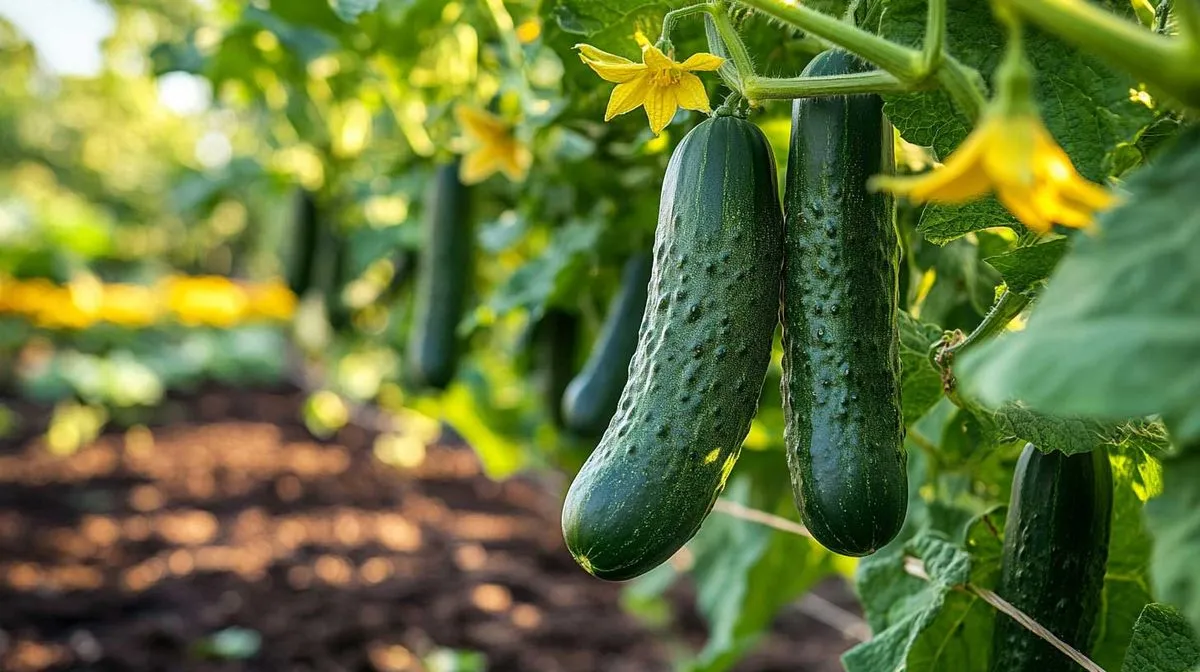
Cucurbits are the crops that benefit most from hand-pollination. Zucchini, pumpkin, cucumber, and watermelon all have separate male and female flowers. Male flowers sit on a thin stem with a straight stamen covered in pollen inside. Female flowers have a tiny fruit (a miniature zucchini, pumpkin, or cucumber) visible behind the petals. You need to get pollen from the male flower to the female flower.
The simplest method is to pick a freshly opened male flower, peel back the petals to expose the pollen-covered stamen, and gently dab it directly onto the stigma inside the female flower. You can also use a small paintbrush or cotton bud to transfer pollen if you prefer not to pick the male flower. Do this in the morning when flowers are freshly opened and pollen is most viable.
For tomatoes, give the plant a gentle shake or tap the flower clusters with your finger. This mimics the vibration that wind and buzz-pollinating bees provide. An electric toothbrush held against the stem near the flower cluster works surprisingly well as a buzz-pollination substitute.
Hand-pollination is most needed on overcast or rainy days, during temperature extremes (very hot or cool mornings), on balconies and rooftops, and early in spring before bee populations have built up. For a full guide to growing and pollinating zucchini, see our zucchini growing guide.
Australian Native Bees vs European Honeybees
Most vegetable garden pollination in Australia is done by European honeybees. They are effective, abundant, and familiar. But Australian native bees are quietly brilliant pollinators, and in some cases they outperform honeybees on specific crops.
Blue-banded bees and teddy bear bees are buzz-pollinators. They grab the flower and vibrate their flight muscles at a specific frequency that shakes pollen loose from tube-shaped anthers. This makes them exceptionally good at pollinating tomatoes, capsicums, eggplants, and blueberries. A single blue-banded bee can pollinate a tomato flower more effectively than a dozen honeybee visits.
Leafcutter bees are solitary bees that nest in hollow stems and small holes in wood. They are efficient pollinators of many vegetable crops and particularly active in the warmer months. Stingless bees (Tetragonula species) are tiny, colony-forming bees that can be kept in a hive in warm climates. They have zero sting risk and will steadily pollinate your veggie garden throughout the warmer months. Keeping a stingless bee hive is a realistic option for gardeners in South East Queensland, northern NSW, and tropical regions.
Native bees need different habitat from honeybees. Ground-nesting species (like blue-banded bees) need patches of bare, compacted soil, so leave a small area of your garden unplanted and unmulched. Cavity-nesting species benefit from bee hotels made of hollow bamboo stems or drilled hardwood blocks. Native plant pollen and nectar sources are essential, which is another good reason to include native flowering plants in your garden border.
Council Pollinator Programs in Queensland
Several South East Queensland councils run pollinator corridor and habitat programs that are worth knowing about. Brisbane City Council's Free Native Plants program offers residents free plants each year, and many of the species available are excellent for pollinators. Grevillea, leptospermum, and callistemon regularly feature in these giveaways.
Other SEQ councils run similar programs or offer subsidised native plants through community nurseries. Using your free plant allocation on flowering natives along your garden boundary is a smart move. You get a privacy screen or hedge that also functions as a permanent pollinator corridor right next to your veggie patch.
Check our freebies page for links to current council plant programs, and look into your own council's environment or biodiversity programs. Many offer resources beyond free plants, including native bee habitat guides and pollinator garden design fact sheets.
Frequently Asked Questions
Do I need bees to grow tomatoes?
Tomatoes are primarily wind-pollinated and self-fertile, but bee buzz-pollination (where the bee vibrates the flower to release pollen) significantly increases fruit set and fruit size. If your tomatoes are setting fruit but the fruit is small or misshapen, better pollination will help. Native blue-banded bees are particularly effective buzz-pollinators.
Why are my zucchini flowers falling off without fruiting?
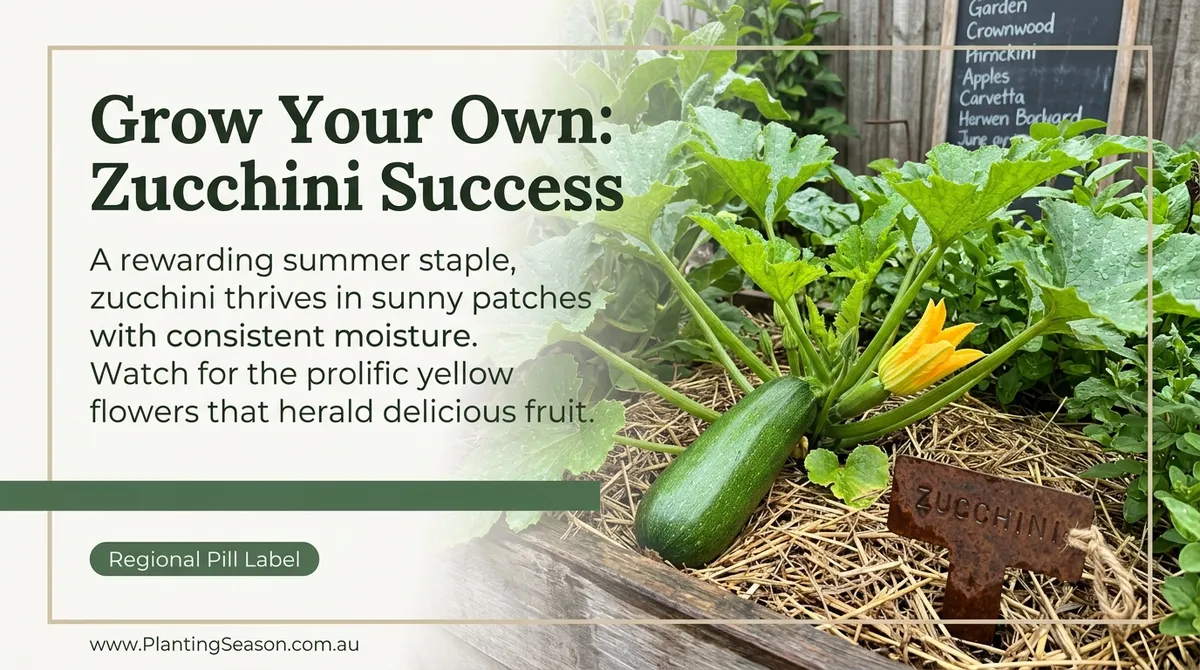
The most common reason is poor pollination. Zucchini have separate male and female flowers. Male flowers open first and often drop without producing anything. Female flowers (identifiable by the tiny zucchini behind the petals) need pollen transferred from a male flower to set fruit. More pollinators in the garden or hand-pollination solves this.
What is the best single plant to attract bees to a vegetable garden?
Borage. It flowers prolifically for months, bees can detect it from a long distance, it self-seeds so you only plant it once, the flowers are edible, and it grows happily among tomatoes and cucurbits. Lavender and rosemary are the best perennial options.
Can I attract pollinators to a balcony or apartment garden?
Yes, even a small balcony can attract bees. Potted lavender, rosemary, basil (let it flower), and borage will draw pollinators from surprising distances. For crops that need pollination on a high-rise balcony, hand-pollination is a reliable backup.
Free Monthly Planting Calendar
Get a personalised email each month with what to plant, seasonal tips, and harvest reminders for your region.
We send one email per month. Unsubscribe any time.