How to Grow Edible Flowers in Australia
Updated June 2026
Add colour to your plate and pollinators to your garden
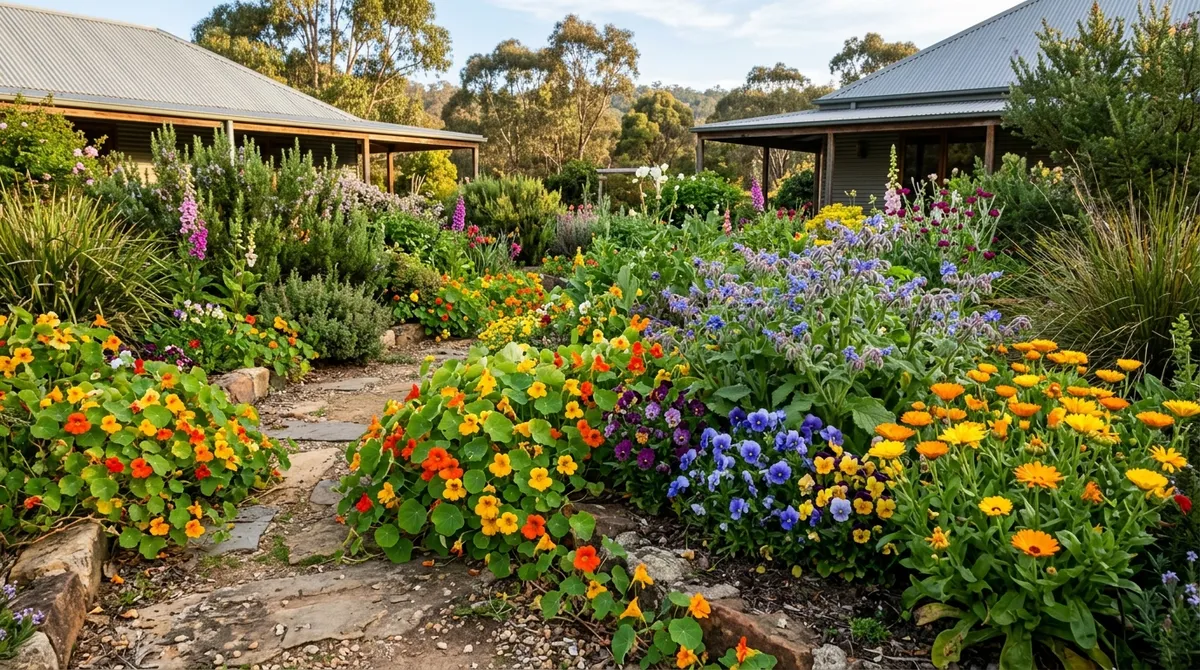
Edible flowers do double duty in the garden. They attract bees and beneficial insects that pollinate your vegetable crops, and they end up on your plate looking spectacular. Growing them is no harder than growing any other annual plant, and many self-seed so freely that one planting provides flowers for years.
This guide covers the eight best edible flowers for Australian gardens, with growing instructions, which parts you can eat, and how to use them in the kitchen. We also cover the important safety rules, because not every garden flower belongs in food.
🌱 Plants in this guide: Nasturtium, Viola, Calendula, Borage, Marigold, Lavender, Rosemary, Hibiscus and 1 more, all listed under Plant profiles at the end of this guide. Each plant profile has sowing times for your region, companion plants and common pests.
Safety First
Before we get to the flowers, some ground rules:
- Only eat flowers you have positively identified. If you are not 100% sure what it is, do not eat it. Many common garden plants are toxic.
- Never eat flowers from a florist, garden centre, or supermarket bouquet. Commercial flowers are treated with pesticides, fungicides, and preservatives that are not safe to eat.
- Only eat flowers you grew yourself or sourced from a known organic grower.
- Do not eat flowers from roadsides or public parks. They may have been sprayed with herbicides or exposed to vehicle exhaust.
- Remove stamens and pistils from larger flowers before eating. They can taste bitter and the pollen can trigger allergies.
- Wash gently in cold water and pat dry before eating.
- Try a small amount first. Even safe edible flowers can cause reactions in sensitive people.
1. Nasturtium (Tropaeolum majus)
Nasturtiums are the king of edible flowers. Every part of the plant is edible: flowers, leaves, stems, and seeds. The flavour is peppery and mustard-like, similar to watercress (they are related). Nasturtiums are also one of the easiest plants you can grow.
Growing
Direct sow seeds in spring (September to November) after the last frost. Seeds are large and easy to handle. Sow 1 cm deep, 20 cm apart. They germinate in 7 to 14 days and start flowering about 8 weeks later. Nasturtiums prefer poor soil. Rich, fertile soil produces lots of leaves but fewer flowers. Full sun gives the best flowering; part shade produces more leaves.
Culinary uses
Flowers and leaves brighten salads, sandwiches, and platters. Stuff flowers with cream cheese for an appetiser. Pickle the green seed pods in vinegar as a substitute for capers (sometimes called "poor man's capers"). Chop leaves into pestos and dips.
2. Viola and Pansy (Viola species)
Violas and pansies produce delicate, colourful flowers that are the classic cake and cocktail garnish. The flavour is mild and slightly sweet, sometimes with a hint of wintergreen.
Growing
Plant in autumn (March to May) for winter and spring flowers. Violas prefer cool weather and will flower through winter in most Australian regions. They tolerate light frost. In hot areas, they fade in summer. Grow in full sun to part shade in rich, moist soil. They work beautifully in pots and window boxes.
Culinary uses
Press into the top of frosted cakes and cupcakes. Freeze in ice cubes for cocktails. Float on soups. Candy them with egg white and sugar for a preserved garnish that lasts weeks.
3. Calendula (Calendula officinalis)
Calendula (also called pot marigold) produces bright orange and yellow daisy-like flowers. The petals have a slightly tangy, peppery flavour and can be used as a poor man's saffron to colour rice dishes, soups, and scrambled eggs.
Growing
Direct sow in autumn or spring. Calendula prefers cooler weather and flowers best from autumn through spring in warm climates and through summer in cooler areas. Full sun, average soil, moderate water. Remove spent flower heads to encourage continuous blooming. Self-seeds readily.
Culinary uses
Strip the petals from the green base (the green parts are bitter). Scatter petals over salads, rice dishes, and pasta. Dry the petals and store in a jar for year-round use as a natural food colouring. Steep in warm oil to make calendula-infused olive oil.
4. Borage (Borago officinalis)
Borage produces star-shaped flowers, usually blue and sometimes white, that taste like cucumber. It is one of the best plants for attracting bees to the vegetable garden. A single borage plant buzzes with pollinators all day long during flowering.
Growing
Direct sow in spring or autumn. Borage grows quickly to 60 to 80 cm tall and self-seeds aggressively. Give it space or be prepared to pull out seedlings. Full sun, well-drained soil. It tolerates poor soil and drought once established. Hairy leaves make it unpalatable to most pests.
Culinary uses
The flowers are the main edible part. Float in drinks (especially gin and tonic and Pimm's). Freeze in ice cubes for summer cocktails. Add to salads. The young leaves are also edible and taste cucumber-like, but the older leaves become prickly and unpleasant to eat raw.
5. Marigold (Tagetes species)
Signet marigolds (Tagetes tenuifolia) are the best species for eating. They have a citrusy, slightly spicy flavour. Standard French and African marigolds are technically edible but often taste bitter and medicinal.
Growing
Sow seeds in spring after the last frost. Marigolds love heat and flower prolifically through summer and into autumn. Full sun, well-drained soil. They make excellent companion plants in the vegetable garden, where their scent helps confuse pests.
Culinary uses
Scatter signet marigold petals over salads, rice dishes, and tacos. The citrus flavour works well in Southeast Asian and Mexican dishes. Dry the petals for tea.
6. Lavender (Lavandula species)
English lavender (Lavandula angustifolia) has the best flavour for culinary use. The flowers are intensely floral and aromatic, and a little goes a long way. Too much lavender makes food taste like soap.
Growing
Plant in spring in full sun and well-drained soil. Lavender hates wet feet and heavy clay. It thrives in dry, poor soil and is extremely drought-tolerant once established. Prune after flowering to maintain shape. Lavender is a perennial that lasts for years.
Culinary uses
Use sparingly. Add a pinch of buds to shortbread, biscuits, scones, and honey. Infuse into cream for lavender ice cream or panna cotta. Combine with lemon in cakes and drinks. Dry buds and blend into a lavender sugar for a fragrant sweetener.
7. Rosemary (Salvia rosmarinus)
Rosemary flowers are small, pale blue to purple, and taste like a milder version of the leaves. They appear in winter and spring and attract bees during a time when other flowers are scarce.
Growing
Plant in a sunny, well-drained spot. Rosemary is a Mediterranean herb that thrives in dry Australian conditions. It is a perennial shrub that can live for 15 to 20 years and needs almost no care. Do not overwater.
Culinary uses
Scatter flowers over roasted vegetables, lamb, focaccia, and salads. They add colour and a subtle herbal note. Use as a garnish anywhere you would use rosemary leaves, but with a softer flavour.
8. Hibiscus (Hibiscus sabdariffa)
Rosella hibiscus (Hibiscus sabdariffa) is the culinary species. The fleshy calyces (the red parts around the seed pod) are used to make tea, jam, and syrups. The flavour is tart and cranberry-like.
Growing
Rosella is a tropical and subtropical plant. Sow seeds in spring in warm climates (Brisbane, Darwin, Cairns). It needs a long, frost-free growing season (5 to 6 months) and does not grow well south of Sydney. Full sun, fertile soil, regular water. Plants reach 1.5 to 2 metres tall.
Culinary uses
Harvest the calyces after the petals drop and the seed pod has formed. Use fresh to make rosella jam, chutney, and syrup. Dry and use for hibiscus tea. The tart flavour works well in drinks, desserts, and sauces.
Harvesting and Storing Edible Flowers
Pick flowers in the morning after the dew has dried but before the heat of the day. This is when they are freshest and most flavourful. Use scissors or pinch stems rather than pulling, which can damage the plant.
Fresh edible flowers do not last long. Most will wilt within a few hours at room temperature. Store them in a single layer on a damp paper towel in a sealed container in the fridge. They will keep for 2 to 3 days this way.
To preserve flowers longer, dry them in a dehydrator at 35 to 40 degrees or press them between sheets of baking paper in a heavy book. Dried flowers lose some colour but retain flavour and can be stored in airtight jars for months.
Frequently Asked Questions
What are the easiest edible flowers to grow?
Nasturtiums are the easiest edible flower for beginners. They grow fast from seed, thrive in poor soil, and produce abundant flowers. Calendula, borage, and violas are also very easy. All four self-seed readily, so one planting can provide years of flowers.
Are all flower petals edible?
No. Many garden flowers are toxic. Only eat flowers you have positively identified as edible. Never eat flowers from a florist or garden centre unless you know they were grown without pesticides. Common toxic garden flowers include foxglove, oleander, lily of the valley, daffodil, and sweet pea.
How do you use edible flowers in cooking?
Edible flowers are used as garnishes on salads, cakes, and cocktails. Some have strong flavours: nasturtiums are peppery, borage tastes like cucumber, and lavender is floral and aromatic. Calendula petals can be used as a saffron substitute in rice dishes. Freeze small flowers in ice cubes for drinks.
Can I eat flowers from my garden?
Yes, provided you have identified them correctly and they have not been sprayed with pesticides, herbicides, or any chemical. Only eat flowers you grew yourself or sourced from a trusted organic grower. Wash flowers gently and pat dry before eating.
When do you plant edible flowers in Australia?
Most edible flowers are planted in spring (September to November) for summer flowering. Calendula, violas, and pansies prefer cooler weather and are best planted in autumn (March to May) for winter and spring flowers. In frost-free areas, many edible flowers grow year-round.
Plant profiles
Each profile has sowing times for your region, companion plants and common pests.