Tomato Varieties for Australia
Updated November 2026
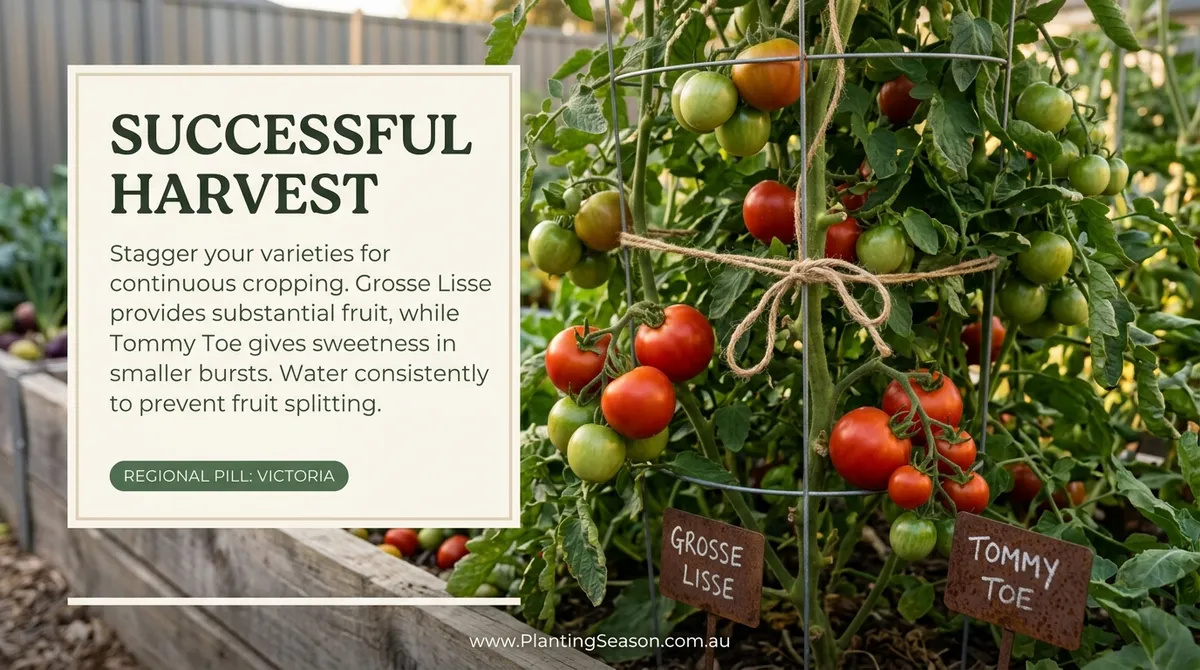
Pick the right tomato by use, plant habit, days to harvest and climate.
All our tomato guides: when to plant in your region, varieties and fixes.
There is no single best tomato, only the best tomato for what you want to do with it and where you live. This guide sorts the varieties sold in Australia as seed or seedlings by use (cherry, slicing, paste and beefsteak), by plant habit, by days to harvest and by climate, so you can choose with confidence. Once you have chosen, our how to grow tomatoes guide shows when to plant in your region and how to look after the plants.
Quick picks
- For the sweetest fruit, grow Sungold, then Sweet 100 or Tommy Toe.
- For a reliable all-rounder in any region, grow Grosse Lisse.
- For a first tomato or a pot, grow Tommy Toe, or Tiny Tim if space is tiny.
- For sauce and bottling, grow Roma, and add San Marzano for flavour.
- For heirloom flavour and colour, grow Cherokee Purple or Black Krim.
🌱 Plant profile: Tomato, with sowing times for your region, companion plants and common pests.
Determinate or indeterminate: choose the habit first
The habit decides how much space and support a tomato needs, so settle it before you look at names. Every variety in the tables below shows its habit.
| Determinate (bush) | Indeterminate (vine) | |
|---|---|---|
| Height | About 0.5 to 1 m, set by the variety | 1.8 m and taller, and it keeps growing |
| Fruiting | One concentrated flush over a few weeks | A steady pick over months, until frost or disease |
| Support | A cage or short stake | A tall stake, string trellis or strong frame |
| Pruning | Do not prune the side shoots | Remove side shoots to keep two or three stems |
| Best for | Sauce and bottling, pots and small gardens | Fresh eating, a long harvest and big fruit |
| Examples | Roma, Mighty Red, Tiny Tim, Tatura Dwarf | Grosse Lisse, Tommy Toe, Brandywine, Cherokee Purple |
If you are unsure which type you have, the seed packet or plant label will say bush, dwarf, climbing or staking. See how to prune tomatoes for what to do with each, and staking and spacing tomatoes for the supports.
Cherry tomatoes
Cherry types are the sweetest, the earliest to ripen and the most forgiving, which makes them the best first tomato. Almost all are indeterminate vines that crop for months. Our cherry tomatoes guide goes further, with a picker for colour and sweetness.
| Variety | Habit | Days to harvest | Notes |
|---|---|---|---|
| Tommy Toe | Indeterminate | 70 | An Australian heirloom. Tangy-sweet, prolific and crack resistant, and quick enough that fruit fly often cannot keep up. A South East Queensland backyard favourite and a good pick for cool climates too. |
| Sungold | Indeterminate | 65 | Glowing orange and widely named the sweetest tomato of all. A heavy cropper that is eaten straight off the vine. |
| Sweet 100 | Indeterminate | 65 | Long trusses of small, very sweet red fruit. Reliable and prolific. |
| Sweet Million | Indeterminate | 65 | An improved Sweet 100 with better crack resistance and a long season. |
| Yellow Pear | Indeterminate | 75 | Mild, sweet, pear-shaped yellow fruit that crops heavily for months. |
| Gardeners Delight | Indeterminate | 65 | A British heirloom cherry with a rich sweet-sharp flavour. |
| Black Cherry | Indeterminate | 70 | Dusky purple fruit with a deep, almost smoky flavour. |
| Tiny Tim | Determinate | About 8 weeks from transplanting | A dwarf cherry bred for pots. Diggers says the bush reaches 30 cm, while other sources give a taller plant, so check the tag. |
Slicing tomatoes
Slicers are the all-rounders for sandwiches, salads and cooking. Grosse Lisse and Money Maker are the dependable classics, and Mighty Red is the compact choice for small spaces.
| Variety | Habit | Days to harvest | Notes |
|---|---|---|---|
| Grosse Lisse | Indeterminate | 80 | The classic Australian tomato. Large, round and balanced, and reliable in every region over a long season. |
| Money Maker | Indeterminate | 75 | Sets fruit in a wide range of conditions. Smooth, medium red fruit for everyday use. |
| Mighty Red | Determinate | 70 | A compact bush that crops in a tidy flush. Suits small gardens and large pots. |
| Apollo Improved | Determinate | Not stated | A modern disease-resistant red slicer that handles South East Queensland humidity better than most. A good first tomato. |
| Green Zebra | Indeterminate | 78 | Green and gold stripes and a zingy, tart flavour. Stays green-toned when ripe, so judge ripeness by a slight give. |
Paste and sauce tomatoes
Paste tomatoes are meaty and low in juice and seeds, so they cook down into thick sauce in far less time than a salad tomato. Bush types such as Roma ripen in one flush, which suits a single bottling day. Read more in our paste tomatoes guide and how to grow Roma tomatoes.
| Variety | Habit | Days to harvest | Notes |
|---|---|---|---|
| Roma (Roma VF) | Determinate | 75 | Thick-fleshed with few seeds. Ripens in one concentrated flush, ideal for sauce and bottling. VF means resistant to verticillium and fusarium wilt. |
| San Marzano | Indeterminate | 80 | The famous Italian sauce tomato, long and meaty. Best in drier regions such as Adelaide, Perth and inland areas. |
| Amish Paste | Indeterminate | 85 | A heirloom paste with more flavour than most sauce types, in larger, slightly heart-shaped fruit. |
| Principe Borghese | Determinate | Not stated | Small, grape-sized fruit that is the classic sun-drying tomato. Works in every region with enough sun. |
| Tatura Dwarf | Determinate | Not stated | A dwarf bush with round, light red fruit for sauce and bottling. Light support helps under a heavy crop. |
Heirloom and beefsteak tomatoes
Beefsteaks are the big, meaty fruit for thick slices, and most of the best-known ones are heirlooms. An heirloom is an open-pollinated variety that has been grown and passed on for many years. If you save the seed from a well-grown plant, the next generation will come true to type, which is something you cannot do with a hybrid. The trade-off is that many heirlooms have less built-in disease resistance than modern varieties, and the big beefsteaks need a long warm season, so start them early and give them strong stakes.
| Variety | Habit | Days to harvest | Notes |
|---|---|---|---|
| Brandywine | Indeterminate | 90 | The famous pink beefsteak heirloom with rich, old-fashioned flavour. Needs a long warm season and strong staking. |
| Cherokee Purple | Indeterminate | 80 | Dusky rose-purple fruit with a deep, sweet-savoury flavour. See our Cherokee Purple guide. |
| Black Krim | Indeterminate | 80 | A dark mahogany Russian heirloom with a rich, slightly salty flavour. Stunning sliced. |
| Black Russian | Indeterminate | 80 | Deep purple-brown fruit with intense flavour. In South East Queensland an autumn sowing dodges the worst of the fruit fly. |
| Beefsteak | Indeterminate | 85 | A big, meaty red slicer for burgers and sandwiches. Needs heat, feeding and firm support. |
| Mortgage Lifter | Indeterminate | 90 | A huge pinkish-red heirloom that can reach 1 kg, with mild flavour and few seeds. A long-season giant. |
The heirlooms in the cherry and paste groups above, including Tommy Toe, Gardeners Delight, San Marzano and Amish Paste, are also grown for their flavour and seed. Seed catalogues such as Diggers, Eden Seeds and Green Harvest list many of them, and our seed saving guide explains how to keep your own.
Which tomato suits your climate?
All the varieties above can be grown in Australia, but some suit certain climates better. Use this table with the planting months for your region in our planting table.
| Climate | Regions | What suits |
|---|---|---|
| Subtropical | South East Queensland, Northern Rivers | Cherry types such as Tommy Toe, and Apollo Improved for humidity. Sow in autumn and late winter, and net the fruit against fruit fly from December to March. Black Russian does well from an autumn sowing. |
| Tropical dry season | North Queensland, Darwin and the Top End | Small-fruited types are the most forgiving of heat, and heat-tolerant varieties are essential. Grow only in the dry season. |
| Temperate | Sydney, Adelaide, Perth | Grosse Lisse, Money Maker, Roma and most of the list. San Marzano does best in the drier climates of Adelaide and Perth. |
| Cool temperate | Melbourne, Hobart, Canberra | Quick varieties such as Tommy Toe and the other early cherry types. Beefsteaks at 80 to 90 days need an early start indoors and the sunniest, most sheltered spot. |
If you are not sure which climate group you fall into, open your region's page from the What to Plant Now hub.
Understanding days to harvest
The days figure is the time from planting out a seedling to the first ripe fruit. Add six to eight weeks if you are starting from seed. Our plant data allows about 85 days for a typical tomato, and the varieties in this guide range from about 65 days for quick cherry types to about 90 for the big heirloom beefsteaks. In a short season, such as Tasmania or Canberra, favour the quicker varieties. In a long season, such as South East Queensland, you can grow any of them and may even manage a second sowing.
How to choose in five steps
- Decide what you want most: sweet snacking (cherry), everyday slicing, sauce (paste) or show-stopping flavour (heirloom beefsteak).
- Pick the habit that suits your space. Choose determinate for pots and small beds, and indeterminate if you can give tall support.
- Check the days to harvest against the length of your warm season, using the planting months for your region.
- Match the variety to your climate with the table above, and favour disease-resistant types such as Roma VF or Apollo Improved if blight or wilt has troubled your garden.
- Grow two or three different types so that something is always ripe.
Frequently asked questions
What is the easiest tomato to grow for beginners?
Tommy Toe and Grosse Lisse are the most forgiving. Tommy Toe is a heavy-cropping cherry that shrugs off heat and dry spells and often outpaces fruit fly, and Grosse Lisse is the classic reliable slicer that crops in every region.
What is the best heirloom tomato to grow in Australia?
Tommy Toe is an Australian heirloom that suits almost every climate. For flavour in a warm region, Cherokee Purple, Black Krim and Black Russian are the favourites, and Brandywine is worth trying if you have a long warm season and strong stakes.
What is the sweetest tomato?
Cherry types are the sweetest, and Sungold is the one most gardeners name as the sweetest of all. Sweet 100, Sweet Million, Tommy Toe and Yellow Pear are close behind.
What is the difference between determinate and indeterminate tomatoes?
Determinate (bush) tomatoes grow to a set size and ripen most of their fruit in a few weeks, which suits sauce and pots. Indeterminate (vine) tomatoes keep growing and fruiting until frost or disease stops them, so they need tall support and give a steady pick over months.
Which tomato is best for sauce?
Roma is the standard because it is meaty, low in seeds and ripens in one flush for a big bottling day. San Marzano and Amish Paste have more flavour and fruit over a longer season. Our paste tomatoes guide compares them.
Which tomatoes grow best in pots?
Compact determinate and dwarf types such as Tiny Tim, Tatura Dwarf and Mighty Red are the easiest, and Tommy Toe works in a large tub with a stake. Use a pot of at least 40 litres for full-size plants.
Which tomatoes cope best with humid summers?
In our data Apollo Improved handles South East Queensland humidity better than most, and Tommy Toe has strong disease resistance. Roma VF resists verticillium and fusarium wilt. Whatever you choose, space plants for airflow and water at the base.
How many tomato varieties should I plant?
Two or three is a good start: one cherry for snacking, one slicer or beefsteak for the kitchen, and a paste type if you want to make sauce. Plant them at the same time and you will have fruit over a long stretch.
See also: How to Grow Tomatoes, Tomatoes in Pots and Tomato in the Plant Library
Plant profile
The tomato profile has sowing times for your region, companion plants and common pests.