
Paste Tomatoes
Updated June 2026
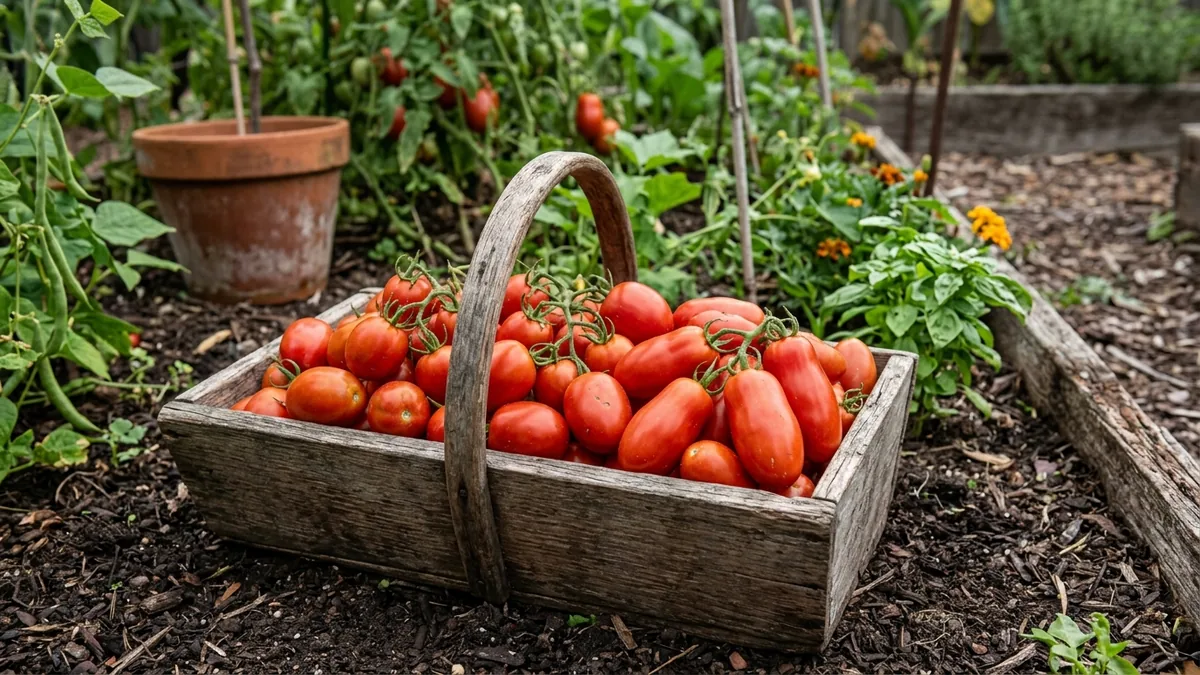
The best varieties for sauce, passata and a pantry full of bottled tomatoes
Paste tomatoes are the workhorses of the kitchen garden. They are bred to be meaty and low in moisture with few seeds, so they cook down fast into a thick, rich sauce rather than a thin, watery one. If your goal is a shelf of bottled tomatoes and jars of passata to see you through the year, this is the family of tomatoes you want.
This guide covers why paste tomatoes are different, which varieties to choose for sauce, how to grow them for a big batch that ripens together, and how to dodge the few problems that catch growers out. Use the variety picker below to find the right paste tomato for your patch.
Paste Tomato Variety Picker
Tell the tool what matters most to you and it will suggest a proven paste variety to grow. Every option below is a real tomato sold in Australia as seed or seedlings.
Which paste tomato should I grow?
For a calendar tuned to your exact spot, use Find My Region or open the Planting Season app and pick your variety from the dropdown.
Why Grow Paste Tomatoes
The difference between a paste tomato and a salad tomato is all in the flesh. Paste types are bred to be meaty and dense, with thick walls, very little juice and few seeds. That low moisture content is the whole point. When you cook a paste tomato down, there is far less water to drive off, so it reduces quickly into a thick, sweet, rich sauce.
Try the same thing with a watery salad or slicing tomato and you will be simmering for hours to get the same body, ending up with a thinner, seedier result and a fraction of the yield. That is why paste tomatoes are the traditional choice for passata, bottling, sauce, paste and slow-roasting. They are the right tool for the preserving job.
Determinate vs Indeterminate for Sauce
How a paste tomato grows changes how you harvest and preserve it, so it pays to know the habit before you plant.
Roma and Roma VF are determinate. They grow as compact bushes that set most of their fruit at once and ripen it in a concentrated flush over a couple of weeks. This is exactly what you want for a single bottling day, when you process a big batch in one go rather than dribs and drabs.
San Marzano, Amish Paste and Speckled Roman are indeterminate. They grow as taller vines that keep flowering and fruiting over a long season, giving you a staggered pick rather than one flush. That suits smaller, more frequent batches and brings extra flavour to the table, but it means the harvest is spread out rather than landing all at once.
Growing for a Big Batch
If your aim is a pantry full of sauce, plan for it at planting time. Grow several bush plants of a determinate variety like Roma together so they ripen at the same time and you can bottle in one or two big sessions instead of saving up small handfuls.
- Full sun: give them at least 6 to 8 hours of direct sun a day for a heavy, even crop.
- Rich soil: dig in plenty of compost and aged manure before planting. Paste tomatoes are hungry.
- Even water: keep soil moisture steady to avoid blossom end rot and to set fruit reliably.
- Mulch: a thick straw or sugar cane mulch keeps roots cool and buffers soil moisture.
- Support: stake or cage even determinate bushes, as a heavy crop of paste fruit will pull them over.
- Plant together: group several of the same variety so they flush as one for an easy bottling day.
Watering and Feeding
Even, consistent watering is the most important thing you can do for a paste tomato. Irregular watering is the main cause of blossom end rot, and while paste types crack far less than big slicers, steady moisture still gives you cleaner, more even fruit. Water deeply at the base of the plant, keep the soil evenly moist, and let mulch do the buffering between waterings.
Feed with compost and aged manure at planting for early growth, then switch to a potassium-rich tomato fertiliser once the first flowers appear, feeding every one to two weeks through fruiting. Ease off the nitrogen once flowering starts, or you will grow a leafy green bush and few tomatoes.
Common Problems
Blossom end rot
A dark, sunken patch on the base of the fruit, caused by a calcium shortage in the developing tomato that is almost always triggered by uneven watering rather than a lack of calcium in the soil. Paste types can be prone to it. Water deeply and regularly, mulch to hold steady moisture, and it usually clears up on later fruit.
Cracking
Splits in the skin after rain or a heavy soak following a dry spell. This is far less of an issue in paste tomatoes than in big slicers, because the dense, thick-walled fruit swells more slowly. Even watering and a good mulch keep it to a minimum.
Fruit fly
In Southeast Queensland and Northern New South Wales, Queensland fruit fly can sting ripening tomatoes and ruin the crop. Net plants, use traps and baits, pick fruit promptly as it colours, and never leave fallen or affected fruit lying around. See our pest and disease guide for control options.
Best Paste Tomato Varieties
These are the proven paste and sauce tomatoes for an Australian garden. All are real, widely grown varieties.
| Variety | Habit | Days | Note |
|---|---|---|---|
| Roma | Determinate | 75 | The standard paste tomato. Thick-fleshed with few seeds, ripens in a concentrated flush, ideal for a big batch of sauce. |
| San Marzano | Indeterminate | 80 | The famous Italian sauce tomato. Long, meaty, low-moisture fruit that cooks down into a rich passata. |
| Amish Paste | Indeterminate | 85 | Heirloom paste with more flavour than most. Larger, slightly heart-shaped fruit, excellent cooked down into a rich sauce. |
| Speckled Roman | Indeterminate | 85 | Striking red-and-gold striped meaty paste. As flavoursome as it is beautiful, a standout for the kitchen. |
| Roma VF | Determinate | 75 | Disease-resistant improved Roma with verticillium and fusarium resistance. The most reliable paste bush in humid gardens. |
Region and Season Notes
Paste tomatoes are frost-tender, so plant them out after the last frost has passed and the soil has warmed. Your window depends on your climate.
- Cool temperate (Melbourne, Hobart, Canberra): plant out from October to November once frost is gone. Start seed indoors in late winter to get a head start.
- Temperate (Sydney, Adelaide, Perth): plant out from September to November for a summer crop and a late-summer bottling.
- Subtropical (Brisbane, Northern NSW): a long planting window from late winter through spring. Aim to have fruit ripening before the wettest, most humid months.
- Tropical (Darwin, Far North QLD): grow through the dry season, roughly April to August, when humidity and disease pressure are lower.
For a planting calendar tuned to your exact location, see our full tomato growing guide or use Find My Region.
Plan Your Sauce Crop in the App
Add a paste tomato to your garden, pick the variety from the in-app dropdown, and get reminders for sowing, transplanting, feeding and harvest tuned to your region, so your big bottling batch lands when you want it.
Open the App →Plan Your Varieties in the App
This guide helps you choose the right paste tomato. The Planting Season app helps you grow it. When you add a tomato to your garden you can choose Roma, San Marzano, Amish Paste, Speckled Roman or Roma VF from the in-app variety dropdown, and the app tracks each one from sowing through to harvest with reminders tuned to your region. Pair a paste type for the kitchen with a cherry tomato for snacking and keep them all on one plan.
Frequently Asked Questions
What is the best paste tomato for sauce?
Roma is the standard paste tomato and the easiest place to start. It is a compact determinate bush with thick flesh and few seeds that ripens in a concentrated flush, perfect for a single big batch of sauce. For more flavour try Amish Paste or San Marzano, and for disease resistance choose Roma VF.
Roma vs San Marzano, which should I grow?
Roma is a determinate bush that ripens its crop in one flush, ideal when you want to bottle on a single day. San Marzano is a taller indeterminate vine that produces long, meaty, low-moisture fruit over a longer season and is famous for rich passata. Grow Roma for a fast, concentrated harvest and San Marzano for flavour and a staggered pick.
Are paste tomatoes determinate?
Some are. Roma and Roma VF are determinate bushes that ripen one big flush, which is great for a single bottling day. San Marzano, Amish Paste and Speckled Roman are indeterminate vines that fruit over a longer season for a staggered pick. Choose the habit that matches how you like to preserve.
Can you eat paste tomatoes fresh?
Yes, you can. Paste tomatoes are meaty and low in moisture with few seeds, so they are firm and a little drier than a salad tomato but still good sliced, roasted or in a salad. Most gardeners grow them mainly for sauce and bottling and grow a separate slicer or cherry type for fresh eating.
How many plants do I need for a year of sauce?
As a rough guide, six to ten healthy paste plants will give a small household enough passata and bottled tomatoes for the year, depending on how much you cook. Planting several determinate bushes like Roma together means they ripen at once, so you can bottle a big batch in one or two sessions.
Why are paste tomatoes better for passata?
Paste tomatoes are meaty and low in moisture with few seeds, so they cook down fast into a thick, rich sauce without hours of simmering to drive off water. Watery salad types make a thin, seedy passata that needs much longer reducing, which is why dedicated paste varieties are the traditional choice for sauce and bottling.
How do I stop blossom end rot on paste tomatoes?
Blossom end rot is a dark, sunken patch on the base of the fruit caused by a calcium shortage in the developing tomato, which is almost always triggered by uneven watering rather than a lack of calcium in the soil. Water deeply and consistently, mulch to hold steady moisture, and it usually clears up on later fruit.
See also: How to Grow Tomatoes, Passata and Bottling and Tomato in the Plant Library