
Cherokee Purple Tomato
Updated June 2026
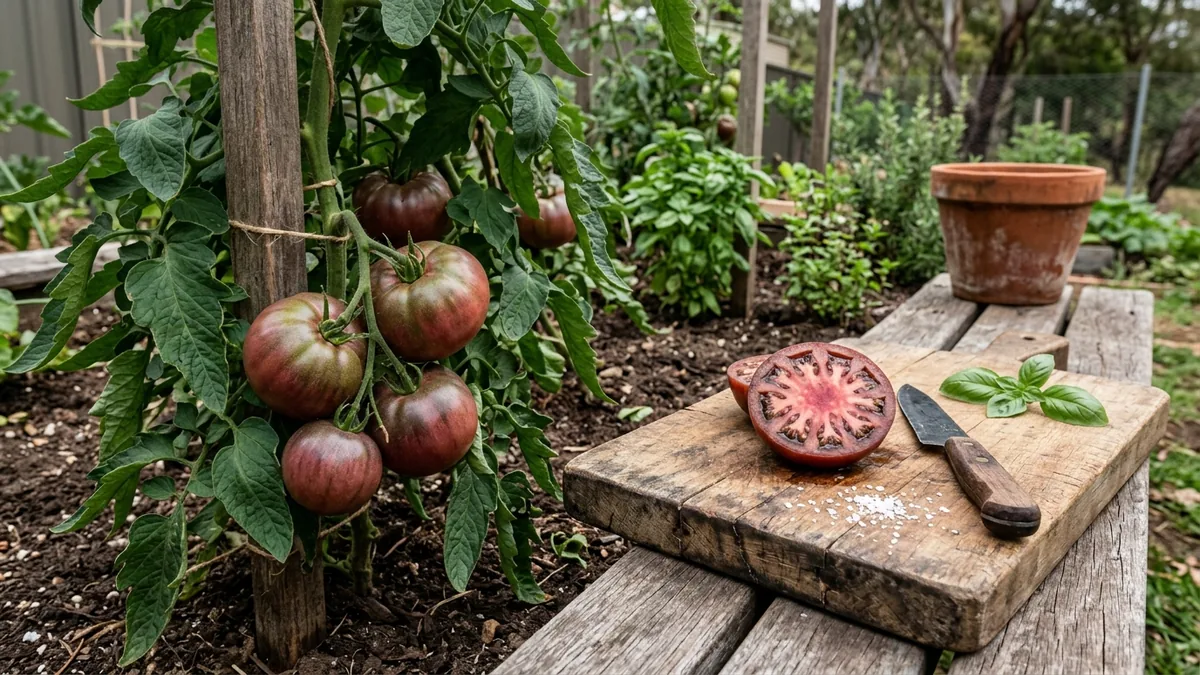
How to grow the famous dusky-purple heirloom beefsteak, from seed to your first warm slice
Cherokee Purple is the tomato that converts people. It is a large heirloom beefsteak with dusky rose-purple skin, green-tinged shoulders, and a flavour most gardeners rank among the best they have ever tasted. It carries a story too, said to have been handed down through generations before being shared with seed savers in the 1990s, and it has been a heritage favourite ever since.
This guide covers what makes Cherokee Purple special, how to grow it well in an Australian garden, and how to save its seed so you can grow it free every year. Use the seed starting timing calculator below to work out exactly when to sow indoors and when to plant out for your part of the country.
Seed Starting Timing Calculator
Cherokee Purple is frost-tender and best started indoors for a head start. Tell the tool roughly when your last frost passes, or pick your climate if you are not sure, and it will work out when to sow indoors and when to transplant.
When should I start my seeds?
These are guides, not hard dates. For a calendar tuned to your exact spot, use Find My Region or open the Planting Season app.
Flavour and Uses
Cherokee Purple is grown for flavour above all. It is deeply sweet and savoury at once, with a smoky, almost wine-like richness and low acidity. The flesh is soft, juicy and meaty, the classic eating quality of a great beefsteak.
This is a tomato for fresh eating. Thick slices on sourdough with salt and good oil, a tomato sandwich, a simple caprese, or a plate of mixed heirloom slices are where it shines. It is too soft and too good to waste on long cooking, so leave the sauce making to paste varieties and enjoy Cherokee Purple raw and warm off the vine.
Habit and Days to Maturity
Cherokee Purple is an indeterminate heirloom, which means it grows as a vine and keeps flowering and fruiting over a long season rather than ripening one flush. Expect a tall, sprawling plant that will easily pass head height if you let it, so it needs proper support from day one.
It takes around 80 to 90 days from transplanting to the first ripe fruit, putting it in the mid to late season. Add 6 to 8 weeks if you are starting from seed. Because it needs a long warm stretch, gardeners in short-season areas should start it early indoors and give it the sunniest, most sheltered spot they have.
How to Grow Cherokee Purple
Cherokee Purple wants the same things as any beefsteak, just a little more patience. Give it full sun, at least 6 to 8 hours a day, and rich, well-drained soil. Dig in plenty of compost and aged manure before planting, since heirloom beefsteaks are hungry plants.
Plant seedlings deep, burying the stem up to the first set of leaves so it can grow extra roots and anchor a stronger plant. Space plants about 60 cm apart to give each vine room and airflow. Water in well and mulch thickly with straw or sugar cane to keep the roots cool and the soil moisture even.
Support
Stake or frame Cherokee Purple at planting time, not later, so you do not damage the roots. Use a tall, sturdy stake of at least 1.8 m driven well into the ground, or a strong tomato frame or string trellis. The fruit is heavy and the vine is vigorous, so flimsy support will not hold it.
Tie the main stem to the support with soft ties as it grows, and remove the side shoots (suckers) that form in the leaf axils to keep the plant open and productive. See our pruning tomatoes guide for how to do it.
Watering and Feeding
Even, consistent watering is the single most important thing with a big heirloom. Irregular watering is the main cause of both blossom end rot and fruit cracking, and Cherokee Purple is more prone to cracking than small types because the large fruit swells fast. Water deeply at the base of the plant, keep the soil evenly moist, and let mulch do the buffering.
Feed with compost and aged manure at planting for early growth, then switch to a potassium-rich tomato fertiliser once the first flowers appear, feeding every one to two weeks through fruiting. Ease off nitrogen once flowering starts, or you will get a leafy green bush and few tomatoes.
Common Problems
Blossom end rot
A dark, sunken patch on the base of the fruit, caused by a calcium shortage in the developing tomato that is almost always triggered by uneven watering rather than a lack of calcium in the soil. Water deeply and regularly, mulch to hold steady moisture, and it usually clears up on later fruit.
Fruit cracking
Splits in the skin after rain or a heavy soak following a dry spell, when the fruit swells faster than the skin can stretch. Water evenly, mulch well, and pick fruit promptly once it starts to colour, especially before forecast rain.
Telling when it is ripe
Cherokee Purple ripens to a dusky rose-purple with green shoulders that never fully redden, which fools first-time growers into picking late or waiting forever. Go by the colour shift and a gentle give to the touch, not by waiting for uniform red.
Saving Cherokee Purple Seed
Cherokee Purple is open-pollinated, so seed saved from your fruit comes true to type next year, as long as it was not crossed by another variety flowering nearby. Saving your own seed is one of the great pleasures of growing heirlooms, and it is easy.
- Choose a fully ripe, healthy fruit from a strong plant.
- Scoop the seeds with their surrounding gel into a jar and add a splash of water.
- Leave it to ferment for 2 to 4 days, stirring daily. The gel breaks down and viable seeds sink.
- Rinse the good seeds clean, spread them on a plate or paper to dry fully.
- Store dry seeds in a labelled paper envelope somewhere cool and dark. They stay viable for several years.
For more detail across all your crops, see our seed saving guide.
Similar Heirlooms to Try
If you love Cherokee Purple, these rich heirlooms belong in your patch too. All are real, widely grown open-pollinated varieties.
| Variety | Colour | Flavour note |
|---|---|---|
| Brandywine | Pink | The classic old-fashioned beefsteak. Big, rich, deeply flavoured. Needs a long warm season. |
| Black Krim | Dark mahogany | Russian heirloom with rich, slightly salty, complex flavour. Stunning sliced for sandwiches. |
| Paul Robeson | Dusky brick-red | Famous smoky, almost savoury dark tomato. A cult favourite for depth of flavour. |
| Black Russian | Purple-brown | Deep, complex flavour and beautiful in salads. Best eaten fresh rather than stored. |
Grow Cherokee Purple in the App
Add Cherokee Purple to your garden, pick it from the in-app variety dropdown, and get reminders for sowing, transplanting, feeding and harvest tuned to your region.
Open the App →Plan Your Varieties in the App
This guide helps you choose Cherokee Purple. The Planting Season app helps you grow it. When you add a tomato to your garden you can choose Cherokee Purple from the in-app variety dropdown, and the app tracks it from sowing through to harvest with reminders tuned to your region. Pair it with a cherry tomato for snacking and a paste type for the kitchen, and keep them all on one plan.
Frequently Asked Questions
What does a Cherokee Purple tomato taste like?
Cherokee Purple has one of the richest flavours of any tomato. It is deeply sweet and savoury at the same time, with a smoky, almost wine-like complexity and low acidity. Most people who try a vine-ripe one rank it among the best tomatoes they have eaten, which is why it is a connoisseur favourite for slicing fresh.
Is Cherokee Purple determinate or indeterminate?
Cherokee Purple is indeterminate, meaning it grows as a vine and keeps producing fruit over a long season rather than ripening one flush. It needs a tall stake or a sturdy frame, regular tying, and removal of side shoots to keep it manageable and productive.
How long does Cherokee Purple take to grow?
Cherokee Purple takes about 80 to 90 days from transplanting to the first ripe fruit. Add 6 to 8 weeks if you are starting from seed indoors. It is a mid to late season heirloom, so give it a long warm stretch to ripen well.
How do I stop Cherokee Purple tomatoes from cracking?
Cracking is caused by uneven watering, where the fruit swells faster than the skin after rain or a heavy soak following a dry spell. Water deeply and consistently, mulch well to buffer soil moisture, and pick fruit promptly once it starts to colour, especially before forecast rain. Large heirlooms like Cherokee Purple are more prone to it than small types.
How do I know when a Cherokee Purple is ripe?
A ripe Cherokee Purple turns a dusky rose-purple with green-tinged shoulders that never fully redden, which can fool first-time growers. Go by feel and colour shift rather than waiting for a uniform red. The fruit should give slightly to a gentle squeeze and come away from the vine with a light twist.
Can I save Cherokee Purple seed?
Yes. Cherokee Purple is an open-pollinated heirloom, so seed saved from your fruit grows true to type next season as long as it was not cross-pollinated by another nearby variety. Scoop the seeds with their gel, ferment them in a little water for a few days, rinse, dry, and store in a labelled paper envelope.
What are some tomatoes similar to Cherokee Purple?
If you love Cherokee Purple, try other rich dark heirlooms: Black Krim, a salty-sweet Russian beefsteak, Paul Robeson, a famously smoky dark tomato, and Black Russian. For a pink heirloom with classic old-fashioned flavour, grow Brandywine.
See also: How to Grow Tomatoes and Tomato in the Plant Library