
Green Tomatoes: How to Ripen Them, and What to Do with the Rest
Updated November 2026
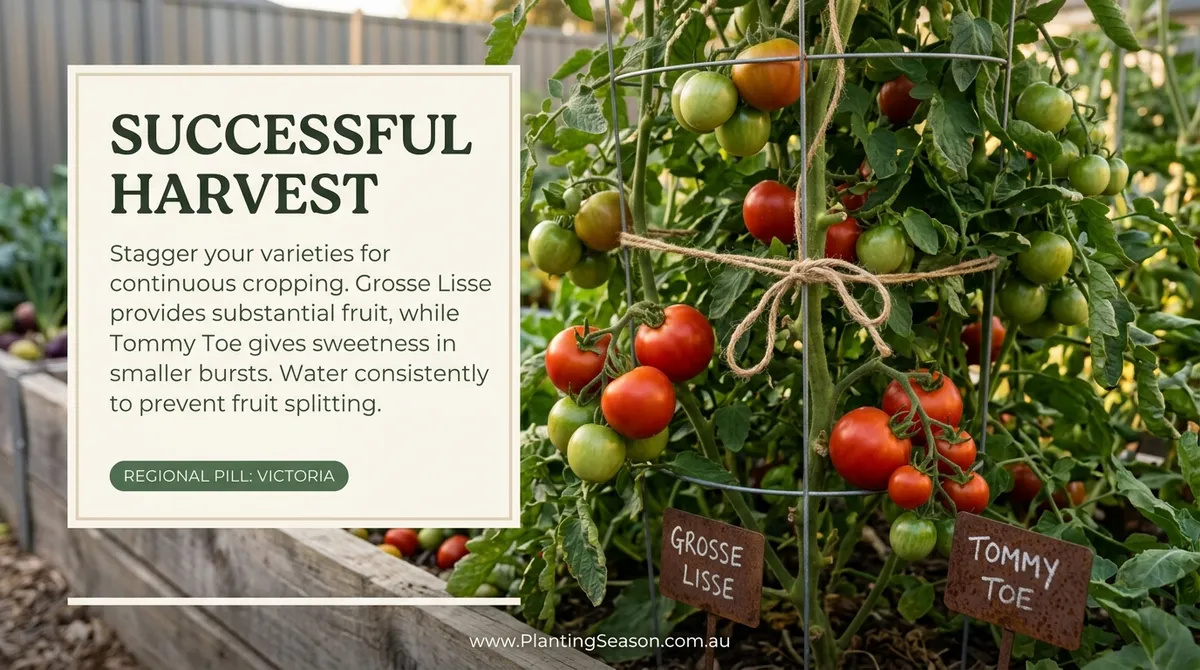
Ripen them indoors, save the plant before frost, or cook the lot.
Tomatoes stay green when the plant has fruit it cannot ripen in time, usually because nights have turned cool, the days have shortened or the plant has been under heat stress. The fruit is not spoiled. Most of it can be ripened indoors, cooked into relish, chutney, fried slices or a spiced cake, or left on the vine a little longer if frost is not due.
What to do with green tomatoes: pick fruit that has a pale, glossy green skin and bring it indoors to ripen at room temperature, in a single layer or in a paper bag with a banana. Cook the dark, hard green fruit in relish, chutney or fried slices. Pick everything, or pull the whole plant, before the first frost.
Why tomatoes stay green
A tomato makes its red colour only inside a fairly narrow temperature band. Ripening slows right down once temperatures fall below roughly 12 to 13 degrees, and the red pigment forms poorly when days sit above about 30 degrees. That is why green fruit shows up at both ends of the season: in autumn in the cool regions, and in the middle of a hot summer in places like Adelaide and the inland.
The common causes are these:
- End of season. Fruit set late in the season simply does not have enough warm days left to colour. A plant can carry dozens of full-size green fruit when autumn arrives.
- Cool nights. Fruit that was nearly ripe can stall for weeks when nights drop into single digits.
- Heat. In a long run of days above 30 degrees, fruit can hang on the vine without colouring. It usually turns when the weather eases.
- A slow variety. Large beefsteak and heirloom types take longer from flower to ripe fruit than cherry types. Our tomato varieties guide lists the quicker choices.
- Too much shade or too many leaves. Fruit ripens fastest when it is warm. A heavily shaded plant gives fruit that is cooler than the air around it.
Plenty of green fruit is a sign of a healthy, productive plant that ran out of season. It is a different problem from flowers dropping or fruit failing to form, which is covered in why tomato flowers do not make fruit.
When the end of the season arrives in your region
How much green fruit you are left with depends on how long you have between the last spring frost and the first autumn frost. The dates below come from our frost dates page and are typical figures, so your own garden can differ by a week or two.
| Region | Typical first autumn frost | What it means for green fruit |
|---|---|---|
| Canberra and ACT | 10 April | The shortest season of our regions. Expect a lot of green fruit by early April. |
| Tasmania | 25 April | Plan to pick the plant out by mid April and ripen indoors. |
| Melbourne and Victoria | 15 May | Cool nights from April stall ripening well before frost arrives. |
| Adelaide and SA | 1 June | A long season, but late fruit still stalls in May. |
| Sydney, Perth, Northern Rivers, South East Queensland, North Queensland, Darwin | Frost free | No frost deadline. Green fruit is usually caused by heat, a slow variety or a very late planting. |
In the subtropics and tropics the picture is reversed. In South East Queensland and the Northern Rivers our data has tomatoes going in during late summer and again in late winter, and in Darwin and North Queensland the main season is the dry months. Green fruit there usually means a hot, humid spell stalled the colour, and it normally turns once the weather settles. For the full table, see the sowing months further down.
Ripening green tomatoes indoors
Fruit that has reached full size and has started to lose its deep green, becoming pale green or slightly whitish with a glossy skin, will usually colour up after picking. Small, hard, dark green fruit often will not ripen well and is better cooked.
The Royal Horticultural Society suggests picking the fruit and ripening it somewhere warm and dark, or putting the fruit in a drawer with a banana. Here is a method that works on the same principle:
- Pick the fruit with its small green calyx (the star at the stem end) still attached where you can, and wipe off soil. Do not wash it, because damp skin rots.
- Discard anything split, bruised, soft or spotted. One rotting fruit spreads quickly in a closed space.
- Place the fruit in a single layer in a shallow box or tray lined with newspaper, with the fruit not touching. Alternatively, put six to eight fruit in a paper bag.
- For a quicker result, add a ripe banana to the bag or box. Bananas and ripening tomatoes both give off ethylene, a gas that signals fruit to ripen, so the banana speeds things along.
- Keep the box somewhere at room temperature, roughly 18 to 22 degrees, out of direct sun. A kitchen cupboard or a shelf in the laundry suits.
- Check every day. Remove ripe fruit and any fruit showing mould or soft patches. Expect most fruit to colour within one to three weeks.
Avoid the fridge, which stops ripening and dulls the flavour of fruit that has ripened. A sunny windowsill is a poor choice as well, because the fruit gets hot, wrinkles and goes soft before it colours. Fruit ripened off the vine will usually be less sweet than fruit that coloured on the plant, which is why it suits cooking and sandwiches better than a salad.
If you live in a fruit fly region, do not leave rotten fruit in the garden or the compost. Our fruit fly page covers how to deal with it.
The frost night rescue
Tomatoes are frost tender. One frost can blacken the leaves and ruin the fruit, so when the forecast shows a clear, still night with a minimum close to 2 degrees, act that day.
- Pick the fruit. Pick everything that has full size and some colour change first. Then pick the smaller green fruit if you want it for relish.
- Or pull the whole plant. Lift the plant out by the roots, shake off the soil and hang it upside down in a shed, garage or covered verandah. The fruit keeps ripening on the plant for a couple of weeks, and you pick as it colours. This is easier than handling dozens of loose fruit.
- Or cover the plants. If a single frost is forecast and warm days follow, a frost cloth or old sheets draped over a frame overnight can buy another fortnight. Remove the covers in the morning. Our frost protection guide explains the methods.
Plants in pots can be moved under cover, which is one of the main reasons to grow tomatoes in containers in cool regions. See tomatoes in pots.
What to do with the green fruit that will not ripen
Whatever is left once you have ripened the best fruit is good cooking material. Green tomatoes are firm and tart, and they hold their shape when cooked.
Relish and chutney
This is the usual home for a big pick of green fruit. Green tomato chutney and relish use a lot of fruit, keep for many months and need only basic equipment. Our tomato relish and chutney page has quantities and the steps for the batch, including the acid and jar rules, so follow that rather than improvising. For general bottling and storage rules, see preserving tomatoes.
Fried green tomatoes
Slice the fruit about 1 cm thick, dip the slices in beaten egg, coat them in seasoned flour, cornmeal or breadcrumbs, and shallow fry in oil until golden on both sides. Drain on paper and eat hot. Salt the slices and leave them for ten minutes before coating if they are very wet.
A simple green tomato cake or loaf
Green tomatoes work in a spiced cake the way grated carrot or zucchini does. Grate or finely chop the fruit, cook it briefly with sugar until soft, then fold it into a standard spiced fruit loaf or cake batter with cinnamon, mixed spice and sultanas. The tomato disappears into the crumb and keeps the cake moist. Any tested fruit cake recipe that uses a cooked fruit pulp as its base can take cooked green tomato in place of apple.
Other uses
- Roast thick wedges with oil and salt until the edges colour.
- Slice into a curry or a stew in place of ripe tomato, for a sharper taste.
- Make a green tomato salsa by cooking the chopped fruit with onion and chilli.
Green when ripe versus unripe fruit
Some tomatoes stay green or turn only partly red when they are completely ripe, so check the variety before you give up on a fruit. A ripe green tomato feels slightly soft when squeezed gently, has a mild give at the blossom end, and usually shifts from a flat green to a yellowish or translucent green with a faint blush. Varieties such as Green Zebra and Green Grape are sold as green-when-ripe types. Check the seed seller's variety page, for example at Diggers or Eden Seeds, for what each variety does when ripe.
An unripe tomato is different. It is hard, a dull or dark green, and often has a slight shine from the waxy skin that does not give when squeezed. If a fruit is firm and the same flat green all over, treat it as unripe.
Are green tomatoes safe to eat?
Unripe green tomatoes contain tomatine, a glycoalkaloid related to the solanine found in green potatoes. The amount drops as the fruit ripens. Fried or pickled green tomatoes are a traditional food and moderate amounts appear to cause no notable effects, but the compound has been studied mostly in laboratory animals, so no exact safe level has been set for people. The sensible approach is to eat green tomatoes cooked, in normal serving sizes, and to leave bitter or very hard fruit out of the pot. Do not eat tomato leaves or stems. If you are unsure about a particular food, ask a pharmacist or doctor.
Start earlier next season so fewer fruit are left green
The simplest fix for a heavy pick of green fruit is to get the plant going earlier, so fruit has the warm months to ripen. These are the sowing months from our data for each region. Sow indoors early in the window and plant out once nights are reliably warm.
| Region | Sowing months |
|---|---|
| South East Queensland | Feb to Apr and Aug to Sep |
| Northern Rivers NSW | Feb to Apr and Aug to Sep |
| Sydney & Coastal NSW | Jul to Nov |
| Melbourne & Victoria | Aug to Dec |
| Adelaide & SA | Aug to Nov |
| Perth & WA | Jul to Oct |
| Tasmania | Aug to Oct |
| Canberra & ACT | Oct to Nov |
| North Queensland | Apr to Sep |
| Darwin & Top End | Apr to Jul |
Tomatoes usually take about 85 days from sowing to the first harvest, so count back from your first autumn frost date. In cool regions, choose quick varieties, remove the growing tip about six weeks before the first frost so the plant puts its effort into ripening existing fruit, and pick off late flowers that will not have time to mature. Our tomato growing guide and tomato plant profile have more on timing, and growing tomatoes from seed covers starting early indoors.
Questions
Can green tomatoes ripen off the vine?
Yes, if they have reached full size and are starting to pale. Keep them at room temperature out of direct sun, and check every day. Small, hard, dark green fruit often does not ripen well and is better cooked.
How do I ripen green tomatoes quickly?
Put them in a paper bag or box with a ripe banana, which gives off ethylene gas, and keep them somewhere around 18 to 22 degrees. Check daily and remove any soft or mouldy fruit.
Should I put green tomatoes in the fridge?
No. Cold stops ripening and spoils the fruit that does ripen. Store them at room temperature.
Should I pull the plant or pick the fruit before a frost?
Either works. Picking gives you loose fruit to sort. Pulling the whole plant and hanging it upside down under cover lets the fruit keep ripening on the plant for a couple of weeks.
What can I make with green tomatoes?
Relish, chutney, fried slices, roasted wedges, a green tomato salsa or a spiced cake or loaf. Our tomato relish and chutney page has a tested batch recipe.
Are green tomatoes poisonous?
Unripe tomatoes contain tomatine, a compound related to solanine, and the level falls as the fruit ripens. Fried and pickled green tomatoes are a traditional food. Eat them cooked, in normal amounts, and avoid bitter fruit, leaves and stems.
Sources
- Royal Horticultural Society: grow your own tomatoes
- Tomatine, with references to toxicity studies (Wikipedia)
- National Center for Home Food Preservation
Plant profile
The tomato profile has sowing times for your region, companion plants and common pests.