Preserving Tomatoes at Home
Updated June 2026
Turn a summer glut into a year's supply of passata, sauce, dried tomatoes, and frozen bases.
All our tomato guides: when to plant in your region, varieties and fixes.
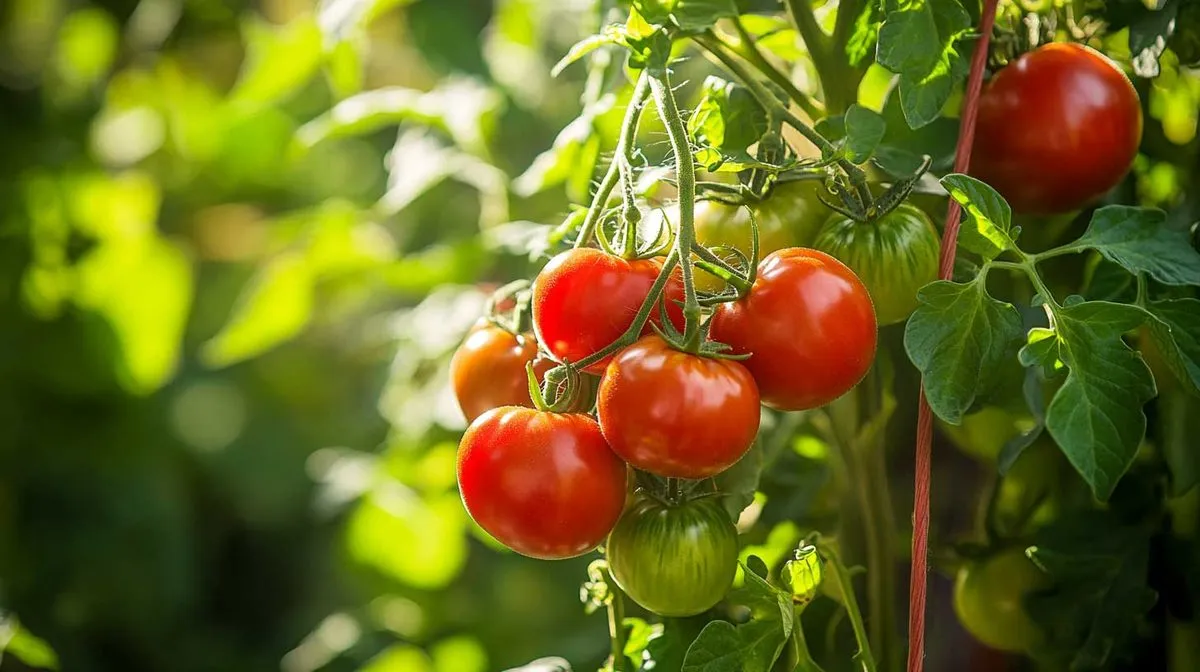
If you grow tomatoes, you know the pattern: nothing for months, then suddenly every plant delivers at once. You're eating them fresh, giving them away, and still can't keep up. This guide covers four reliable methods for preserving your tomato harvest so nothing goes to waste and you have homegrown tomato flavour in the kitchen year-round.
🌱 Plant profile: Tomato, with sowing times for your region, companion plants and common pests.
Method 1: Passata (Tomato Puree)
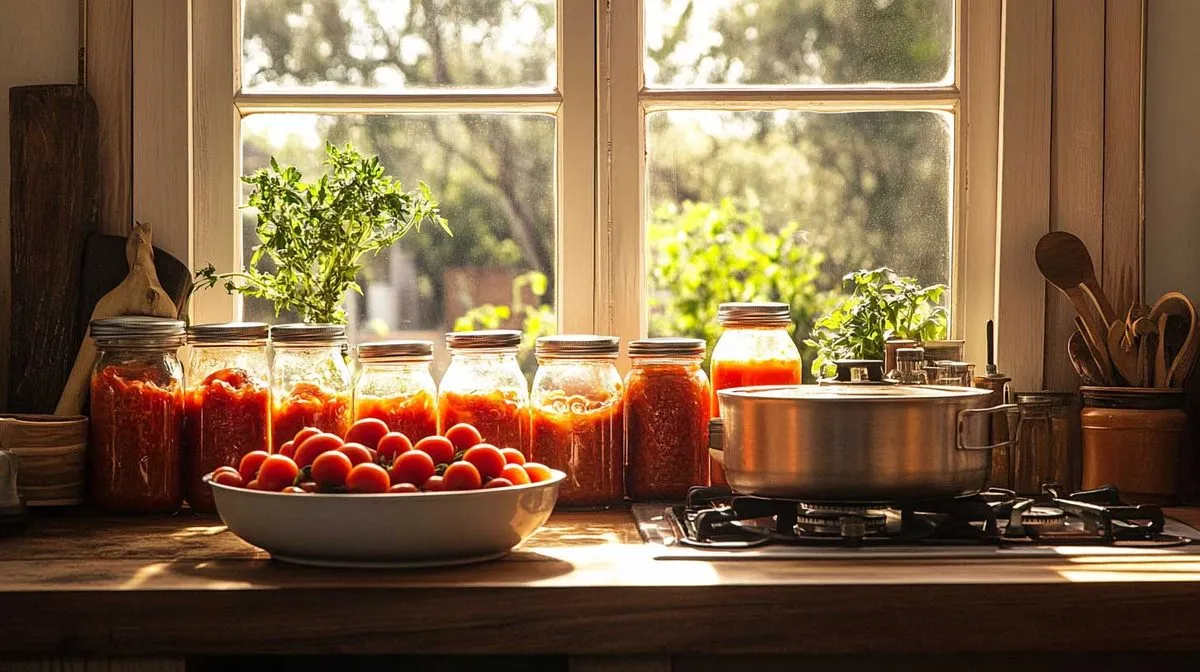
Passata is the foundation. It's smooth, pourable tomato puree that you use as a base for pasta sauce, soup, stews, and pizza. A batch of passata in the pantry replaces every tin of crushed tomatoes you'd buy from the supermarket.
How to make passata
- Wash and core tomatoes. No need to peel. Roma varieties are ideal because they have thick flesh and low water content. Any ripe tomato works, but watery varieties produce thinner passata.
- Cook down. Roughly chop tomatoes and cook in a large pot over medium heat for 20 to 30 minutes, stirring occasionally, until soft and broken down. No water needed. Tomatoes release plenty of liquid.
- Pass through a food mill or sieve. This removes seeds and skin, giving you a smooth puree. A food mill (mouli) is the traditional tool and works fast. A fine sieve and wooden spoon works too.
- Add acid, then bottle hot. Put measured acid in each sterilised jar first: 30 ml of bottled lemon juice or half a teaspoon of citric acid for a 500 to 750 ml jar, or 15 ml or a quarter teaspoon for a 250 ml jar. Bottled juice, not fresh, because its acidity is consistent. Pour in the hot passata, leave 1 cm headspace, seal and process in a boiling water bath for 35 to 40 minutes. The acid is what keeps botulism out of the jar, so never skip it. Our passata and bottling guide has the full method and an acid calculator.
Yield: 5 kg of fresh tomatoes produces roughly 2 to 2.5 litres of passata.
Method 2: Oven-Roasted Tomato Sauce
This is the lazy method and it produces the richest, most concentrated sauce. No stirring, no watching the pot.
- Halve tomatoes and place cut-side up on lined baking trays. Drizzle with olive oil, scatter with garlic cloves and fresh herbs (basil, oregano, thyme).
- Roast at 160 degrees for 2 to 3 hours until tomatoes are collapsed, caramelised, and reduced by half.
- Blend. Transfer everything (including the garlic and herbs) to a blender and process until smooth. Season with salt.
- Freeze in portions. Pour into labelled zip-lock bags or containers. Freeze flat for easy stacking. Keeps for 12 months.
Method 3: Sun-Dried (or Dehydrator-Dried) Tomatoes
Sun-dried tomatoes concentrate flavour dramatically. They're chewy and intensely savoury, and they keep for months stored dry in an airtight jar or in the freezer.
- Halve small tomatoes (Roma, Principe Borghese, or cherry varieties work best). Place cut-side up on wire racks.
- Sprinkle with salt. This draws out moisture and acts as a preservative.
- Dry in sun for 2 to 4 days (bring racks inside at night). Or use a dehydrator at 60 degrees for 8 to 12 hours. Tomatoes are done when leathery but still slightly pliable.
- Store them dry, or in oil for the week. For the long keep, store fully dried tomatoes in an airtight jar or freeze them. If you want them in olive oil with garlic, herbs or chilli, make a small jar, keep it in the fridge and use it within four days, or freeze it. Homemade vegetables and herbs in oil are a known botulism risk, and Oregon State University Extension gives that four-day limit.
Method 4: Freezing
The fastest preservation method. No cooking, no bottling, no special equipment.
- Wash and core tomatoes. Leave whole (for small tomatoes) or roughly chop (for large ones).
- Freeze on a tray in a single layer until solid. Then transfer to zip-lock bags or containers. Removes air and prevents a frozen block.
- Use from frozen. The skin slips off easily under warm water once frozen. Add directly to soups, stews, and sauces. Texture changes during freezing, so frozen tomatoes are best for cooking, not salads.
Keeps for: 12 months in a chest freezer, 6 months in a standard fridge freezer.
Which Method for Which Tomato?
Roma and paste tomatoes: Best for passata and oven-roasted sauce (thick flesh, low water).
Cherry and grape tomatoes: Best for drying and freezing whole.
Large slicers (Grosse Lisse, Beefsteak): Best for oven-roasted sauce and freezing. Too watery for good passata.
Frequently Asked Questions
How do you preserve tomatoes at home?
The four main methods are passata (cooked, pureed, and bottled), oven-roasted sauce (roasted and frozen), sun-dried or dehydrator-dried (stored dry or frozen), and freezing whole or chopped. Passata gives the longest shelf life without freezing.
How many tomatoes do I need for passata?
Roughly 5 kg of fresh tomatoes produces 2 to 2.5 litres of passata. For a year's supply (replacing tinned tomatoes), aim for 20 to 30 kg of fresh tomatoes, which is about 10 Roma plants.
Can you freeze fresh tomatoes?
Yes. Wash, core, and freeze on a tray before transferring to bags. Frozen tomatoes are best for cooking (the texture changes). The skin slips off easily under warm water after freezing.
How long does homemade passata last?
Properly bottled and water-bath processed passata keeps for 12 to 18 months in a cool, dark pantry. Once opened, refrigerate and use within a week. Frozen passata keeps for 12 months.
See also: Tomato in the Plant Library · How to Grow Roma Tomatoes
Plant profile
The tomato profile has sowing times for your region, companion plants and common pests.