
How to Prune Apple and Pear Trees in Australia: Winter Pruning by Tree Age
Updated November 2026
More fruit growing help: Backyard Fruit Trees in Australia, with the best fruit for each region and when to plant it.
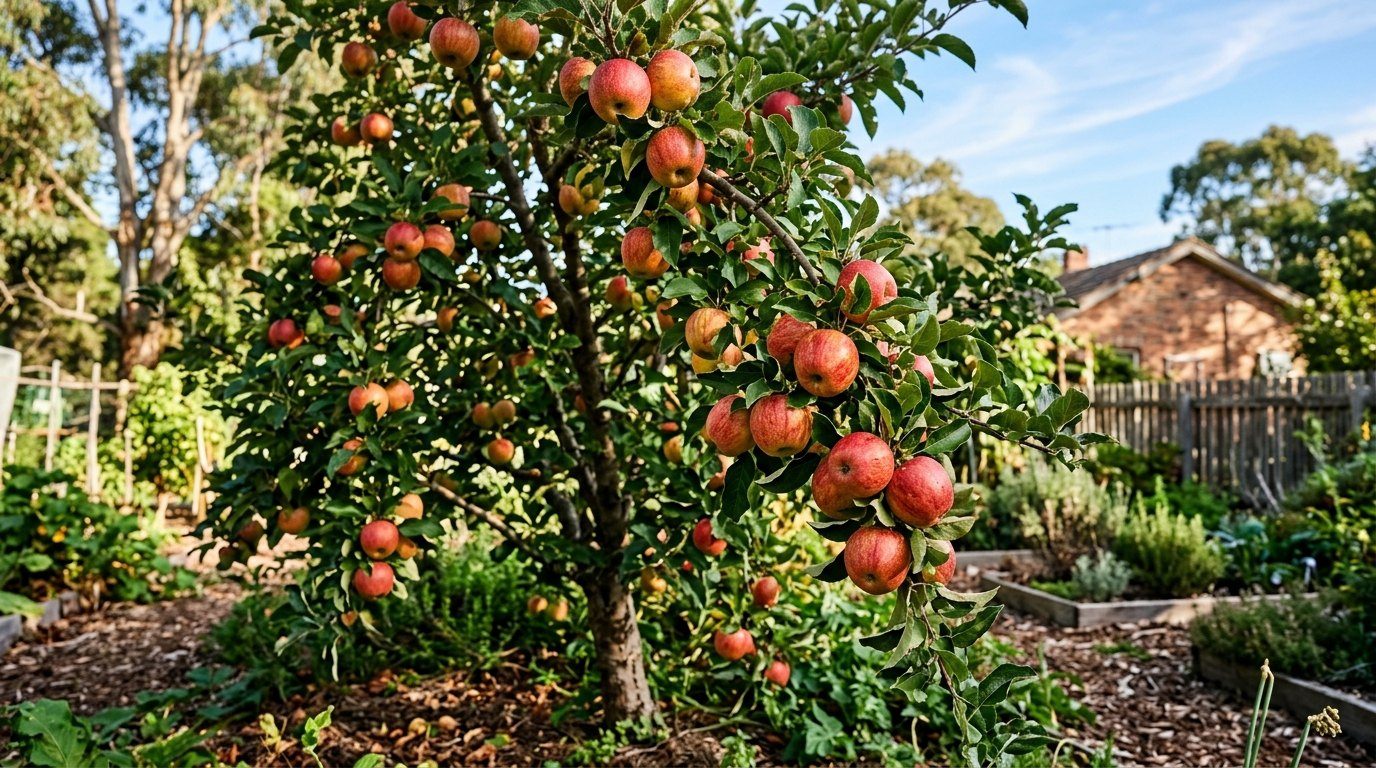
Apples and pears are pruned in winter in Australia, from June to August, when the tree is leafless and you can see the whole framework. A young tree is pruned to build a strong frame, and an older tree is thinned so that sun and air reach the fruit and the leaves dry quickly, which cuts down black spot and other diseases. This page covers the cuts at each age, how a variety’s fruiting habit changes what you remove, and the mistakes that cost the most fruit.
When to Prune Apples and Pears
Winter is the main pruning season. In warm areas such as South East Queensland and the Northern Rivers, low chill apples wake early, so finish by the end of July. In Sydney, Melbourne, Adelaide and Perth, June to August is the usual window, and in Canberra and Tasmania the second half of winter suits well. The fruit tree pruning month table lists every region. For dwarf and espalier trees, summer pruning from late January, once the season’s growth stops, gives less regrowth than winter pruning.
Pruning an Apple or Pear by Tree Age
At planting
Plant bare-root trees in winter. Cut a single stem whip back to about 75 to 90 cm above the ground, just above a bud, so that it branches low. A tree that arrives already branched needs only its top shortened and any branch lower than about 50 cm removed.
Second and third winter
Select three or four side branches that leave the trunk at wide angles, spaced up the stem and around it, and remove the competing shoots. Shorten the chosen branches by about a third, to an outward facing bud. Branches that grow almost straight up crop poorly, so tie them down towards horizontal with soft string, or use a branch spreader.
Year four onwards
- Remove dead, diseased and damaged branches.
- Remove branches that cross, rub or grow back into the centre.
- Take out upright water shoots, unless one is needed to replace an old limb.
- Thin out crowded fruiting spurs, the knobbly clusters of short shoots, on older branches.
- Keep the lowest branches longest and the top branches shortest, so that light reaches every level.
- Stand back and look. If light does not reach the middle, take out one more branch.
Check How Your Variety Fruits
Most apples fruit on short spurs along the branches and tolerate some shortening of side branches. A few varieties set part of their crop on the tips of last year’s shoots, and cutting those tips removes the fruit. Ask the nursery for the fruiting habit of your variety when you buy. Pink Lady is very susceptible to apple scab (black spot), so an open, thinned canopy matters even more for it. Our apple varieties page compares the popular types.
Pruning for Size and Small Gardens
A dwarfing rootstock gives a small tree that suits small gardens, espaliers and pots, and it needs permanent staking. A multi-grafted tree carries several varieties that pollinate each other, which helps a small garden. Pears are pruned the same way as apples but grow more upright, so spread the branches a little more. Nashi are pruned in the same way, and our nashi guide has the details. See the dwarf fruit trees guide for small spaces.
Pruning and Pests
In winter, scrub flaky bark at the base of the trunk with a stiff brush to remove codling moth grubs sheltering there. Codling moth is the main apple pest in eastern and southern Australia, but it is not known to occur in Western Australia, where it is a declared pest and any suspected find must be reported to DPIRD. See our codling moth page for monitoring months, and thin the fruit in late spring so that the remaining apples size up.
Mistakes That Cost Fruit
- Cutting every branch back by half each winter, which creates a thicket of upright shoots and very little fruit.
- Leaving a tree for years and then taking half of it off in one winter.
- Shortening the tips of a variety that fruits on them.
- Leaving stubs, which die back and let disease in, or cutting flush with the trunk, which removes the collar that heals the wound.
- Using dirty tools between trees.
Frequently Asked Questions
When is the best time to prune apple trees in Australia?
In winter, from June to August, while the tree is dormant. In South East Queensland and the Northern Rivers finish by the end of July, because low chill trees break dormancy earlier.
How hard can I prune an apple tree?
Remove no more than about a third of the tree in a year. Cut out dead, crossing and inward growing branches first, then thin the crowded wood. Cutting every branch back hard causes a mass of upright shoots.
Should I prune a newly planted apple tree?
Yes. Cut a single stem whip to about 75 to 90 cm so that it branches low, and prune again each winter for the first two or three years to choose the main branches.
Can I prune pears at the same time as apples?
Yes. Prune pears in winter in the same way as apples, but spread the branches a little more because pears grow more upright.
Sources: our own apple and pear plant pages, our pruning guide and the codling moth page. For stone fruit see our stone fruit pruning page.