
How to Grow Nashi (Asian Pear) in Australia
Updated June 2026
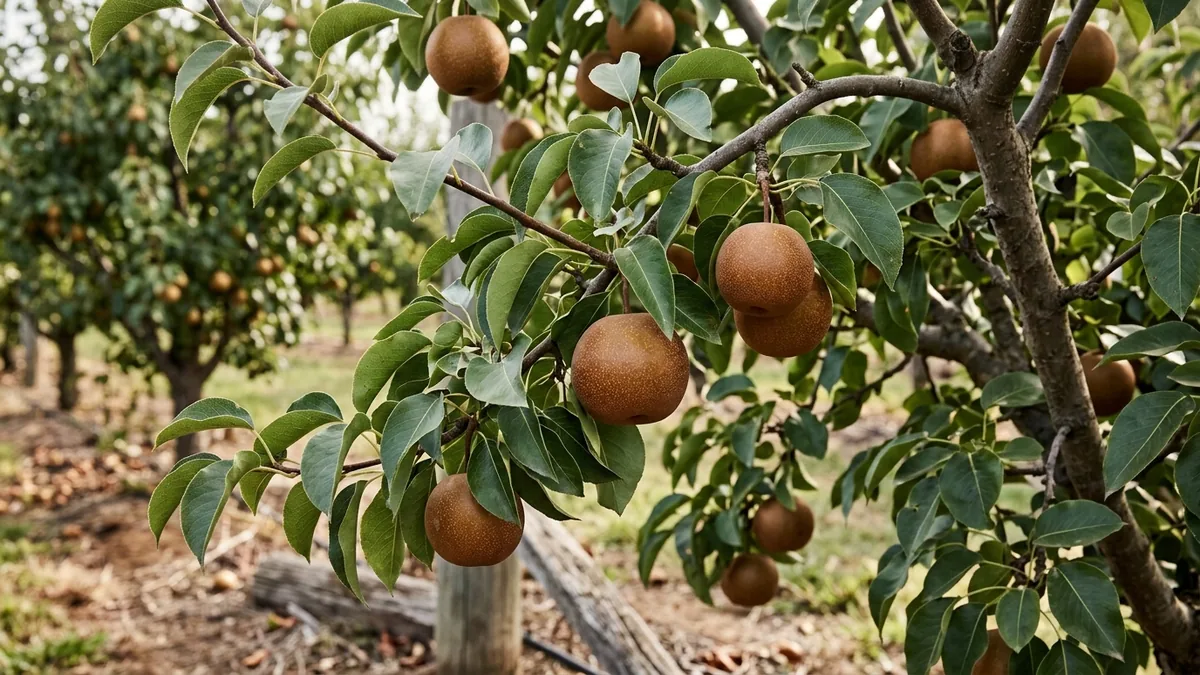
Crisp, juicy and ready to eat off the tree, the nashi rewards two things above all: enough chill, and a pollinator partner
Nashi is the Asian pear (Pyrus pyrifolia), a deciduous tree that gives round, apple-shaped fruit with crisp, intensely juicy white flesh. Unlike European pears, nashi ripen on the tree and are crunchy and ready to eat the moment you pick them. They store for weeks and shrug off bruising better than most tree fruit, which makes them a generous home-orchard tree.
Two things decide whether you get a crop. First, winter chill: nashi need a cold dormant spell, so they suit cooler districts. Second, pollination: most nashi need a compatible second variety flowering at the same time. Plan for both and the tree is easy, long-lived and very productive. The tool below checks your climate.
Will nashi grow in your climate?
Nashi need winter chill, and almost always need a pollinator partner. Pick your Australian climate below for a verdict on whether nashi will fruit and which kind of variety to choose.
Climate and position
Nashi suit warm temperate, cool temperate and cold Australia, where winters reliably deliver the chill they need. In subtropical districts only the lowest-chill cultivars are worth trying, and in the true tropics there is no useful winter chill, so nashi are unsuitable. Give the tree full sun and shelter from strong wind, which can mark the skin and knock fruit.
The dormant tree is frost-hardy, but the spring blossom is tender and a late frost can ruin a crop, so avoid frost pockets and choose a spot that warms early. Soil should be deep, fertile and free-draining. Improve heavy clay with compost before planting, as nashi dislike waterlogging.
Pollination and planting partners
This is the part most often missed. Most nashi need a compatible second variety flowering at the same time for good fruit set. Even partially self-fertile types like Nijisseiki crop far more heavily with a partner. A European pear such as Williams (also sold as Bartlett) flowering at the same time can also pollinate nashi.
Planting
Bare-root nashi are planted in winter while dormant, the cheapest way to buy and the time the widest range is available. Potted trees can go in during autumn or winter. Dig a hole wider than the roots, set the tree at the depth it grew in the nursery with the graft union above the soil, spread the roots, backfill, firm and water in. Space standard trees about 4 to 5 metres apart, less for trained or dwarf forms. Mulch the root zone, keeping mulch off the trunk.
Watering and feeding
Water young trees regularly to establish them, and water established trees deeply through the warm months, especially while fruit is swelling, when drought gives small fruit. Ease off over winter. Feed in late winter to early spring as growth begins, with a balanced fertiliser plus compost or aged manure, and mulch in spring to hold moisture and feed the soil slowly. Go easy on nitrogen, which can push soft growth and encourage disease.
Training, pruning and thinning
Nashi train well to a central-leader or modified central-leader shape, with an upright trunk and tiers of side branches. Tie young branches down towards horizontal to encourage the fruiting spurs that nashi carry for many years. Prune in winter while dormant to build and renew the framework, let in light and remove crowded or damaged wood.
Harvest and storage
Nashi ripen on the tree in late summer to autumn, ready to eat when picked. Harvest when the skin colour has developed fully for the variety, whether green-yellow or russet brown, and the fruit lifts away easily with a gentle twist. Taste-test as they colour. They store unusually well, keeping several weeks in the fridge, longer than most other tree fruit, so a good crop lasts well into the cooler months.
Pests and problems
- Birds and possums: the biggest threat to ripe nashi. Net the tree as the fruit colours, or bag individual fruit.
- Codling moth: the grub that tunnels into pome fruit. Bag fruit, use pheromone traps, and remove and bin any infested fruit promptly.
- Pear and cherry slug: the dark, sluglike sawfly larva that skeletonises leaves. Hose off, dust with wood ash, or treat as needed.
- Fruit fly: a concern in much of Australia. Bag fruit, use traps, and clean up fallen fruit.
- Fire blight: not present in Australia and kept out by strict quarantine, but the reason for buying only from reputable local nurseries.
Varieties to grow in Australia
| Variety | Type | Pollination / chill note | Best for |
|---|---|---|---|
| Nijisseiki (20th Century) | Green-yellow, crisp, classic | Partially self-fertile but much better with a pollinator; ~400 to 600 chill hrs | The benchmark nashi, reliable in temperate gardens |
| Hosui | Russet brown, sweet, excellent flavour | Needs a pollinator; ~400 to 600 chill hrs | Flavour, paired with Nijisseiki or Shinseiki |
| Shinseiki | Yellow, crisp | More self-fertile, leans lower-chill | Milder areas and as a dependable pollinator partner |
| Kosui | Small, very sweet | Needs a pollinator; ~400 to 600 chill hrs | Sweetness in a small fruit |
| Chojuro | Russet, firm | Needs a pollinator; ~400 to 600 chill hrs | Firm, well-keeping fruit for cooler districts |
Good pairings: Hosui, Nijisseiki and Shinseiki cross-pollinate one another well, so any two of them make a sound combination. A European pear such as Williams (Bartlett) flowering at the same time can also pollinate nashi.
When to plant in Australia
Plant bare-root nashi in winter, roughly June to August, while the trees are dormant and the range at nurseries is widest. Potted trees can also go in during autumn. Wherever you are, plant at least two compatible varieties, or a nashi plus a suitable European pear, in a sunny, free-draining, frost-aware spot, and match the chill need to your district.
For timing tuned to your exact spot, use Find My Region or open the Planting Season app. If your winters are mild, see our guide to low-chill fruit for varieties better suited to warm districts.
Check the chill, line up a pollinator, get the crop
The Planting Season app helps you track chill hours and pick fruit-tree varieties that suit your climate zone, and flags which trees need a pollination partner. Log flowering, thinning and harvest, and watch your totals build.
Open the App →Frequently Asked Questions
What is a nashi?
Nashi is the Asian pear (Pyrus pyrifolia), a deciduous tree closely related to the European pear. The fruit is round like an apple rather than pear-shaped, with crisp, very juicy, refreshing white flesh that is ready to eat straight off the tree, unlike European pears which ripen after picking. Skin colour ranges from green-yellow to russet brown depending on the variety.
Does nashi need a pollinator?
Yes, in almost all cases. Most nashi need a compatible second variety flowering at the same time for good fruit set, and even partially self-fertile types like Nijisseiki crop far better with a partner. A European pear such as Williams (Bartlett) flowering at the same time can also pollinate nashi. Plant at least two compatible varieties, or a nashi plus a suitable European pear.
How many chill hours does nashi need?
Most nashi need roughly 400 to 600 chill hours (hours below about 7 degrees while dormant), so they suit warm temperate through to cold districts. Some cultivars lean lower-chill, such as Shinseiki, which gives milder areas a better chance. In subtropical districts only the lowest-chill cultivars are worth trying, and the tropics do not provide enough chill at all.
Why does my nashi set too much fruit?
Nashi naturally over-set, carrying far more fruit than the tree can size and ripen well. Without heavy thinning you get small, poor fruit and broken branches. Thin hard while the fruit is small, leaving one fruit per cluster and spacing them about 15 to 20 cm apart along the branch. Heavy thinning is the single biggest thing you can do for quality nashi.
How do I train a nashi tree?
A central-leader or modified central-leader shape suits nashi well, with a main upright trunk and tiers of side branches. Train and prune in winter while dormant, and tie young branches down towards horizontal to encourage fruiting spurs. Nashi fruit on long-lived spurs, so once the framework is built, pruning is mostly about renewal, light and removing crowded wood.
When is nashi ripe and how do I pick it?
Unlike European pears, nashi ripen on the tree and are ready to eat when picked. Harvest in late summer to autumn when the skin colour has developed fully for the variety and the fruit lifts away easily with a gentle twist. Taste-test as they colour. They store well in the fridge for several weeks, longer than most other tree fruit.
Can I grow nashi in a subtropical or tropical climate?
Tropical climates are unsuitable because they provide no winter chill. In subtropical districts only the lowest-chill cultivars, such as Shinseiki, are worth attempting, and even then results can be marginal. Nashi perform best in warm temperate, cool temperate and cold areas that reliably deliver their 400 to 600 chill hours, always with a compatible pollinator nearby.
See also: How to Grow Pears and Low-Chill Fruit