
Low-Chill Fruit: Choosing Fruit Trees for Warm Climates
Updated June 2026
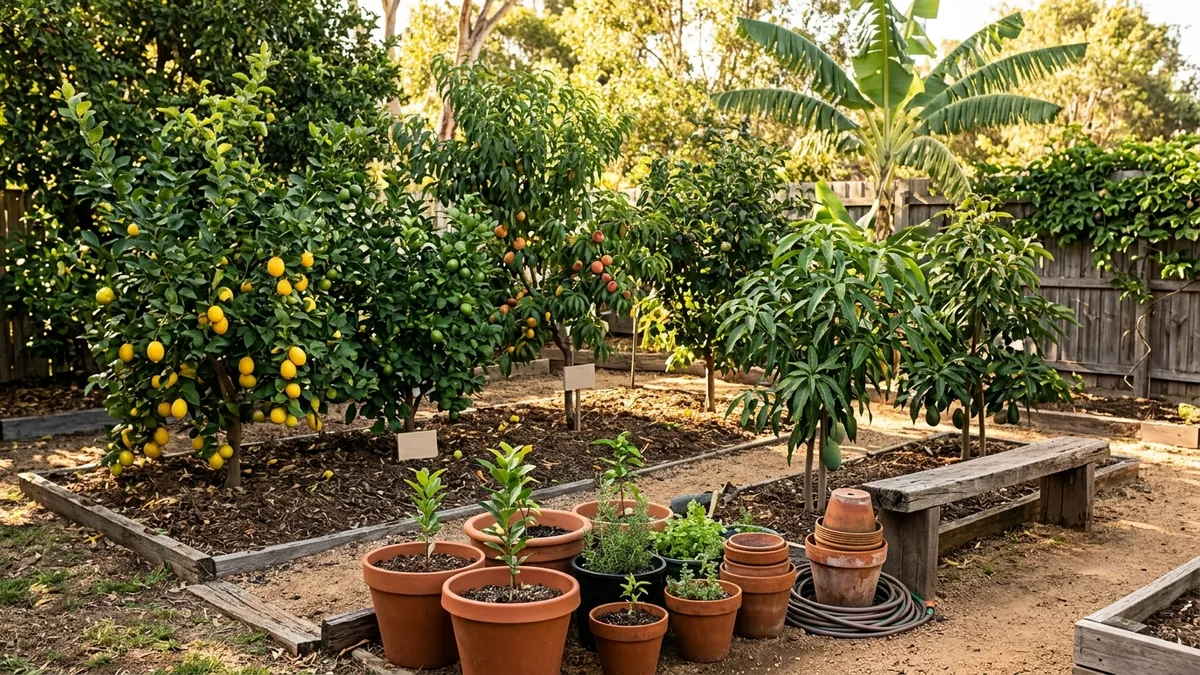
Why apples and peaches fail in warm gardens, what chill hours mean, and a picker that shows the fruit and varieties that will actually crop where you live
If you have ever planted an apple or a peach in a warm or subtropical garden and watched it grow into a healthy tree that simply refuses to fruit, you have met the chill-hours problem. Many deciduous fruit trees need a stretch of winter cold to wake up and flower properly. Without it they leaf out late, flower weakly, and crop badly or not at all. The good news is that plant breeders have created low-chill varieties of nearly every favourite, and a whole tier of subtropical fruit needs almost no chill at all.
This hub explains chill hours in plain language, helps you work out roughly how much chill your garden gets, and gives you a low-chill fruit picker that lists the fruit and the specific varieties that will fruit well in your climate, along with the chill hours each one needs.
What are chill hours?
Chill hours are the total number of hours below about 7 degrees Celsius (around 45 degrees Fahrenheit) that a tree experiences over winter. Deciduous fruit trees, the ones that drop their leaves and go dormant, use this accumulated cold as a signal that winter has truly passed before they push into bloom. A tree's chill requirement is the amount of that cold it needs to break dormancy evenly and set a good crop.
Trees are usually grouped as high-chill (roughly 600 hours or more), medium-chill (around 300 to 600), and low-chill (under about 300, with some needing as little as 100 to 200). Match the tree to your winter and it thrives. Get a high-chill tree into a warm garden and it disappoints, every year.
What happens with too little chill?
When a deciduous tree does not get its chill requirement, dormancy does not break cleanly. The result is delayed and uneven leafing, weak and straggly flowering, poor pollination and heavy drop of flowers and tiny fruit. You end up with a leafy tree and little or no harvest. This is the single most common reason stone fruit and apples fail in warm, frost-free, subtropical and tropical Australian gardens. Choosing a low-chill variety solves it.
How to find your chill hours
You do not need a precise figure, just a sense of the range. As a rough guide for Australia:
| Climate | Rough chill hours | Examples |
|---|---|---|
| Cool temperate / highlands | 800+ hours | Hobart, Tasmanian midlands, alpine and tableland areas |
| Temperate | 300 to 800 hours | Melbourne, Adelaide, Canberra |
| Warm temperate / coastal | 100 to 300 hours | Sydney, Perth, coastal NSW |
| Subtropical | under 150 hours | Brisbane, northern NSW, Sunshine Coast |
| Tropical | near zero | Cairns, Townsville, Darwin |
Your own winter minimum temperatures are a good indicator, and local nurseries, gardening groups and your state department of primary industries can give district figures. Microclimate matters too: a frost hollow accumulates more chill than a warm coastal slope a few kilometres away.
The low-chill fruit picker
Choose your climate to see the fruit that will crop well, the best low-chill varieties for warm areas, and the chill hours each needs. Lower-chill choices sit at the top of each list.
Not sure which you are? Use Find My Region to match your postcode to a climate zone.
Fruit and varieties at a glance
A reference table of popular fruit and the chill they need. Anything at the low end of the scale suits warm and subtropical gardens.
| Fruit | Chill needed | Low-chill varieties to look for |
|---|---|---|
| Peach / nectarine | 150 to 300+ hrs | Tropic Snow, Flordaprince, Tropic Beauty, Sunraycer (nectarine) |
| Apple | 200 to 300 hrs (low-chill) | Anna, Dorsett Golden, Tropic Sweet (plant Anna + Dorsett to pollinate) |
| Plum | 150 to 400 hrs | Gulf Ruby, Gulf Gold, Mariposa (low-chill Japanese types) |
| Persimmon | 100 to 200 hrs | Fuyu, Jiro (non-astringent, very warm-tolerant) |
| Feijoa | 50 to 100 hrs | Unique, Apollo (a little chill helps flowering) |
| Citrus | none | Lemon, lime, mandarin, orange, grapefruit |
| Fig | none | Brown Turkey, Black Genoa, White Adriatic |
| Mulberry | none | Hicks Fancy, Black English, Shahtoot |
| Loquat | none | Nagasakiwase, Bigi Sweet |
| Guava | none | Hawaiian, Cherry guava, strawberry guava |
| Dragon fruit | none | White, red and pink-fleshed selections |
Buying low-chill varieties
The variety is everything in a warm climate, so a few rules pay off:
- Read the label for the chill figure. Reputable fruit-tree nurseries list chill hours. If it is not stated, ask before you buy.
- Buy from a nursery that serves your climate. A grower in a warm region stocks varieties proven to fruit there.
- Check pollination needs. Some low-chill apples and plums need a compatible partner. Anna and Dorsett Golden pollinate each other, for example.
- Choose grafted, named trees over seedlings for predictable fruit and earlier cropping.
- Match ripening times if you want a long harvest rather than a single glut.
Care basics for warm-climate fruit
Low-chill trees are still fruit trees and reward good basics. Give them full sun and free-draining soil, mulch well and keep water up through flowering and fruit set. Feed in spring and after harvest. In warm and subtropical regions, fruit fly is the main pest, so net trees, use traps and clean up fallen fruit. Prune deciduous low-chill stone fruit and apples in winter to shape and open the canopy, and prune evergreen subtropicals lightly after fruiting. Many of these trees, including citrus, feijoa, fig, mulberry and dragon fruit, also grow well in large pots.
Match fruit trees to your chill with the app
The Planting Season app includes a Fruit Tree Varieties and chill module that matches fruit and varieties to your region and chill hours, so you can see exactly which low-chill peaches, apples and other fruit will crop where you live, then track flowering and harvest through the season.
Open the App →Frequently Asked Questions
What are chill hours?
Chill hours are the total number of hours below about 7 degrees Celsius that a deciduous fruit tree gets during winter. Many fruit trees need a set amount of winter chill to break dormancy properly and produce strong flowering and fruit set in spring. The colder your winters, the more chill hours you accumulate.
What happens if a fruit tree does not get enough chill?
If a tree does not meet its chill requirement, it leafs out late and unevenly, flowers poorly and erratically, drops flowers and small fruit, and crops badly or not at all. This is the main reason high-chill apples and stone fruit fail in warm, subtropical and tropical gardens. The fix is to choose low-chill varieties bred for warm climates.
How do I know my chill hours?
As a rough guide, cool temperate highland areas may get 800 hours or more, temperate areas a few hundred, warm temperate and coastal areas 100 to 300, subtropical areas under 150, and the tropics close to zero. Local nurseries, your state department of agriculture and gardening groups can give figures for your district, and your own winter low temperatures are a good indicator.
What is the lowest-chill stone fruit I can grow?
For very warm areas, look for the lowest-chill peaches and nectarines such as Flordaprince and Tropic Snow, which need only around 150 to 200 chill hours, and low-chill plums like Gulf Ruby and Gulf Gold. These were bred in warm climates such as Florida specifically to fruit where winters are mild.
Which fruit trees do not need chill at all?
Many of the best warm-climate fruits need little or no winter chill. Citrus, figs, mulberries, loquats, guavas, dragon fruit, bananas, papaya and many subtropical fruits crop without a cold winter. Persimmon and feijoa want only a mild amount of chill. These are the backbone of a warm-climate orchard.
Can I grow apples in the subtropics?
Yes, if you choose low-chill apple varieties. Anna, Dorsett Golden and Tropic Sweet were bred for warm climates and fruit with only around 200 to 300 chill hours. Anna and Dorsett Golden also pollinate each other, so plant both for a reliable crop. Standard apples like Granny Smith need far more chill and will disappoint in warm areas.
Do low-chill fruit trees still need a cold winter?
They need much less. Low-chill varieties are bred to break dormancy and fruit with only a small amount of winter cool, which is exactly why they suit warm, frost-free and subtropical gardens. In a cold-winter area you can still grow them, but you have a far wider choice and can also grow high-chill varieties.
Does the Planting Season app help pick fruit for my climate?
Yes. The app includes a Fruit Tree Varieties and chill module that matches fruit trees and varieties to your region and chill hours, so you can see which low-chill peaches, apples and other fruit will crop well where you live, and track flowering and harvest through the season.
See also: How to Grow Feijoa, Unusual Fruit to Grow and How to Grow Persimmon