
Dwarf Fruit Trees for Small Spaces
Updated June 2026
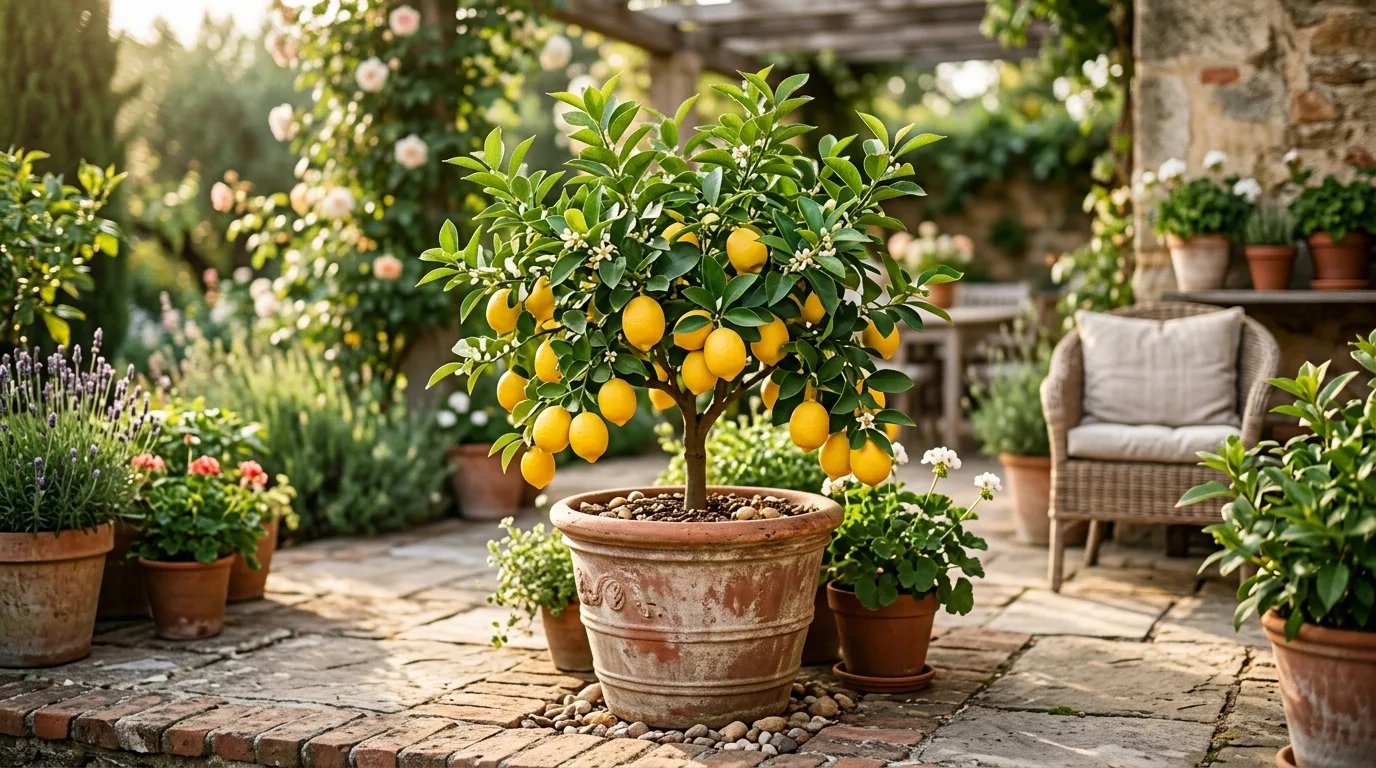
You can grow real fruit trees in pots. Here is how to choose and keep dwarf trees productive.
A lack of space is no longer a reason to skip fruit trees. Dwarf and patio varieties, and trees grafted onto dwarfing rootstocks, stay small enough to grow in a large pot on a balcony or in a tiny courtyard, while still producing full-size fruit. Citrus, apples, peaches, nectarines, figs and more are all available in compact forms.
How dwarf trees stay small
Most dwarf fruit trees are normal varieties grafted onto a dwarfing rootstock that limits their size, so you get full-size, full-flavoured fruit on a tree that stays one to two metres rather than five. Some are genetic dwarfs (common in peaches and nectarines). Both are ideal for pots. Multi-grafted trees, with several varieties on one tree, are another clever small-space option, and solve pollination too.
Choosing the right tree
- Match it to your climate. Deciduous trees like apples and cherries need winter chill, so in warm regions choose low-chill varieties. Citrus, figs and many stone fruit suit warmer areas.
- Check pollination. Citrus, figs, peaches and nectarines are usually self-fertile and fruit alone. Many apples and pears need a pollination partner, so choose a self-fertile variety or a multi-graft if you only have room for one.
- Pick a true dwarf or patio type rather than a standard tree, which will outgrow a pot.
Pot, soil and position
Use a large pot, at least 40 to 50 litres, with excellent drainage, and pot up to a bigger size as the tree grows. Use a quality potting mix, ideally one for fruit trees or citrus. Give the tree the sunniest spot you have, at least six hours, as fruit needs sun to ripen and sweeten.
Care and pruning
Prune to keep the tree compact, open and within reach, and to suit a pot. Refresh the top layer of mix with compost each year, and repot or root-prune every couple of years to stop it becoming pot-bound. Thin a heavy fruit set so the small tree is not overloaded, which gives bigger fruit and protects the branches.
Catch problems before they cost you a crop
Track every bed in the Planting Season app, log what is going wrong, and get region-specific reminders so the same problem does not bite twice.
Open the App →Frequently Asked Questions
Can you grow fruit trees in pots?
Yes. Dwarf and patio fruit trees, and trees on dwarfing rootstocks, stay small enough for a large pot while producing full-size fruit. Citrus, apples, peaches, nectarines and figs all come in compact, pot-friendly forms.
What is the best fruit tree for a small space?
Citrus is the classic container choice as it is self-fertile and compact, and dwarf peaches and nectarines, figs, and apples on dwarfing rootstock all suit pots. Multi-grafted trees fit several varieties and solve pollination in one pot.
How big a pot does a dwarf fruit tree need?
At least 40 to 50 litres with excellent drainage to start, potting up to a larger size as it grows. A bigger pot holds moisture and nutrients better and supports a more productive tree.
Do dwarf fruit trees need a pollination partner?
Some do. Citrus, figs, peaches and nectarines are usually self-fertile and fruit alone, while many apples and pears need a second compatible variety. Choose a self-fertile type or a multi-grafted tree if you only have room for one.
Why isn't my potted fruit tree fruiting?
Common reasons are the tree being too young, insufficient winter chill for deciduous types in warm areas, a missing pollination partner, too much shade, or too much nitrogen. Give it full sun, the right variety for your climate, and time.
See also: Fruit Tree Varieties and Chill and Why Fruit Trees Not Fruiting
Get next month's planting calendar, free
One email a month with exactly what to plant in your region, plus seasonal tips and harvest reminders. No spam, and you can unsubscribe any time.