Codling moth: identify, prevent, control
Updated June 2026
Active from flowering through summer in cooler apple and pear districts, September to March, often with two or three generations.
Codling moth is the classic pest of apples and pears in cooler regions, and the grub in the apple. Larvae tunnel to the core, fill it with frass and ruin the fruit, so a single overlooked generation can spoil most of a crop.
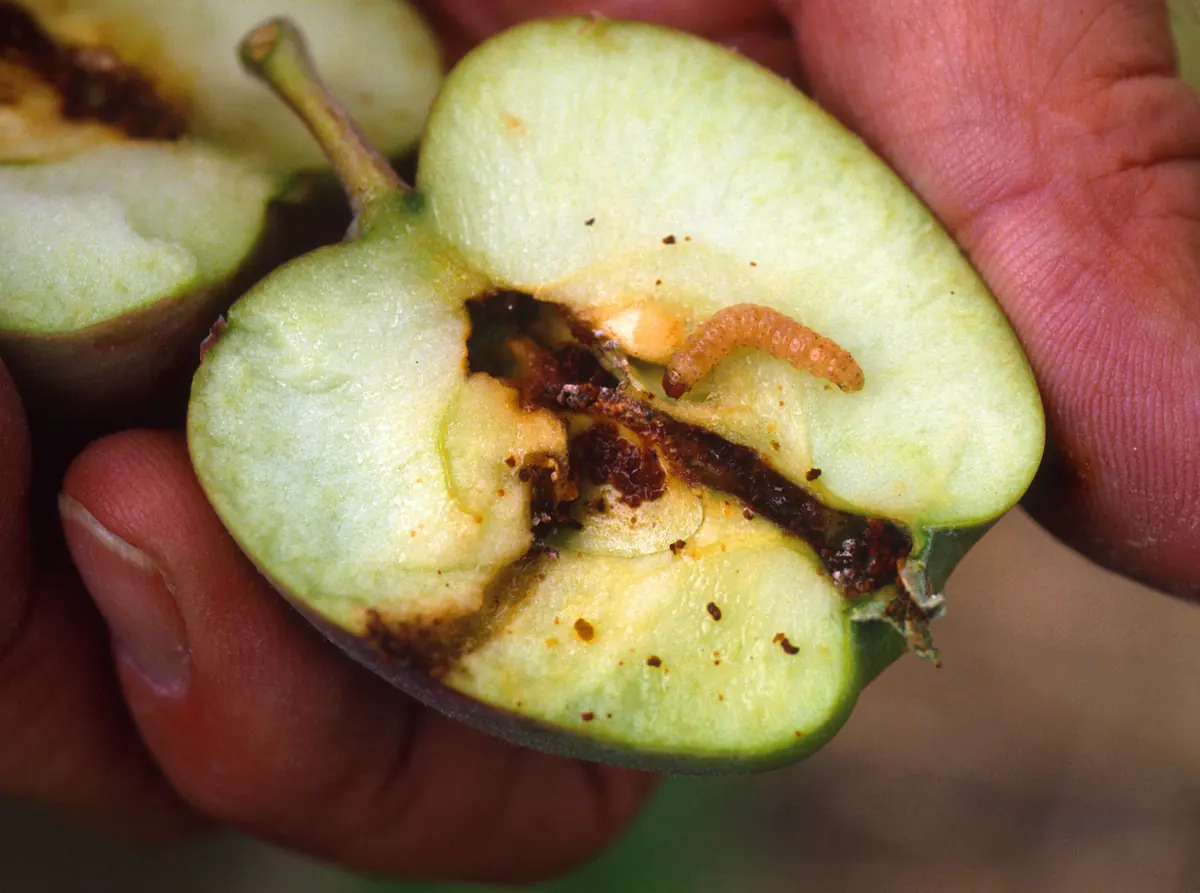
How to identify it
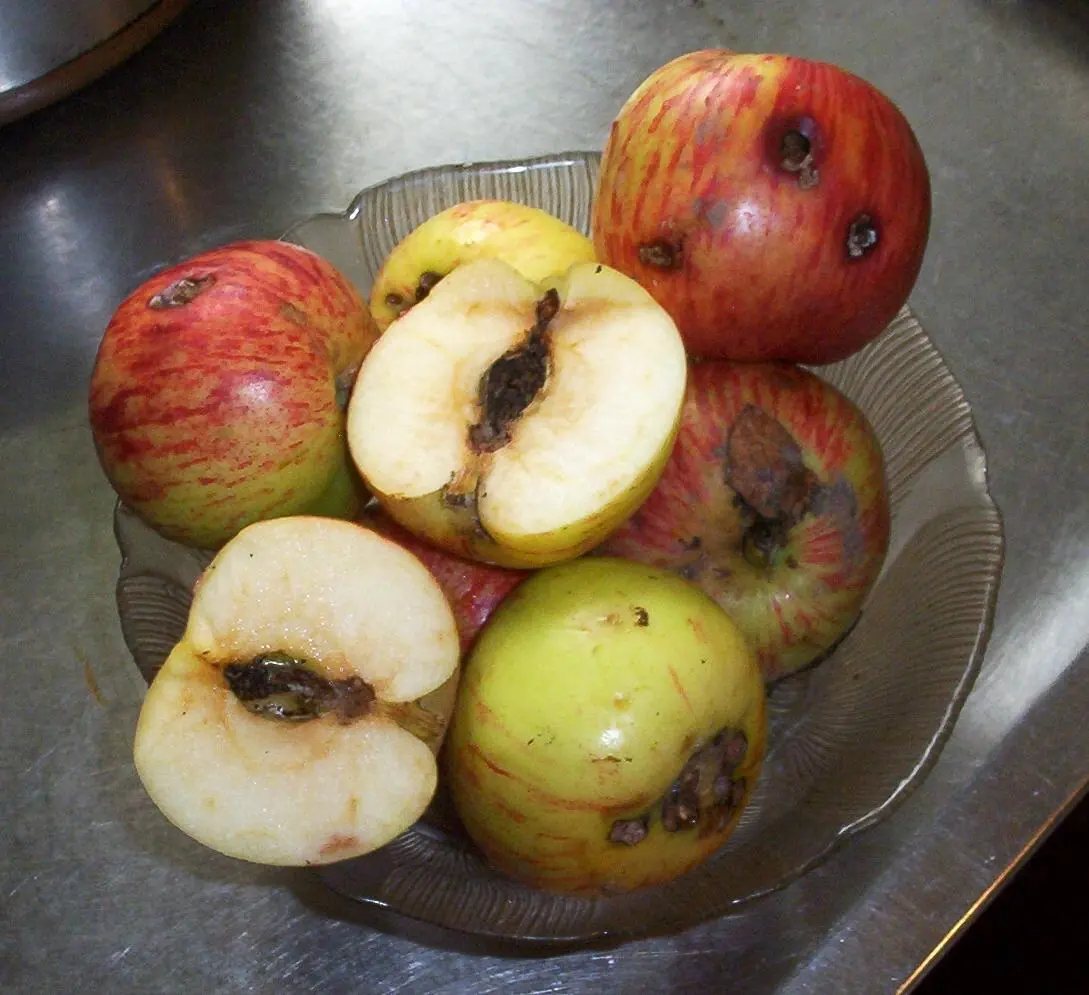
- A small hole, often near the blossom end, plugged with brown crumbly frass
- Tunnels running to the core, packed with droppings, when fruit is cut open
- Pinkish-white caterpillar with a dark head inside the fruit
- Premature fruit drop with entry holes
How to prevent it
- Bag individual fruit or net trees to keep egg-laying moths off
- Pick up and dispose of fallen fruit at least twice a week
- Scrape loose bark and wrap trunks with corrugated cardboard bands to trap pupating larvae, then remove and burn the bands
- Keep just a few well-managed trees rather than many neglected ones nearby
Organic control, step by step
- Hang pheromone traps from flowering to monitor moth flights and time other measures
- Apply cardboard trunk bands as larval traps, checking and clearing them regularly
- Bag fruit early as the most reliable organic protection
- Spray Dipel during egg hatch, repeating every 7 to 10 days and after rain
- Remove and dispose of infested and fallen fruit promptly to break the cycle
- Encourage birds and parasitic wasps that prey on larvae
Plants it attacks
Track it in the app. The free Planting Season planner lists the pests and diseases to watch for on every plant in your garden, tuned to your region.