
Apple Tree Varieties for Australia: Chill Hours, Pollination Partners and Harvest Months
Updated November 2026
More fruit growing help: Backyard Fruit Trees in Australia, with the best fruit for each region and when to plant it.
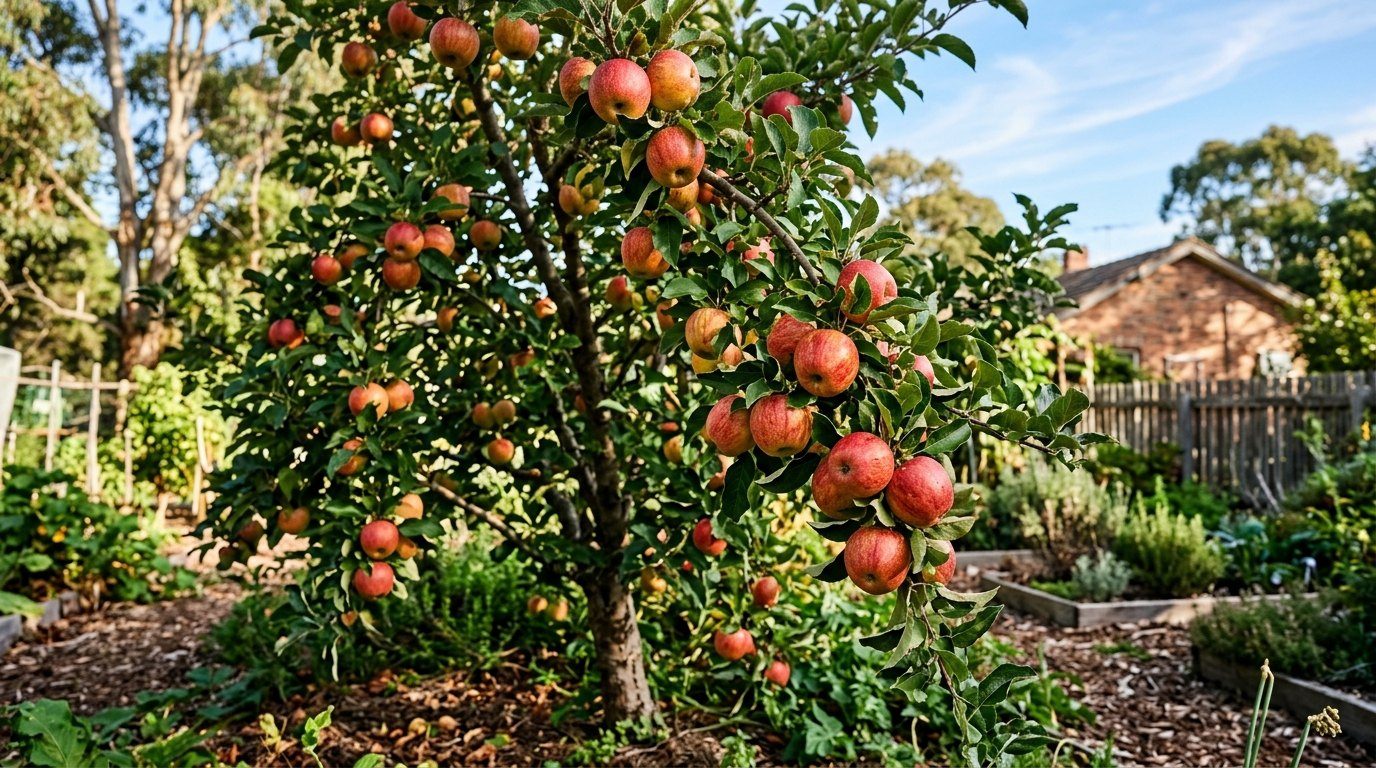
The right apple tree for your garden is a variety whose winter chill need matches your climate, with a pollination partner flowering at the same time and a harvest you can use. This page compares seven varieties on those points, shows how chill hours change from Hobart to Brisbane, and explains how to pick a partner. The harvest months are a guide, because fruit ripens two to three weeks earlier or later with district and season.
Apple Varieties Compared
| Variety | Fruit | Winter chill | Pollination partner | Harvest |
|---|---|---|---|---|
| Anna | Low chill, crisp, an early apple for warm gardens | About 200 to 300 hours | Plant with Dorsett Golden, which flowers at the same time | Early, about November to January |
| Dorsett Golden | Low chill, golden fruit, an early apple for warm gardens | About 200 to 300 hours | Plant with Anna | Early, about November to January |
| Tropic Sweet | Low chill, sweet, for warm gardens | About 200 to 300 hours | Plant two low chill varieties together | Early summer |
| Gala | Sweet, mild, early season and kid friendly | Lower chill requirement, good for warmer areas | Plant a second variety that flowers at the same time | Late summer, about February to March |
| Granny Smith | Tart green cooking and eating apple, an Australian original from Sydney | Moderate | Pollinates Pink Lady, and the pair suit each other | Autumn, about April to May |
| Pink Lady (Cripps Pink) | Australian bred, sweet-tart, crisp and an excellent keeper | About 400 to 500 hours | Granny Smith pollinates Pink Lady | Late autumn, about May |
| Fuji | Japanese variety, very sweet and crisp, a good keeper | Moderate | Plant a second variety that flowers at the same time | Autumn, about April to May |
Pink Lady, Granny Smith, Gala and Fuji are sold by Daleys Fruit, Flemings and Bunnings, as listed in our apple growing guide, and specialist fruit tree nurseries sell the low chill types. The chill figures come from our low chill fruit guide and apple plant page. Pink Lady is very susceptible to apple scab (black spot), so give it an open canopy and good airflow.
Chill Hours: Which Apples Suit Your Climate?
Chill hours are the hours between 0 and 7.2°C added up over autumn and winter, and a deciduous tree uses them to break dormancy evenly. If a variety gets too few, it leafs out late and unevenly, flowers poorly and drops its young fruit. The figures below are our estimates for whole regions, not readings, and your own block can sit well above or below them. For a figure for your nearest weather station, use the Queensland DPI Chill and Thermal Time Calculator, choose Chilling Hours and plan against the lowest 10 per cent line. Our chill hours tool matches varieties to your region.
| Climate | Rough chill hours | What it means for apples |
|---|---|---|
| Cool temperate and highlands | Melbourne about 800, Hobart about 1,000, Canberra about 1,200 | High chill: every variety is open to you, including Fuji and Pink Lady |
| Mediterranean plains | Perth plain about 300, Adelaide plains about 400, more in the hills | Low chill apples on the plains, most varieties in the Adelaide Hills orchards |
| Warm temperate, Sydney | Roughly 100 to 300 on the coast, 450 to 650 or more in the west and the mountains | Low chill apples on the coast. Western Sydney has enough chill for Granny Smith, Gala and Pink Lady |
| Subtropical | Under 300, often under 150 near the coast, for Brisbane, northern NSW and the Sunshine Coast | Low chill varieties only, such as Anna, Dorsett Golden and Tropic Sweet |
| Tropical | About 0 to 50 hours | Not viable: even low chill apples need more cold than the tropics give |
Pollination Partners
Most apples are not self-fertile, because flowers pollinated with pollen of the same variety usually fall off. You need a second variety that flowers at the same time, with a bee to carry the pollen. These are the easiest ways to get one:
- Plant a pair that suit each other. Granny Smith pollinates Pink Lady, and Anna and Dorsett Golden pollinate each other.
- Buy a multi-grafted tree, which carries several varieties that pollinate each other, a good choice for a small garden or pot.
- Check for a neighbour’s apple or crab apple flowering within bee range, and ask the nursery for the flowering group of each variety.
A single potted tree still needs a second variety nearby unless it is multi-grafted.
Harvest Months
| Variety | Dec | Jan | Feb | Mar | Apr | May |
|---|---|---|---|---|---|---|
| Anna and Dorsett Golden | ● | ● | ||||
| Gala | ● | ● | ||||
| Granny Smith and Fuji | ● | ● | ||||
| Pink Lady | ● |
Apples ripen from late summer into autumn, depending on the variety, and low chill types ripen earliest. A ripe apple lifts and twists off the spur easily, its seeds have turned brown and it tastes sweet. Planting several varieties spreads the harvest over months. Store only perfect fruit, not touching, in a cool, dark place or the fridge, and the late varieties keep longest.
Tree Size
Dwarfing rootstocks give small trees that suit small gardens, espaliers and pots. Dwarf trees range from 2 to 3 m, and standard trees grow much taller. See the dwarf fruit trees guide and our apple pruning page.
Frequently Asked Questions
What are the best apple tree varieties for Australia?
Pink Lady, Granny Smith, Gala and Fuji suit cool and temperate gardens. In warm or subtropical gardens choose low chill varieties such as Anna and Dorsett Golden, and plant two together.
How many chill hours do apples need?
Pink Lady needs about 400 to 500 hours, and low chill apples such as Anna and Dorsett Golden need about 200 to 300. Melbourne, Hobart and Canberra get roughly 800 to 1,200 hours, and the Sydney coast about 100 to 300.
Do I need two apple trees?
Usually yes. Most apples need a second variety flowering at the same time, such as Granny Smith with Pink Lady or Anna with Dorsett Golden. A multi-grafted tree carries several varieties on one trunk.
Can I grow apples in Brisbane or Sydney?
Yes, with low chill varieties, planted in pairs. Standard apples such as Granny Smith, Gala and Pink Lady need more chill than the Brisbane or Sydney coast gets, although western Sydney has enough.
Sources: our own apple plant page and low chill fruit guide, which carry the chill figures and the pollination pairs, and the Queensland DPI Chill and Thermal Time Calculator. Harvest months are general guide figures and vary with district.