How to Grow Wombok (Chinese Cabbage) in Australia
Updated June 2026
Tall, tightly wrapped heads for kimchi, stir-fries, and dumplings
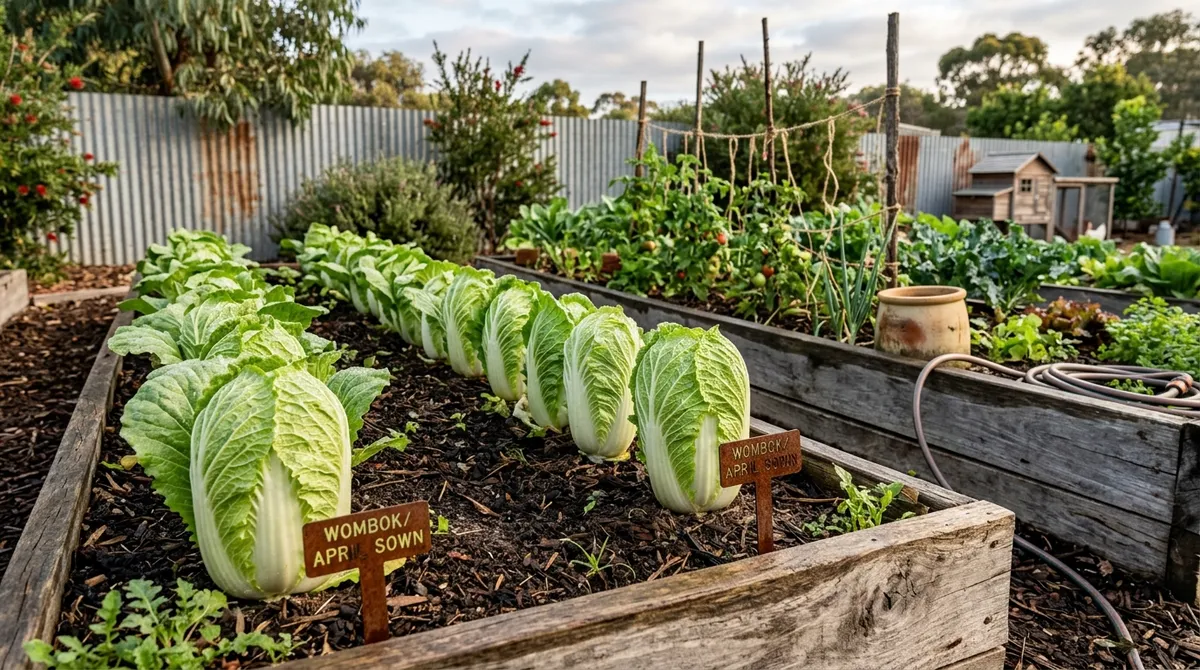
Wombok (Brassica rapa subsp. pekinensis) forms tall, barrel-shaped heads of pale green, crinkled leaves with thick white ribs. You might also see it labelled napa cabbage or Chinese cabbage at the supermarket. It is the cabbage used for kimchi, and it is equally good shredded into stir-fries, dumpling fillings, hot pot, and slaws.
Wombok is a cool-season crop. It bolts (runs to seed) in warm weather, so timing matters more with this vegetable than most. Sow in autumn for best results. The heads mature in 8 to 10 weeks, and a single plant produces a large, dense head weighing 1 to 2 kg.
What it looks like as it grows


🌱 Plant profile: Wombok, with sowing times for your region, companion plants and common pests.
When to Plant in Your Region
Varieties
Blues
The standard supermarket wombok. Produces tight, heavy heads in about 8 to 10 weeks. Good disease resistance and reliable performance across Australian conditions. This is the variety to start with.
Michihili
A taller, more cylindrical head with looser leaves. Takes 10 to 12 weeks to mature. The flavour is milder and the texture is slightly more delicate than Blues. Popular in northern Chinese cooking.
Wong Bok
Short, barrel-shaped heads that are wider than they are tall. Dense and compact with thick, crunchy ribs. Well suited to smaller gardens and containers because of its compact growth habit.
Bilko
A bolt-resistant hybrid bred for extended growing seasons. You can sow Bilko slightly earlier in autumn and later in spring than other varieties without it bolting. Produces medium-sized, well-wrapped heads. A good choice for warmer regions where the planting window is narrow.
How to Grow Wombok
Direct sowing (recommended)
Wombok has a shallow taproot that dislikes disturbance. Direct sowing gives the best results and the lowest bolting risk. Sow seeds 1 cm deep in rows 40 to 50 cm apart. Thin seedlings to 30 to 40 cm spacing once they have 4 true leaves. Use the thinnings in salads.
Transplanting
Transplanting works, but it increases the chance of bolting. Sow seeds into deep cells or biodegradable pots so you can plant the whole pot without disturbing the roots. Transplant at the 3 to 4 leaf stage. Water seedlings in thoroughly and transplant in the late afternoon to reduce stress.
Soil and position
Wombok needs rich, moisture-retentive soil. Dig in plenty of compost and well-rotted manure before planting. A soil pH of 6.0 to 7.0 is ideal. Acidic soils increase the risk of clubroot disease, so add lime if your soil pH is below 6.0.
Full sun is best for autumn and winter crops. In subtropical regions where daytime temperatures still climb during early autumn, provide afternoon shade to keep the soil cool. Mulch around plants with sugar cane mulch or straw to retain moisture and regulate soil temperature.
Watering
Consistent moisture is critical. Wombok heads that experience dry periods develop tip burn (brown edges on inner leaves) and are more likely to bolt. Water deeply 2 to 3 times per week, or daily in warm weather. Drip irrigation or soaker hoses work well because they keep the leaves dry, reducing disease risk.
Feeding
Wombok is a heavy feeder. Apply a balanced organic fertiliser at planting time. Side-dress with blood and bone or pelleted chicken manure every 3 weeks. Liquid seaweed or fish emulsion applied fortnightly promotes strong leaf growth and firm heads. Reduce feeding once the heads start wrapping tightly, about 4 to 5 weeks before harvest.
Preventing Bolting
Bolting is the main challenge with wombok. The plant sends up a flower stalk instead of forming a head. The leaves become tough and bitter once this happens. These strategies reduce bolting risk:
- Sow at the right time. Autumn is the safest planting window. The shortening days and cooling temperatures signal the plant to form a head rather than flower.
- Direct sow. Root disturbance from transplanting stresses the plant and triggers bolting.
- Keep moisture consistent. Dry periods stress the plant and push it toward flowering.
- Choose bolt-resistant varieties. Bilko and some newer Blues selections are bred for slower bolting.
- Avoid warm spells. Several consecutive days above 25 degrees during the heading phase will trigger bolting regardless of other conditions.
Pest and Disease Management
White cabbage moth caterpillars
Green caterpillars of the cabbage white butterfly are the number one pest. They bore into forming heads and leave frass (droppings) through the leaves. Fine mesh insect netting draped over a frame is the most effective control. Put the netting up at planting time, before the butterflies find the crop. Bacillus thuringiensis (Bt) spray controls caterpillars that get through.
Aphids
Aphids cluster on the undersides of outer leaves and work their way into the developing head. A strong blast from the hose removes most of them. Neem oil spray applied in the evening handles persistent infestations. Encourage ladybirds and lacewings by planting flowering herbs nearby.
Clubroot
Clubroot is a soil-borne disease that affects all brassicas. Infected plants wilt on sunny days and develop swollen, distorted roots. There is no cure once a plant is infected. Prevent clubroot by rotating brassicas so you do not grow cabbage, broccoli, kale, or bok choy in the same bed more than once every 3 to 4 years. Liming acidic soil also helps, as clubroot thrives in low pH conditions.
Slugs and snails
Young wombok seedlings are a target for slugs and snails, especially in the wet autumn months. Iron-based snail pellets are effective and safe. Go out after dark with a torch to hand-pick them for immediate results.
Harvesting
Wombok is ready to harvest when the head feels firm and solid. Squeeze the head gently. A ready head resists the pressure and feels dense. A head that gives easily needs more time.
Cut the head at the base with a sharp knife, leaving the outer wrapper leaves attached. They protect the head during storage. Harvest in the morning while the leaves are crisp and full of moisture.
Wombok stores well in the fridge for 2 to 3 weeks when wrapped loosely in plastic. Do not wash it until you are ready to use it. The whole head keeps much longer than cut pieces.
Cooking with Wombok
Wombok is versatile in the kitchen. The outer leaves are sturdy enough for wraps and braising. The inner leaves are tender and sweet, suited to raw salads and slaws. The thick white ribs add crunch to stir-fries and hot pot.
Common uses include kimchi (the traditional Korean fermented preparation), stir-fried with garlic and ginger, shredded into dumpling and gyoza fillings, braised in chicken stock, and raw in Asian-style salads with sesame dressing.
Quick kimchi method
Quarter a mature wombok head lengthwise. Rub coarse salt between the leaves and let it sit for 6 to 8 hours. Rinse and squeeze out the water. Make a paste from gochugaru (Korean chilli flakes), garlic, ginger, fish sauce, sugar, and chopped spring onions. Work the paste between the leaves. Pack tightly into a clean jar. Ferment at room temperature for 2 to 5 days, pressing down daily, then refrigerate. The kimchi keeps for months in the fridge and improves with age.
Frequently Asked Questions
When should I plant wombok in Australia?
Autumn is the best time to plant wombok in most Australian regions. In subtropical areas like Brisbane, sow from March to May. In temperate areas like Sydney, Melbourne, and Adelaide, sow from February to April. Wombok bolts quickly in warm weather, so timing the crop for cool growing conditions is essential.
How long does wombok take to grow?
Wombok heads mature in 8 to 10 weeks from sowing. Some faster varieties like Blues can be ready in 8 weeks. Slower types like Michihili may take up to 12 weeks. Harvest once the head feels firm when you squeeze it gently. Do not leave it too long after maturity or it may split or bolt.
How do I prevent wombok from bolting?
Sow in autumn so the crop matures during cool weather. Avoid transplant shock by direct sowing or handling seedlings very gently. Keep soil consistently moist and avoid any dry periods. Choose bolt-resistant varieties like Bilko. Temperatures above 25 degrees for several consecutive days trigger bolting regardless of other conditions.
Can I make kimchi from homegrown wombok?
Yes. Homegrown wombok makes excellent kimchi. Harvest tight, mature heads and quarter them lengthwise. Salt the quarters for 6 to 8 hours, rinse, then pack with a paste of gochugaru (Korean chilli flakes), garlic, ginger, fish sauce, and sugar. Ferment at room temperature for 2 to 5 days, then refrigerate.
See also: Wombok in the Plant Library
Plant profile
The wombok profile has sowing times for your region, companion plants and common pests.