
What to Plant With Tomatoes: Companion Plants for Australian Gardens
Updated November 2026
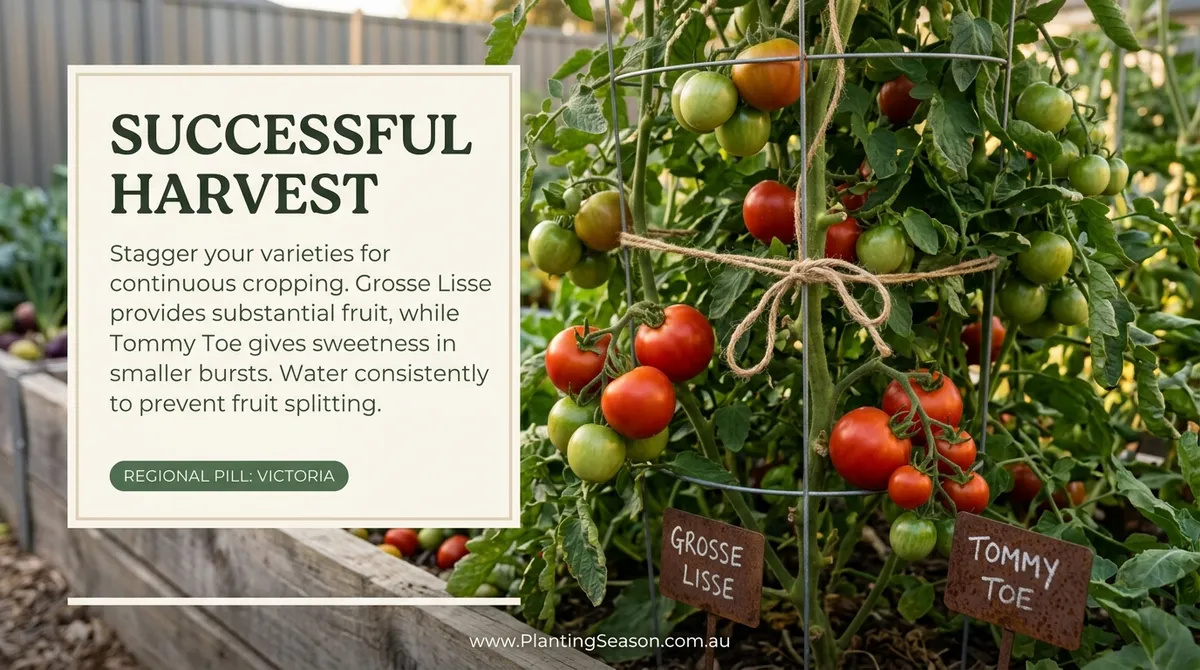
The short answer to what to plant with tomatoes is basil, French marigold, parsley, chives, carrot, nasturtium and borage, with a few flowers such as calendula, cosmos and zinnia along the edge of the bed. The plants to keep apart are potato, sweet corn, brassicas, fennel and rosemary. Those lists come from the companion data behind our tomato plant page, read both ways, so a pairing that appears on either plant's list is included.
This page goes further than a chart by saying how much evidence stands behind each pairing. Some have been measured, some have promising results from other crops, and some are garden tradition that nobody seems to have tested. Where a pairing is only tradition, the plant is usually harmless and often useful for another reason, such as a herb you will pick for the same meal.
Every pairing below carries one of three labels. Proven means someone measured it and it held. Promising means the results are real but mixed, or they come from another crop. Tradition means we searched for a trial and found none. We never call a tradition wrong, and we say what we would plant.
Plant with tomatoes
| Plant | Evidence | Why, and what we found |
|---|---|---|
| Basil | Tradition | Basil sits happily in the same bed and ends up in the same dish. We found no trial showing it improves tomato flavour or keeps pests away, so grow it for convenience. Let a plant or two flower, because bees and hoverflies visit the flowers. |
| French marigold | Promising | French marigolds release a compound that suppresses root-knot nematodes. The University of Florida's Extension fact sheet says the effect needs a dense stand grown in the same soil for at least two months before the crop, and that marigolds planted between vegetables do not appear effective. Grow a block first and dig it in if nematodes are a problem, and use marigolds as an edging for their flowers otherwise. |
| Parsley and chives | Tradition | Low herbs that shade bare soil under the tomatoes and stay out of the way of the stakes. Left to flower they feed hoverflies, whose larvae eat aphids, but we found no trial of these two herbs beside tomatoes. |
| Carrot | Tradition | Carrots root deep and tomatoes root wide, so the two share a bed without much competition. The benefit is about space, and we found no trial of any pest benefit. |
| Nasturtium | Tradition | Often described as an aphid trap crop. We did not find an Australian trial of nasturtium protecting tomatoes, so treat it as tradition. It is edible, flowers for months and spills over the bed edge. |
| Borage | Tradition | Bees love borage flowers, which helps pollination in the bed. We found no trial behind the claim that it deters tomato pests. Borage self-seeds freely, so cut the flowers before they set seed if you do not want a crop of seedlings. |
| Garlic and spring onions | Tradition | Alliums fit tight against tomatoes without shading them. Their smell is said to confuse pests, but the evidence is inconsistent. They are a sensible filler for gaps. |
| Calendula, cosmos and zinnia | Promising | Open, easy-to-land-on flowers feed ladybirds, hoverflies and parasitic wasps. The best Australian evidence is from Hort Innovation trials of flowering strips beside brassica crops, where natural enemy numbers rose, so the result comes from another crop. It is still the best-supported reason to put any flower beside tomatoes. |
| Capsicum and chilli | Tradition | Our data lists them as friendly neighbours, and they like the same sun, warmth and feeding. They belong to the same family as tomato, so they share some diseases and should rotate together. This is a convenience pairing, not a pest-control one. |
Keep apart from tomatoes
| Plant | Evidence | Why, and what we found |
|---|---|---|
| Potato | Proven | Tomato and potato are in the same family and both catch late blight, caused by Phytophthora infestans (UMass Extension; University of Florida IFAS). Early blight affects both as well. Growing them side by side gives the disease a bridge, and volunteer potatoes left in a tomato bed carry it forward. Keep them in separate beds and rotate. Our tomato and potato blight guide covers prevention. |
| Sweet corn | Proven | The caterpillar called the corn earworm on corn and the tomato grub or fruitworm on tomatoes is one insect, Helicoverpa armigera, and it feeds on both crops (Pacific Pests, Pathogens and Weeds). A corn patch beside the tomatoes gives it a nursery. The native budworm, Helicoverpa punctigera, eats both too. |
| Brassicas | Tradition | Cabbage, broccoli, kale and their relatives are heavy feeders that compete with tomatoes for water and nutrients. We found no trial of harm in either direction, and the main brassica pests do not attack tomatoes, so this is a question of space and feeding. Separate beds are the easy answer. |
| Fennel | Tradition | Fennel has a long reputation for stunting its neighbours. We found no field trial showing harm to tomatoes. Fennel self-seeds and spreads, so a pot or a far corner is sensible whatever the evidence. |
| Rosemary | Tradition | Our data lists rosemary as a poor neighbour, and we found no trial. Rosemary wants dry, lean soil while tomatoes want regular water and feeding, so they suit different parts of the garden anyway. |
A simple bed layout
A bed 1.2 m wide and 2.4 m long holds four staked tomatoes at the data spacing of 60 cm. In Australia the sun is to the north, so tall plants go on the southern edge where they will not shade the rest.
| Position | What goes there | Why |
|---|---|---|
| Southern edge | Four staked tomatoes, 60 cm apart | The tallest plants, up to about 2 m on stakes, shade nothing else from this side. |
| Between the tomatoes | One basil plant between each pair, about 25 cm from the stems | Within reach for picking, and the flowers feed bees if you let one or two bloom. |
| Middle of the bed | A strip of carrots with garlic or spring onions in the gaps | Different root depths, so little competition. |
| Northern edge | French marigold, nasturtium and calendula | Flowers along the sunny edge feed hoverflies and pollinators and keep out of the tomatoes' way. |
| A different bed | Potato, sweet corn, brassicas, fennel and rosemary | Rotate so tomatoes do not follow potato in the same soil. |
What companions will not do
No companion has been shown to stop the pests that most trouble Australian tomato growers. For fruit fly, fruit netting or bagging, picking promptly and clearing fallen fruit do the work, and we found no trial showing a companion plant protects tomatoes from it. Aphids and whitefly are more manageable when flowers keep their predators nearby, but the flowers help rather than guarantee. If your soil has root-knot nematodes, rotation and a dense marigold crop dug in before planting do more than a few plants dotted around.
Planting months differ by region, so check the tomato plant page for your region before you buy seedlings, and plant the companions at the same time.
Related pages
- Tomato plant page with regional planting months
- How to grow tomatoes
- Tomato and potato blight
- Companion planting chart for 53 crops
- Bed planner with companion checks
- Late blight
- Good bugs in the garden
Questions
What is the best companion plant for tomatoes?
If you plant one companion, make it a flowering one such as calendula, cosmos or French marigold, because flowers that feed hoverflies and parasitic wasps have the best evidence behind them. Basil is the one you will eat, and it does no harm, but we found no trial showing it changes how tomatoes grow or taste.
What should not be planted near tomatoes?
Keep potato away because both catch blight, and keep sweet corn away because the same caterpillar eats both. Brassicas, fennel and rosemary are traditional keep-apart plants, with no trial that we found. Give them their own bed if you have the room.
Can I plant tomatoes and capsicum together?
Yes, they enjoy the same conditions and our data lists them as neighbours. They are in the same family and share some diseases, so rotate them together and do not plant either where potato or eggplant grew last season.
Do marigolds really protect tomatoes?
Only in one specific way. French marigolds suppress root-knot nematodes when grown as a dense stand in the same soil for at least two months before the crop and then dug in. A few plants between tomatoes are unlikely to do that job, although the flowers still feed beneficial insects.
How far apart should tomatoes and their companions be?
Our plant data gives tomatoes 60 cm between plants and basil 25 cm. Keep herbs trimmed away from the lower tomato leaves so air can move through, because blight and other leaf diseases spread in damp, crowded foliage.
Sources
- University of Florida IFAS Extension, Marigolds (Tagetes spp.) for Nematode Management (ENY-056/NG045)
- UMass Extension, Late Blight of Tomato and Potato
- University of Florida IFAS Extension, Late Blight of Potato and Tomato (PP301)
- Pacific Pests, Pathogens and Weeds (Lucid), Tomato fruit borer, corn earworm, cotton bollworm
- Hort Innovation flowering strip trials beside brassica crops (2018 to 2020), as summarised on our companion planting guide