Late blight: identify, prevent, control
Updated October 2026
Worst in cool, wet, humid spells of 10 to 25 degrees, mainly in spring and autumn in southern Victoria, Tasmania and the cooler parts of NSW and South Australia.
Late blight is caused by Phytophthora infestans, the water mould behind the Irish potato famine. It attacks tomatoes and potatoes, and also capsicum, chillies, eggplant, tamarillo and pepino, and in the right weather it can kill a whole planting in a few days. One form, the A1 mating type, occurs in parts of Australia, but the A2 mating type and newer aggressive A1 strains are exotic, and the disease is a declared pest in Western Australia, so unusual outbreaks should be reported.
Phytophthora infestans
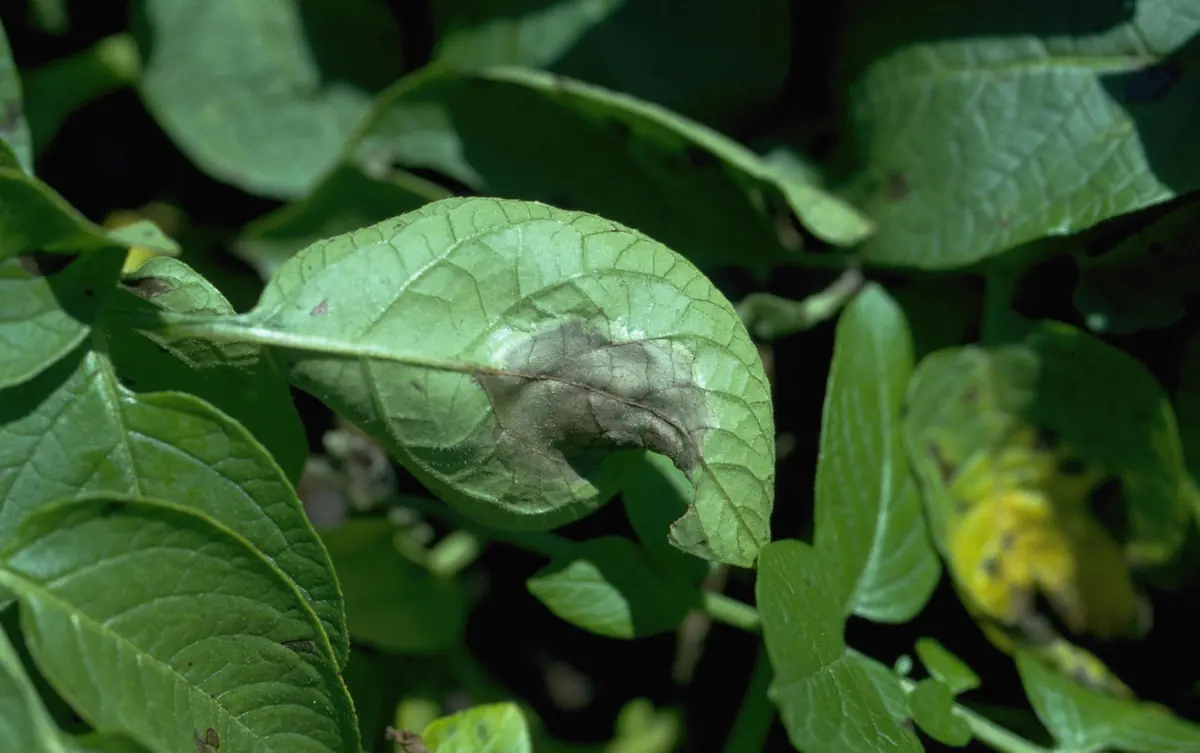

How to identify it
- Pale green to grey green, water soaked patches appear on leaves, often starting at the tips or edges, and grow rapidly into large brown to black dead areas.
- In humid weather, a fine white downy growth forms on the underside of the leaf around the edge of each patch, usually seen best early in the morning.
- Dark brown to black patches circle the stems and leaf stalks, and the plant above them wilts and collapses.
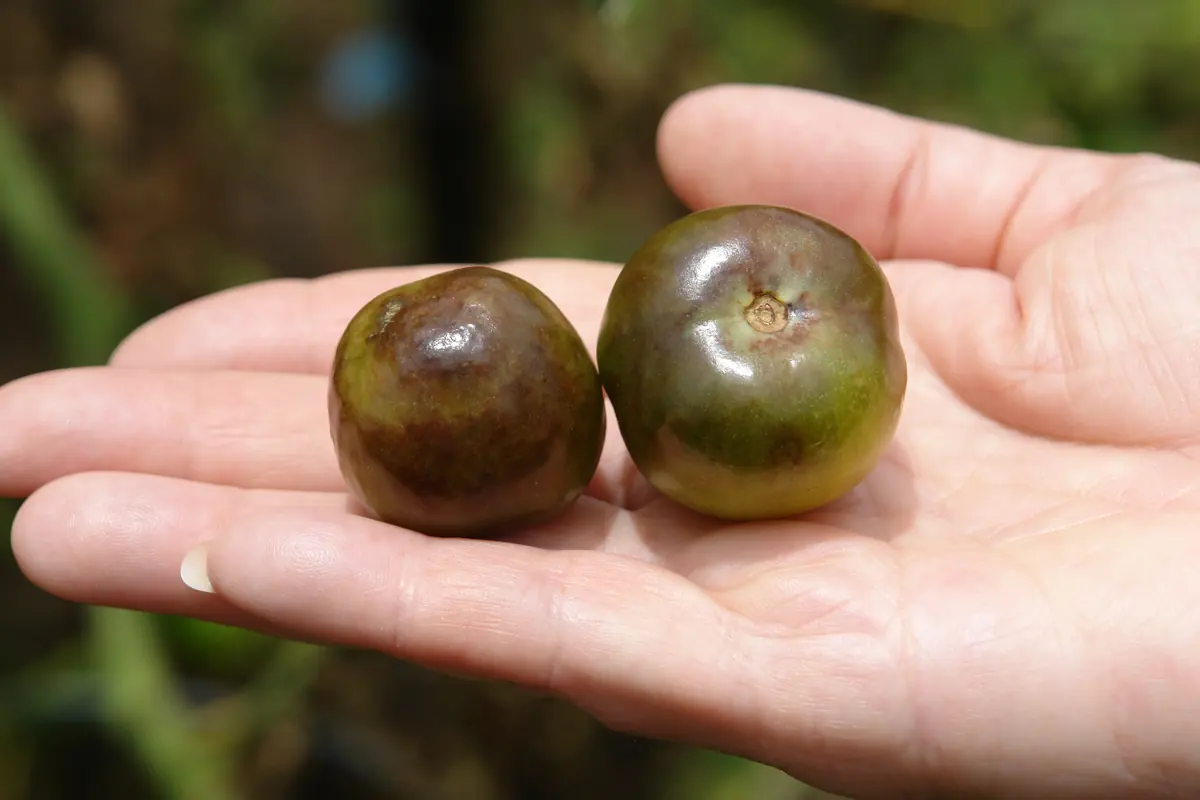
- Green tomatoes develop large, firm, greasy looking brown or bronze blotches that spread across the fruit, usually starting on the upper side.
- Potato tubers show sunken, purplish brown patches on the skin and a reddish brown dry rot just underneath, which often lets other rots in during storage.
- Infected plants may give off a sour, rotting smell when the disease is spreading fast.
.jpg)
What it is often confused with
Early blight
Early blight makes smaller, dry, brown spots with target rings, starting on the oldest leaves, and spreads over weeks. Late blight makes large greasy patches anywhere on the plant and can spread in days.
Botrytis
Grey mould makes a fuzzy grey growth on damaged leaves, stems and fruit, usually on the upper surface, while late blight's mould is fine, white and on the underside of leaves.
Bacterial spot
Bacterial spot makes many small dark spots rather than large spreading patches, and it never produces the white downy growth of late blight.
When and where it is worst
The disease needs cool nights, mild days and long periods of wet leaves. Outbreaks in Australia have mostly been in cool, wet seasons in southern Victoria, Tasmania and the tablelands and coastal districts of NSW and South Australia, and it is rare in hot or dry areas. WA has declared it a pest and reports that it is not currently found there. It is uncommon in the tropics except in cool, wet highland gardens.
Spores blow on the wind and splash in rain, and the disease can carry over in infected potato tubers left in the ground, in compost heaps and in volunteer potatoes and tomatoes. That is why outbreaks often start near old potato patches. Expect the highest risk in spring from September to November and in autumn from March to May during runs of cool, rainy weather.
Plants it affects
These plants in our library list it as a problem to watch for.
How to prevent it
- Plant certified seed potatoes rather than sprouted supermarket potatoes or tubers saved from a blighted crop.
- Dig up every potato at harvest, and pull out volunteer potatoes and self sown tomatoes, because they carry the disease between seasons.
- Grow tomatoes and potatoes in full sun with good air flow, and water at the base in the morning so leaves stay dry.
- Keep tomatoes and potatoes apart in the garden and rotate both so that neither grows in the same bed more than once every three years.
- Hill soil well over growing potatoes so spores washing down from the leaves cannot reach the tubers.
- Watch the weather and check plants closely after any run of two or three cool, wet days.
Organic control, step by step
- Remove and bag any leaves or stems with greasy dark patches the moment you see them, and wash your hands and tools before touching healthy plants.
- If more than a few leaves are affected, pull out the whole plant, seal it in a bag and put it in the rubbish bin, never in the compost.
- Before harvesting potatoes from a blighted patch, cut off and remove the tops and wait about two weeks, so spores on the foliage do not infect the tubers as you dig.
- Protect healthy plants with a copper spray such as copper hydroxide or copper oxychloride before wet weather, repeating every 7 days and after heavy rain.
Conventional control
- Copper hydroxide and copper oxychloride home garden fungicides are registered for blight on tomatoes and potatoes and work only as a protectant on leaves that are not yet infected.
- Mancozeb is registered for home garden use on tomatoes and potatoes and should be applied before forecast rain and repeated every 7 days while cool, wet weather continues.
- No home garden product will cure a plant that is already collapsing, so remove badly affected plants and focus on protecting the rest.
- Always read the label, check that your crop is listed, and keep to the withholding period before you harvest.
Frequently asked questions
Do I need to report late blight?
In Western Australia, late blight is a declared pest and any suspected case must be reported to DPIRD. Elsewhere, if you see a fast spreading blight on tomatoes or potatoes that is unusual for your area, call the Exotic Plant Pest Hotline on 1800 084 881, because exotic strains are not present in Australia and early detection matters.
Can I eat potatoes from a plant with late blight?
Tubers that look and feel sound are safe to eat, but use them soon, because hidden infections can rot in storage. Do not keep any of them to replant as seed potatoes.
Will late blight stay in my soil?
The form of late blight found in Australia does not survive long in soil on its own. It carries over in living plant material, such as potato tubers left in the ground and volunteer plants, so clearing those away breaks the cycle.
Related problems
Sources: Department of Agriculture, Fisheries and Forestry, Potato late blight; WA DPIRD, Late blight of potato and tomato is a declared pest in WA; NSW DPI, Late blight; Pacific Pests, Pathogens and Weeds, Potato late blight. Identification and control follow these sources. Always read the product label before use.