Early blight: identify, prevent, control
Updated October 2026
Worst from midsummer into autumn in warm, humid weather with heavy dew, from South East Queensland and Sydney down to Victoria and Tasmania.
Early blight, called target spot in Australia, is a fungal disease of tomatoes, potatoes, capsicums and eggplant caused by Alternaria solani. It starts on the oldest leaves and works upwards, so a crop can lose most of its leaves by late summer and leave fruit sunburnt and small. The same common name is also used for a different leaf disease of celery, and carrots get a closely related Alternaria leaf blight, both covered below.
Alternaria solani (tomato and potato)
.jpg)
How to identify it
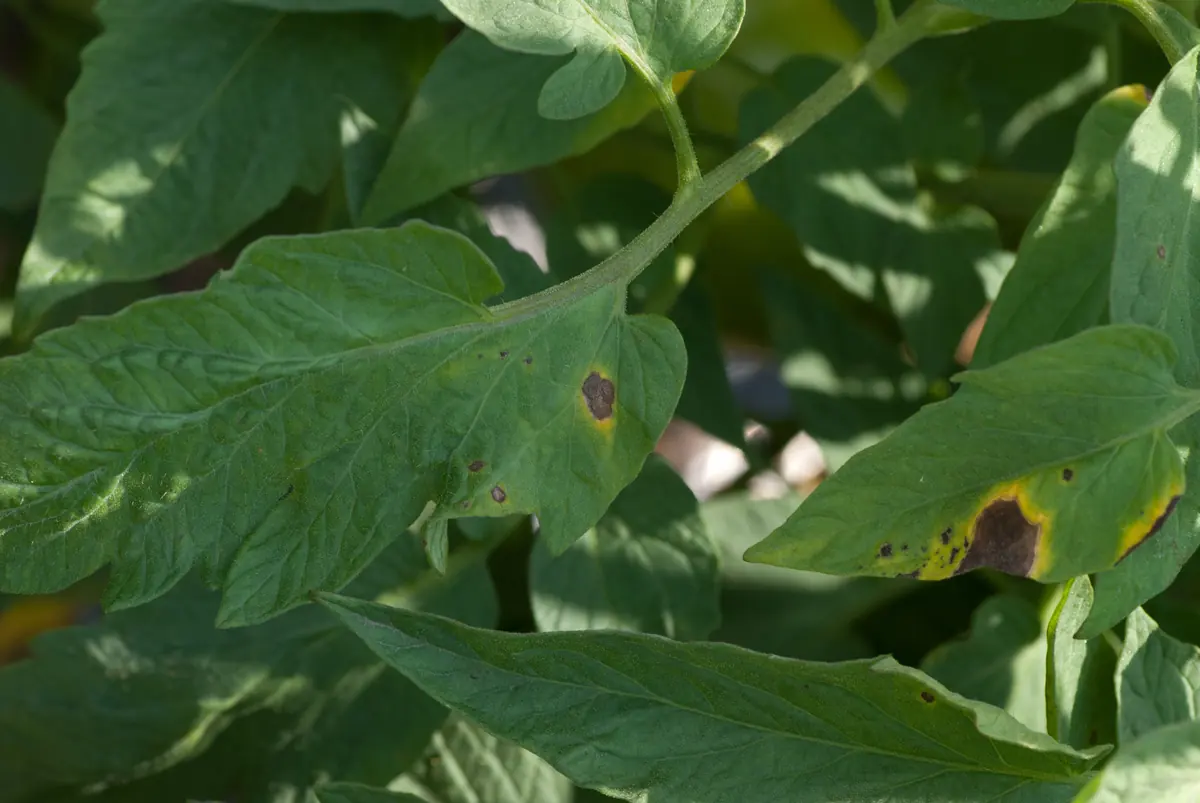
- Small dark brown to black spots appear first on the lowest, oldest leaves, usually once plants are carrying fruit.
- The spots grow to about 6 to 12 mm, stay roughly within the leaf veins, and develop rings like a target or tree rings, often with a yellow halo.
- Leaves with several spots turn yellow and drop, and the bare patch moves steadily up the plant.
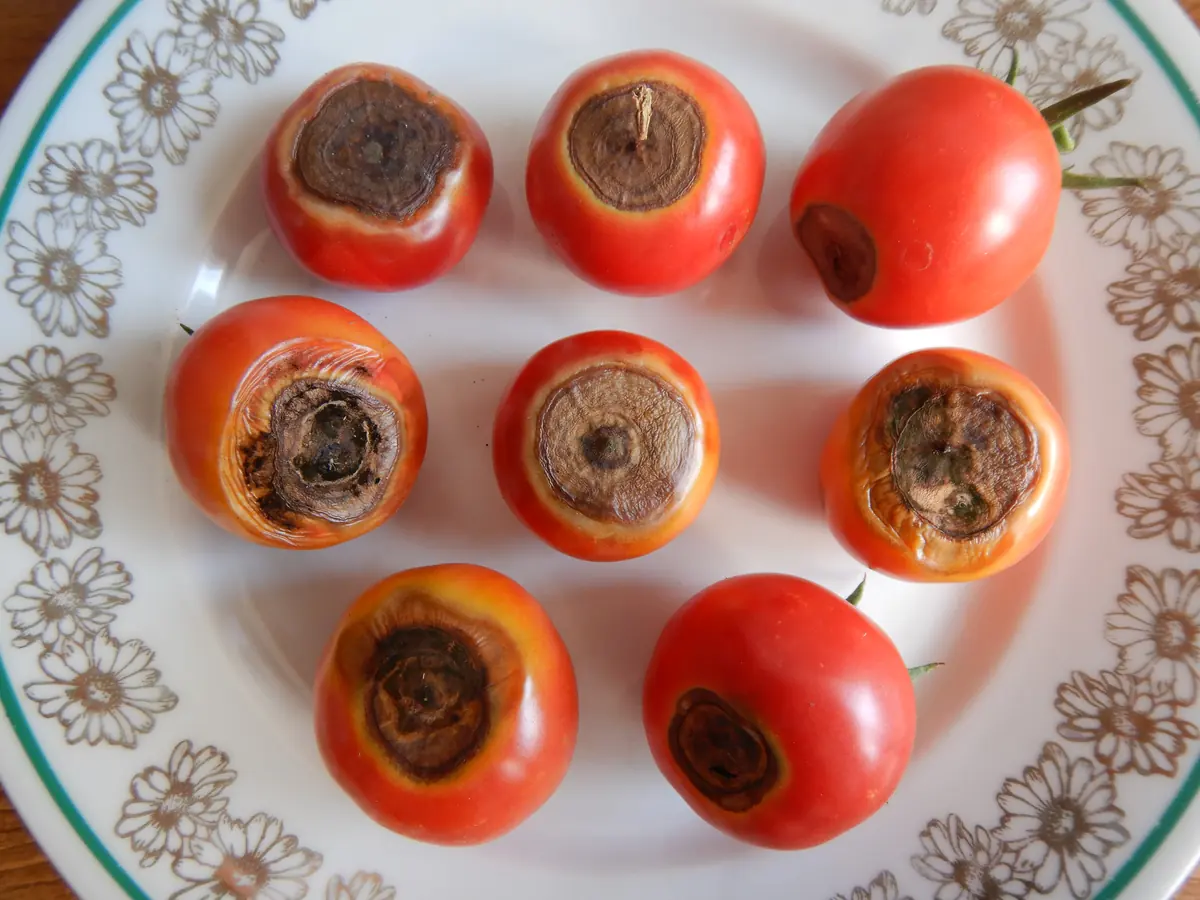
- On tomato stems and fruit, dark sunken, ringed lesions form, often at the stem end of the fruit.
- Potato tubers can show shallow, dark, slightly sunken spots with a corky brown rot underneath.
- On celery, the disease called early blight is Cercospora leaf spot, which makes pale yellow spots that turn grey-brown and papery, and on carrots Alternaria leaf blight makes dark brown spots on the leaf edges that cause the tops to shrivel and blacken.

What it is often confused with
Late blight
Late blight spreads in cool, wet weather and makes large, pale, water-soaked patches with white mould underneath. Early blight spots are smaller, dry and ringed.
Leaf spot
Septoria leaf spot of tomato makes many small spots with pale centres and tiny black dots, without the target rings.
Bacterial spot
Bacterial spot makes small, greasy, dark spots that do not form rings, and raised scabby spots on fruit.
When and where it is worst
Target spot is common wherever tomatoes and potatoes are grown in Australia. The fungus survives on old plant debris and in the soil, and spores spread by wind, rain splash and on hands and tools. It thrives at about 24 to 29°C with long periods of leaf wetness from dew or rain, so it is worst from January to April in Sydney, Brisbane and coastal NSW, and from February onwards in Melbourne, Adelaide and Hobart.
Older, stressed or poorly fed plants are hit hardest. Potatoes in the southern states often show it near the end of the season, when it can hasten the death of the tops.
Plants it affects
These plants in our library list it as a problem to watch for.
How to prevent it
- Rotate tomatoes, potatoes, capsicums and eggplant so they do not grow in the same bed more than once every three years.
- Stake or cage tomatoes and remove the lowest leaves up to about 30 cm so rain does not splash soil onto them.
- Mulch the soil surface with straw or sugar cane mulch to stop spores splashing up.
- Water at the base in the morning and keep the leaves dry.
- Feed plants steadily with compost and a balanced fertiliser, because hungry plants show target spot earlier and worse.
- Clear out and bin old tomato and potato plants at the end of the season instead of leaving them in the bed.
Organic control, step by step
- Pick off the first spotted lower leaves and bin them, then wash your hands before handling healthy plants.
- Thin crowded foliage so the plants dry quickly after rain.
- Spray copper hydroxide or copper oxychloride every 7 to 10 days in humid weather once the first spots appear, covering both sides of the leaves.
- For carrots and celery, give plants wider spacing, water in the morning and remove spotted outer leaves.
Conventional control
- Mancozeb, including home garden packs that combine mancozeb with wettable sulphur, is registered for early blight (target spot) on tomatoes; start at the first spots and repeat as the label directs.
- Copper hydroxide and copper oxychloride are registered on tomatoes and potatoes in many home garden products and can be alternated with mancozeb.
- Before spraying celery or carrots, check that the crop is named on the label, because many home products list only tomatoes and potatoes.
- Read the label every time, check the crop is listed and keep to the withholding period before harvest.
Frequently asked questions
Can I still eat tomatoes from a plant with early blight?
Yes. Fruit without lesions is safe to eat. Cut away any spotted areas and use damaged fruit quickly, because it rots sooner.
Why is it called early blight when it comes late in the season?
The name comes from potatoes in cooler countries, where it shows up earlier than late blight. In Australia it usually appears once plants are carrying a crop, from midsummer.
Is celery early blight the same disease as on tomatoes?
No. Celery early blight is caused by Cercospora apii and does not infect tomatoes. The management is similar: rotation, dry leaves and removing infected foliage.
Does early blight live in the soil?
It survives on old plant debris in and on the soil for a year or more. Rotation and cleaning up old plants reduce the amount of fungus ready to splash up next season.
Related problems
Sources: Agriculture Victoria, Target spot (early blight) of potatoes; Pacific Pests, Pathogens, Weeds and Pesticides, Early blight of tomato and potato; Yates, Mancozeb Plus product information (APVMA label). Identification and control follow these sources. Always read the product label before use.