Verticillium wilt: identify, prevent, control
Updated October 2026
Worst in mild weather from spring to early summer and again in autumn, in temperate and inland gardens of NSW, Victoria, South Australia and Western Australia.
Verticillium wilt is caused by Verticillium dahliae, a soil fungus that enters through the roots and blocks the water conducting tissue inside the stem. NSW DPI notes it infects more than 400 plant species in Australia and can survive in soil for more than ten years, so once it is in a bed it is there for a long time. There is no chemical cure, so prevention through rotation, resistant plants and hygiene is the only real control.
Verticillium dahliae

How to identify it
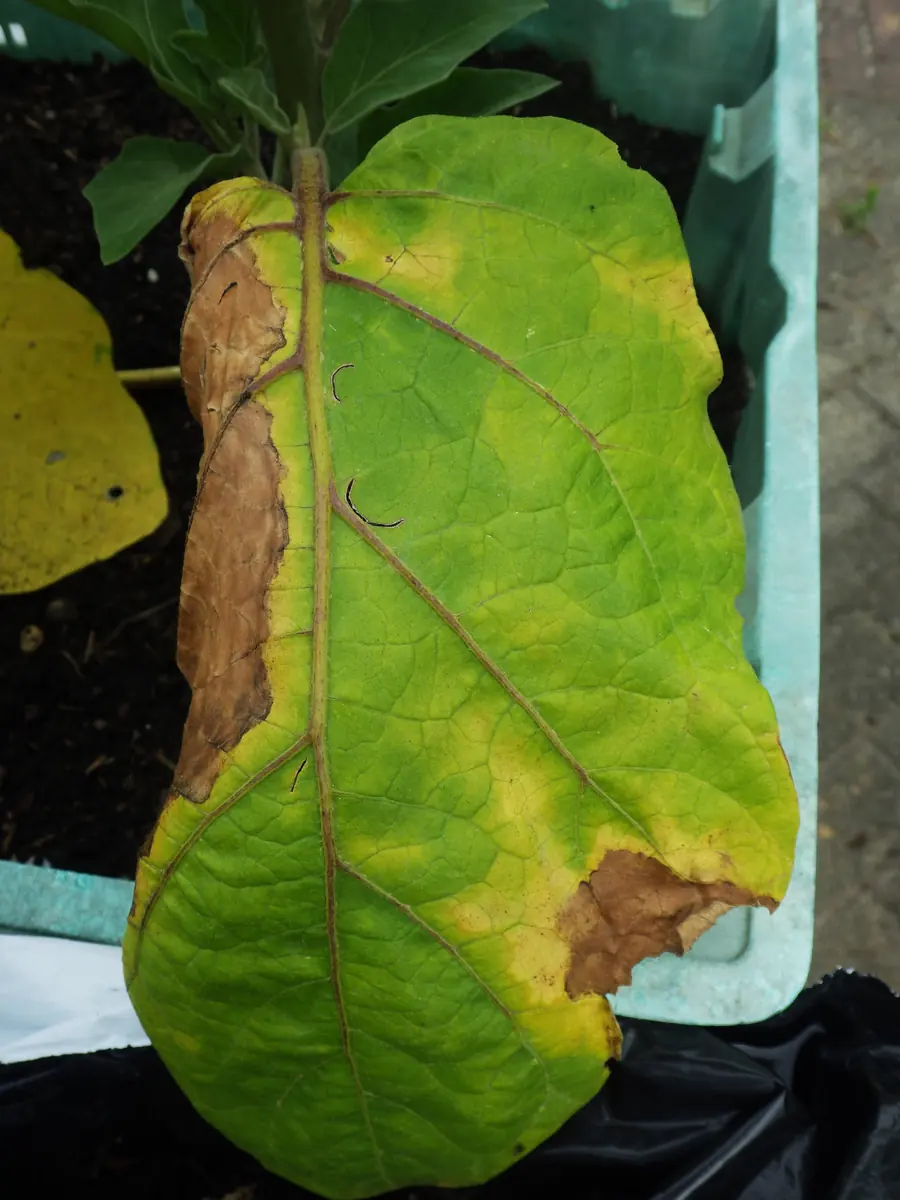
- Lower leaves yellow first, often on one side of the plant or even one side of a single leaf, which gives a lopsided look that is the classic sign on eggplant.
- Yellow patches between the veins turn brown and dry from the edges inward, and the plant wilts in the heat of the day.
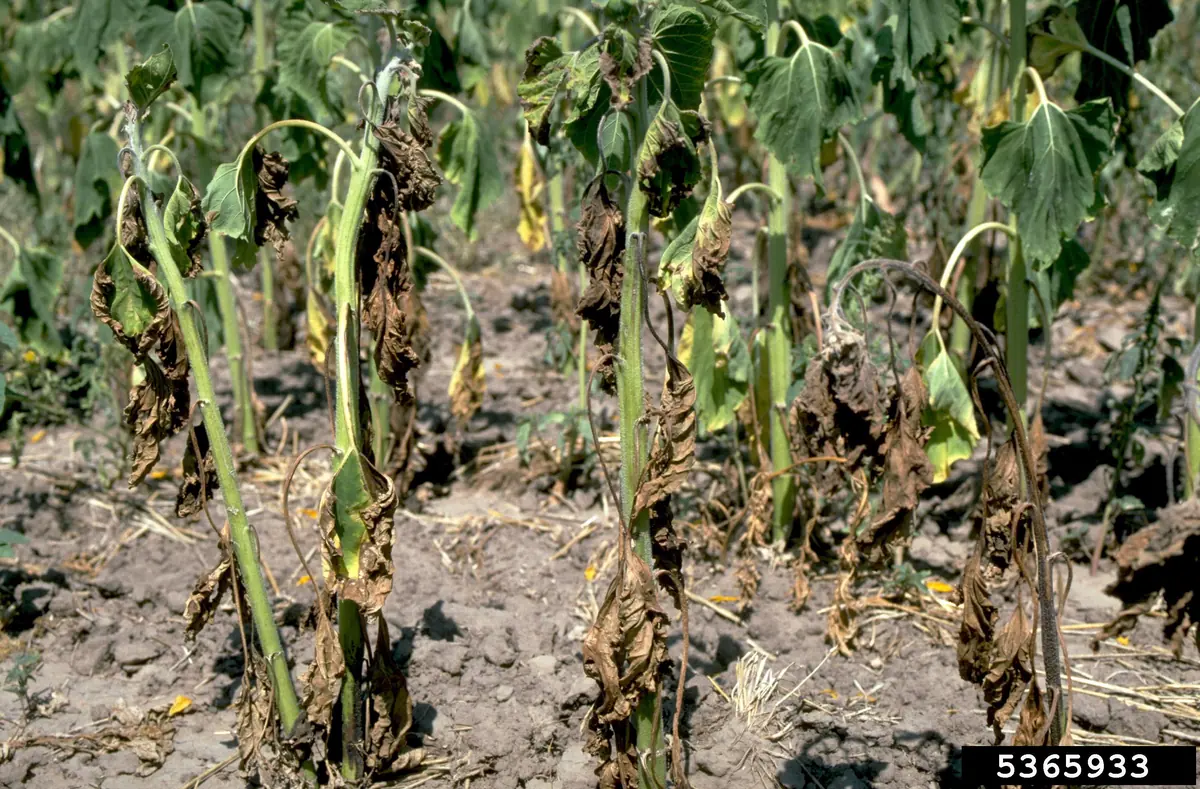
- Growth slows, the plant looks stunted, and leaves drop from the bottom of the stem upwards while the tips stay green for a while.
- If you cut through the lower stem or a wilting branch, you see brown or dark streaks in the wood just under the bark.
- On olives, whole branches or one side of the tree suddenly wilt in spring, the leaves turn dull and curl inward, and dead leaves often stay attached to the branch.
- On mint, upper leaves become pale and twisted, the stems are stunted, and patches of the bed die out over a season or two.

What it is often confused with
Fusarium wilt
Fusarium wilt also yellows leaves on one side and stains the stem, but it prefers hot weather and soil above about 27 degrees. Verticillium is worse in mild weather from about 20 to 25 degrees and slows down in midsummer heat.
Root rot
Root rot leaves the roots brown and mushy and the stem may be soft at the base, while Verticillium leaves the roots looking fairly normal and stains the inside of the stem.
Spider mite
Spider mites cause fine pale speckling across the whole leaf and fine webbing underneath, not the sharp one sided yellowing of Verticillium.
When and where it is worst
Verticillium is widespread in Australian soils that have grown cotton, potatoes, tomatoes, eggplant and capsicum, and NSW DPI reports it in a band from the Moree district to Griffith. It also turns up in market garden and orchard soils in Victoria, South Australia and Western Australia, and it has been recorded on olives in South Australia. It is much less of a problem in the tropical north, where summer heat holds it back.
The fungus is most active when soil is around 20 to 25 degrees, so symptoms usually show in late spring and early summer, fade in the hottest weeks, and can return in autumn. Infected olive trees often show sudden branch dieback in spring after a cool, wet winter. The fungus spreads in soil on tools and boots, in infected cuttings and transplants, and from weeds such as nightshades and thistles that act as hidden hosts.
Plants it affects
These plants in our library list it as a problem to watch for.
How to prevent it
- Rotate eggplant, tomato, potato, capsicum and okra so that none of them grow in the same bed more than once every four years.
- Choose resistant varieties where they exist, such as tomatoes labelled V on the seed packet, and ask your nursery about olive varieties with better tolerance.
- Buy olive trees, mint and seedlings from a reputable nursery, and never plant mint runners taken from a patch that has been dying out.
- Keep weeds such as blackberry nightshade and thistles out of the vegetable patch, because they carry the fungus without showing much damage.
- Avoid planting olives on old cotton, potato or tomato ground, which may carry a heavy load of Verticillium.
- Clean soil off tools and boots before moving from an affected bed to a clean one.
Organic control, step by step
- Pull out wilted vegetable plants with as much root as you can and bin them rather than composting them.
- Prune dead olive branches back to healthy wood in dry weather, and clean your secateurs between cuts with methylated spirits or a household disinfectant.
- Keep affected plants well watered and lightly fed without excess nitrogen, since unstressed plants often crop through a mild infection.
- Solarise small beds over the hottest six to eight weeks of summer under clear plastic, which lowers fungal numbers in the top layer of soil.
- Grow cereals, grasses, brassicas or onions in affected beds for several years, as these are not hosts and help the soil recover.
Conventional control
- No fungicide is registered for the control of Verticillium wilt in Australia, either for home gardens or farms, so chemical sprays will not help.
- Put your effort into rotation, clean plants and resistant varieties instead, and read the label of any product offered as a cure, because none can list Verticillium wilt as a registered use.
Frequently asked questions
Can a tree with Verticillium wilt recover?
Olive trees sometimes recover when the infected branches are pruned out and the tree grows strongly the next year, especially after a hot summer. Young trees and trees on heavily infested soil often decline and die. Annual vegetables do not recover, so pull them out.
How long does Verticillium stay in the soil?
The fungus forms tiny resting bodies that survive in soil for more than ten years. That is why long rotations and keeping weed hosts down matter more than anything else.
My mint has gone pale and twisted. Is it Verticillium?
It may be, especially if the patch has been in the same spot for years and is dying out in patches. Start a new patch from healthy nursery stock in fresh potting mix or a different bed, and remove the old plants completely.
Is it safe to eat eggplant from an infected plant?
Yes. Verticillium does not affect people, and fruit from an infected plant is safe to eat. The yield is just lower and the fruit can be smaller.
Related problems
Sources: NSW DPI, Climate vulnerability assessment: Verticillium wilt; Rutgers Plant and Pest Advisory, Verticillium wilt in eggplant; Penn State, Verticillium wilt: a major threat to olive production. Identification and control follow these sources. Always read the product label before use.