Nematodes: identify, prevent, control
Updated June 2026
Worst in warm soils through summer and autumn, December to April, especially in sandy ground.
Root-knot nematodes are microscopic soil worms that invade roots and form galls, blocking the plant's water and nutrient uptake. They are common in warm sandy soils and hit tomatoes, carrots, cucurbits and beans, causing slow decline that is easy to mistake for a watering problem.
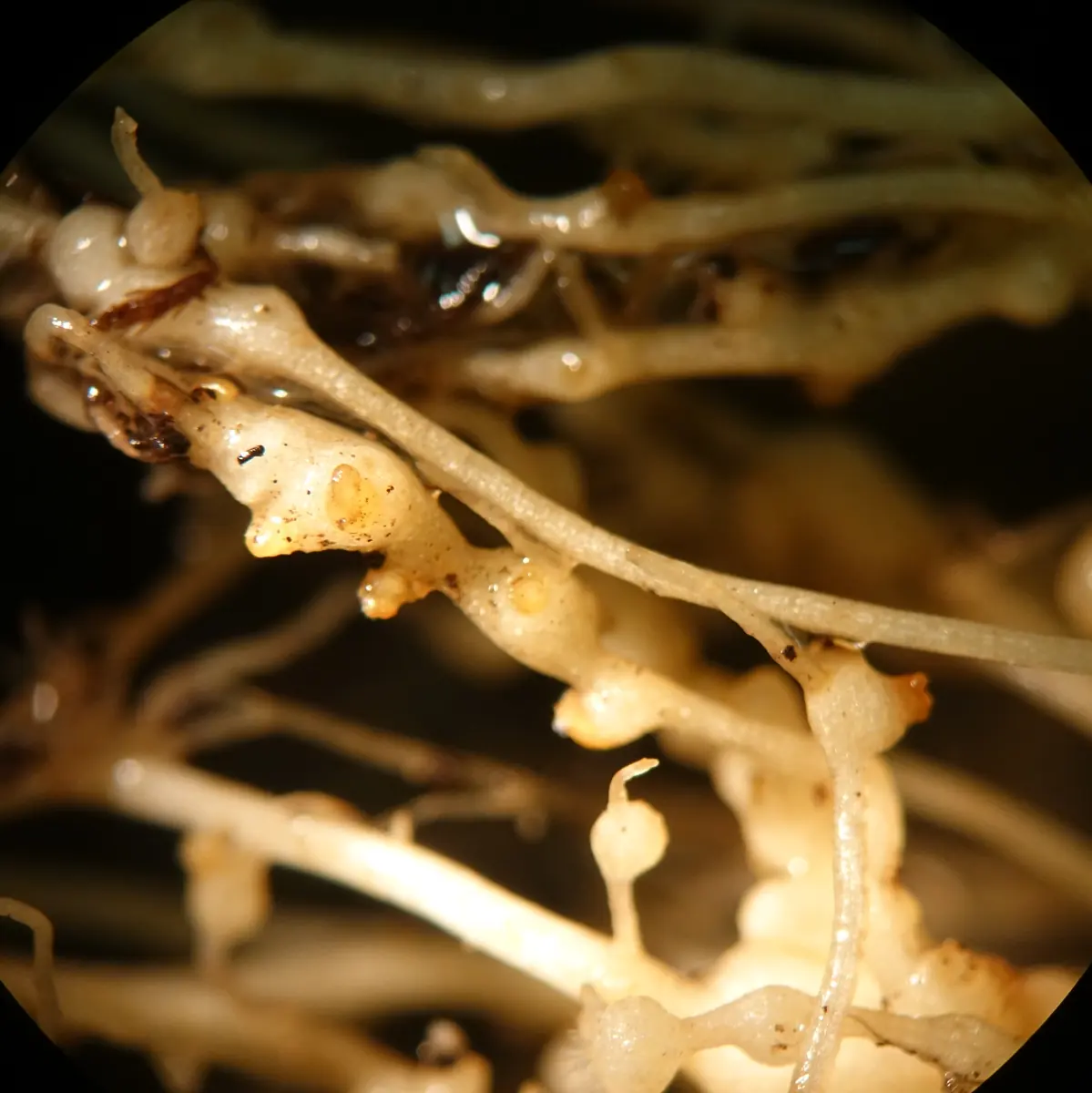
How to identify it
- Plants wilting in the heat and recovering overnight despite moist soil
- Stunted, yellowing growth and poor yields with no obvious pest above ground
- Knotty galls and swellings along the roots when you lift a plant
- Forked, distorted carrots and root crops
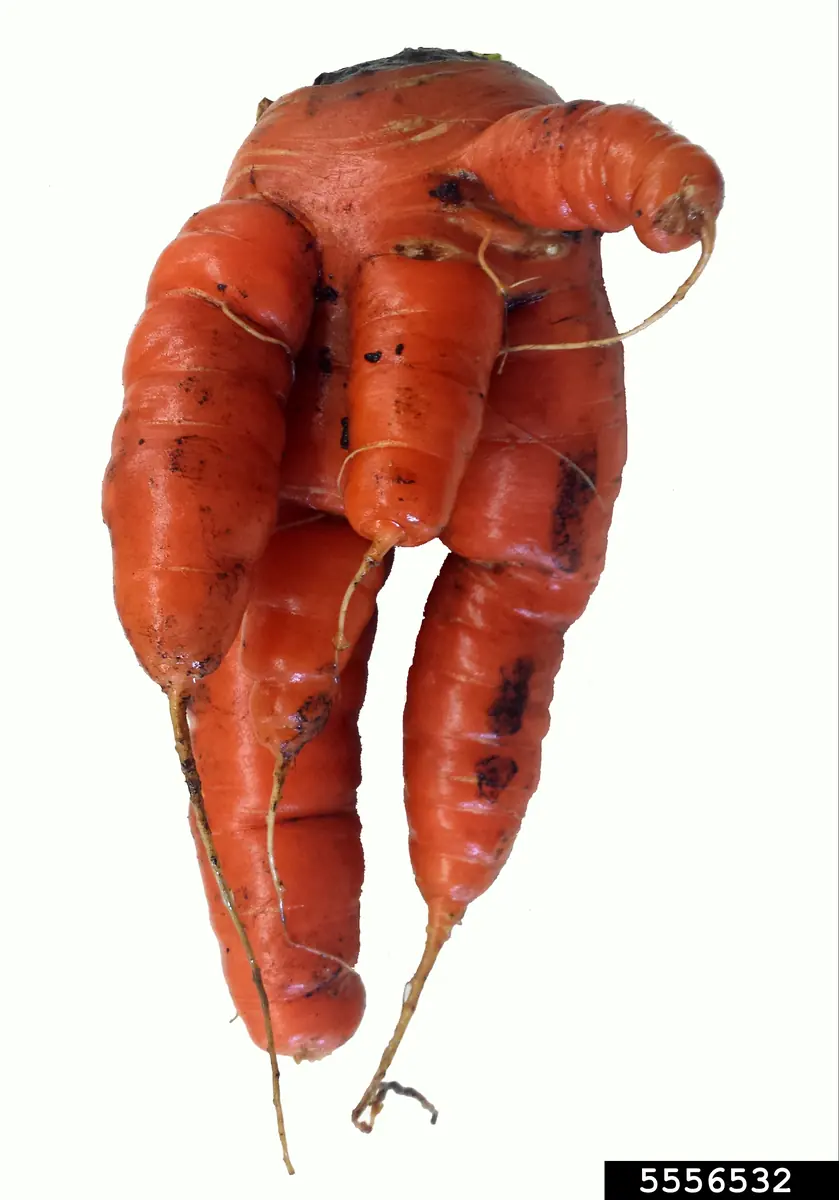
How to prevent it
- Rotate crops and avoid replanting susceptible crops in the same bed
- Grow a biofumigant green manure like mustard, then dig it in while green
- Build up organic matter and soil life, which suppresses nematodes
- Choose nematode-resistant varieties where available, often marked with an N
Organic control, step by step
- Solarise infested beds over summer by covering moist soil with clear plastic for 6 weeks
- Dig in mustard green manure as a biofumigant before replanting
- Plant a marigold cover crop densely and dig it in, since some types suppress nematodes
- Add plenty of compost to boost beneficial soil organisms that prey on nematodes
- Rest badly affected beds with non-host crops like sweetcorn and onions
Track it in the app. The free Planting Season planner lists the pests and diseases to watch for on every plant in your garden, tuned to your region.