Blossom end rot: identify, prevent, control
Updated June 2026
Worst during hot, dry spells and growth spurts in summer, December to February, on the first fruit to set.
Blossom end rot is a calcium and watering disorder, not a pathogen, so it cannot spread from plant to plant. It shows as a sunken brown patch on the bottom of tomatoes, capsicum and zucchini when uneven watering stops the fruit getting enough calcium during a growth spurt.
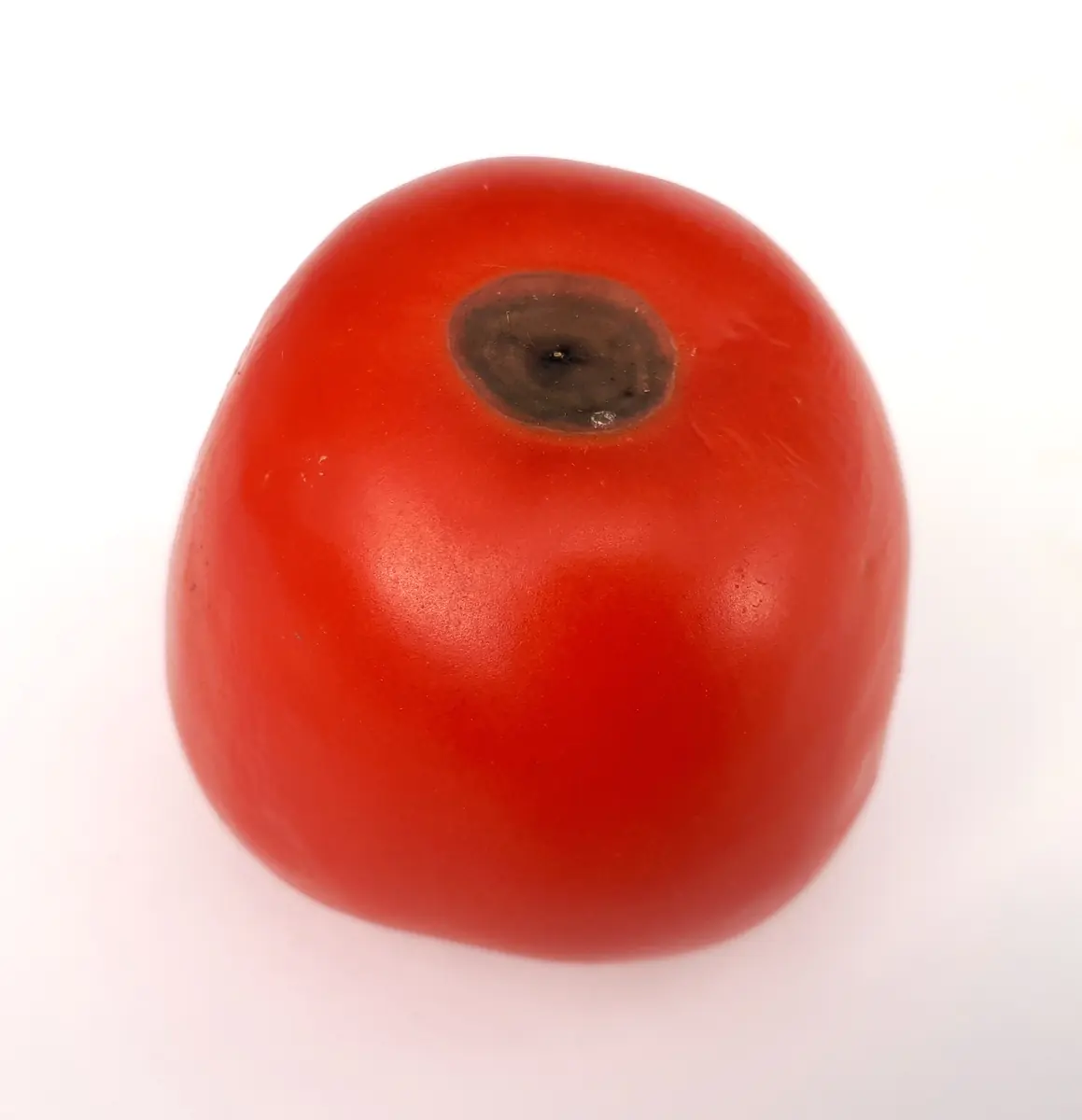
How to identify it
- A sunken, leathery brown or black patch on the blossom end (bottom) of the fruit
- First fruit of the season often worst affected
- The patch staying dry and firm rather than turning to soft mould
- Appearing after hot spells or irregular watering
How to prevent it
- Water deeply and consistently, since erratic watering is the main cause
- Mulch well to hold even moisture in the root zone
- Avoid heavy nitrogen feeding, which pushes fast growth that outruns calcium supply
- Lime acidic soil before planting so calcium is available to the roots
Organic control, step by step
- Even out your watering routine, as this is the real fix rather than any spray
- Mulch thickly to buffer soil moisture between waterings
- Remove affected fruit so the plant puts its energy into healthy fruit
- Check soil pH and lime if it is too acidic for calcium uptake
- Ease off high-nitrogen fertilisers during fruiting
- Expect later fruit to come good once watering steadies
Plants it attacks
Track it in the app. The free Planting Season planner lists the pests and diseases to watch for on every plant in your garden, tuned to your region.