Pod borer: identify, prevent, control
Updated October 2026
Worst from late summer to autumn in tropical and subtropical gardens from the Top End to South East Queensland and northern NSW.
Pod borer is a name for caterpillars that feed inside the flowers and pods of beans and other legumes. In Australian gardens the main culprits are the bean podborer, Maruca vitrata, a small brown and white moth of the warm north and east coast, and Helicoverpa, the native budworm and cotton bollworm caterpillars that attack almost any crop. The caterpillars hide inside buds, flowers and pods, so you usually find the damage before you find the pest.
Maruca vitrata; Helicoverpa armigera
How to identify it
- Flowers and buds drop early or look chewed and webbed together, often with small brown droppings stuck in a light silk web.
- Pods show small round entry holes, usually where a pod touches a flower, a leaf or another pod, and the seeds inside are eaten or rotting.
- Bean podborer caterpillars are pale cream to greenish, up to about 18 mm long, with two rows of paired dark spots along the back.
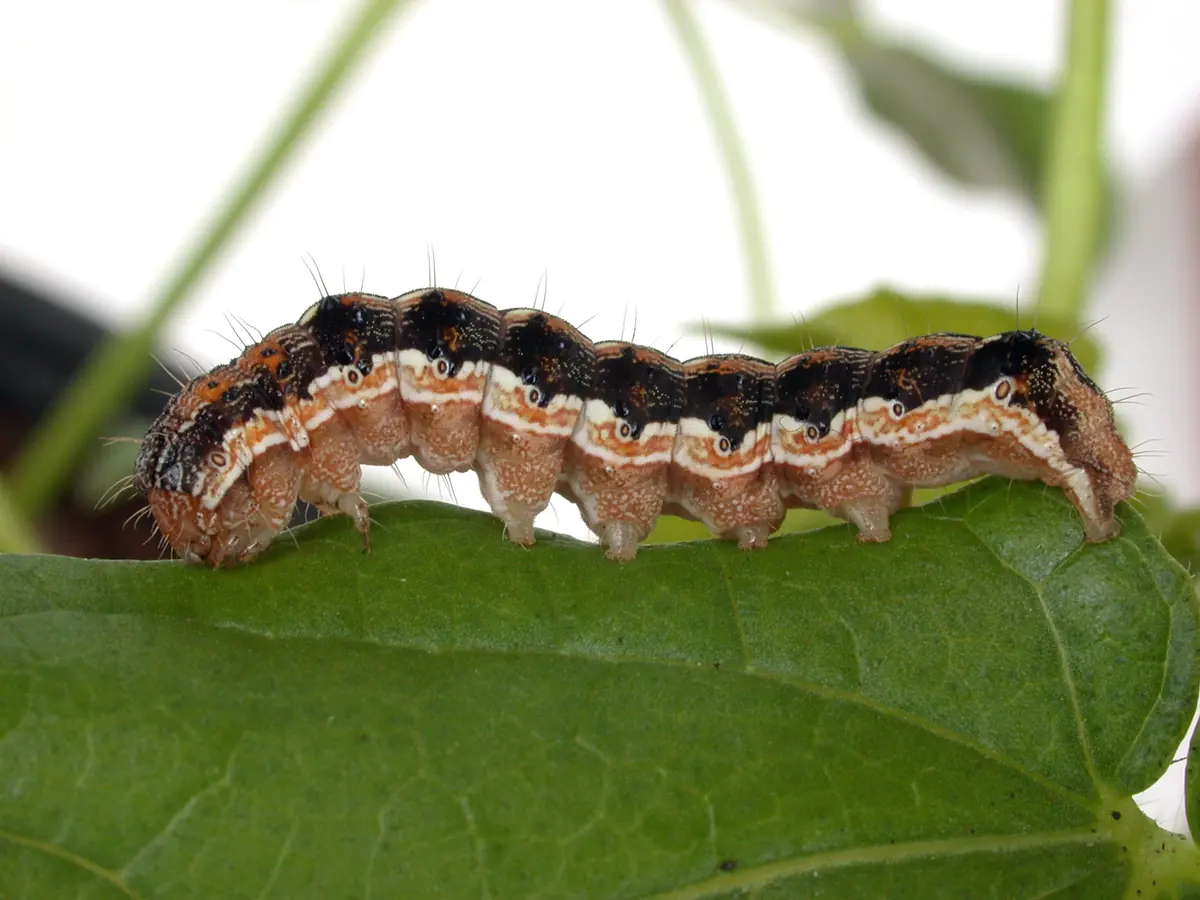
- Helicoverpa caterpillars are larger, up to about 40 mm, and vary from green to brown or almost black with pale stripes along the sides and short bristles.
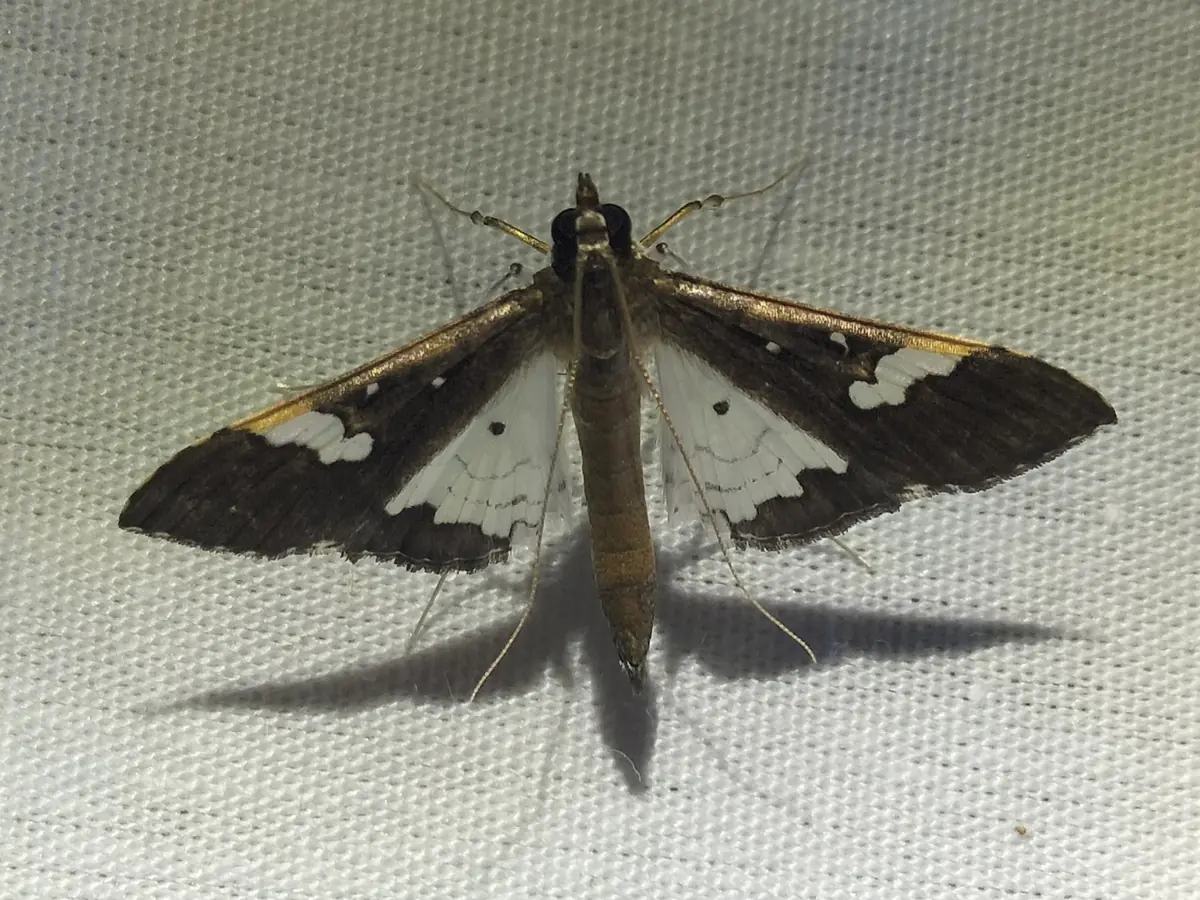
- The bean podborer moth has a wingspan of 20 to 25 mm, with brown forewings crossed by a white band and pale, translucent hind wings with brown edges, and it rests with its wings spread flat.

What it is often confused with
Bean fly
Bean fly maggots tunnel in the stems of young bean seedlings and cause them to wilt and snap near the soil. Pod borers attack flowers and pods on older, flowering plants.
Caterpillars
Leaf eating caterpillars chew holes in the foliage and are easy to see, while pod borers spend most of their life hidden inside buds, flowers and pods.
Stink bugs
Green vegetable bugs and other stink bugs suck the pods, which leaves shrivelled, spotted or deformed seeds but no entry holes or droppings.
When and where it is worst
Bean podborer is a pest of the tropics and subtropics. Business Queensland describes it as a major pest of mungbeans in coastal cropping districts, and in home gardens it is common from Darwin and Cairns down through the Wide Bay, South East Queensland and northern NSW. It builds up in late summer and autumn, from about February to May, when many legumes are flowering. Lablab, cowpeas and edamame grown through the wet season are especially exposed.
Helicoverpa is found across mainland Australia and Tasmania. Moth flights start in spring and can build to large numbers in summer and autumn, especially after rain inland produces a flush of weeds for the first generation. Gardens near cotton, grain or vegetable farms often see heavier pressure.
Plants it attacks
These plants in our library list it as a problem to watch for.
How to prevent it
- Time your plantings so that flowering does not fall in the peak pod borer months, for example by sowing cowpeas and edamame early in the warm season in the subtropics.
- Check flowers and young pods twice a week once plants start to flower, opening a few flowers to look for small caterpillars and webbing.
- Cover small plantings with fine insect mesh once flowering starts, if the crop does not need insects to set pods, because the moths lay eggs on buds and flowers.
- Remove volunteer legumes and weeds around the bed, which can carry caterpillars from one crop to the next.
- Pick pods regularly and do not leave old, dry pods on the plant, since late pods carry the next generation.
- Encourage predators and parasitic wasps by growing flowering plants nearby and avoiding broad spectrum sprays, as described on our good bugs page.
Organic control, step by step
- Pick off and squash any caterpillars you find, and remove and bin bored pods and webbed flower clusters rather than leaving them on the ground.
- Spray Bacillus thuringiensis (Bt) in the late afternoon onto flowers and young pods, every 5 to 7 days while caterpillars are active, because it works best on small caterpillars that are still feeding on the surface.
- Spinosad sprays, which are allowed in organic growing, can be used on flowers and pods where the label lists beans or legume vegetables, but spray in the evening to protect bees.
- Clean up all spent plants after harvest and dig the bed over lightly, which exposes Helicoverpa pupae in the soil to birds and weather.
Conventional control
- Home garden insecticides containing Bacillus thuringiensis or spinosad are the most practical choices, because they target caterpillars and have short withholding periods.
- Sprays only work well if you apply them as flowering begins and before the caterpillars bore into the pods, so start as soon as you see the first webbed flowers or small larvae.
- Synthetic pyrethroid home garden sprays have little effect once larvae are inside pods and they kill beneficial insects, so we do not recommend them for pod borer.
- Always read the label, check that your crop is listed, and keep to the withholding period before you pick.
Frequently asked questions
Can I eat beans that had pod borer in them?
Discard bored pods, because the seeds inside are usually eaten, soiled with droppings or starting to rot. Unaffected pods from the same plant are fine to eat.
Why are my lablab flowers dropping before they set pods?
Bean podborer caterpillars often feed inside the flower buds, which makes them drop. Open a few fallen flowers and look for a small cream caterpillar with dark spots. Hot dry weather and water stress can also make flowers drop.
Is Bt safe for bees and other insects?
Bacillus thuringiensis only affects caterpillars that eat the treated leaves or flowers, so it is safe for bees, ladybirds and other predators. It breaks down in sunlight, which is why it should be applied in the late afternoon and repeated after rain.
Related problems
Sources: Business Queensland, Bean podborer; The Beatsheet (Queensland DAF), Bean podborer outbreak in Central Queensland mungbeans; Pacific Pests, Pathogens and Weeds, Bean pod borer. Identification and control follow these sources. Always read the product label before use.