Banana bunchy top: identify, prevent, control
Updated October 2026
Found year round in South East Queensland and north-east NSW, with symptoms easiest to see on new leaves during the warm growing season.
Banana bunchy top is a virus disease that stunts banana plants so badly that they rarely produce a usable bunch. In Australia it is contained in the southern banana biosecurity zone of South East Queensland and north-east NSW, and both states regulate it to protect the commercial banana districts of North Queensland, the Northern Territory and Western Australia, which are free of it. There is no cure, so infected plants must be destroyed and the right authority told.
Banana bunchy top virus (BBTV), spread by the banana aphid Pentalonia nigronervosa

How to identify it
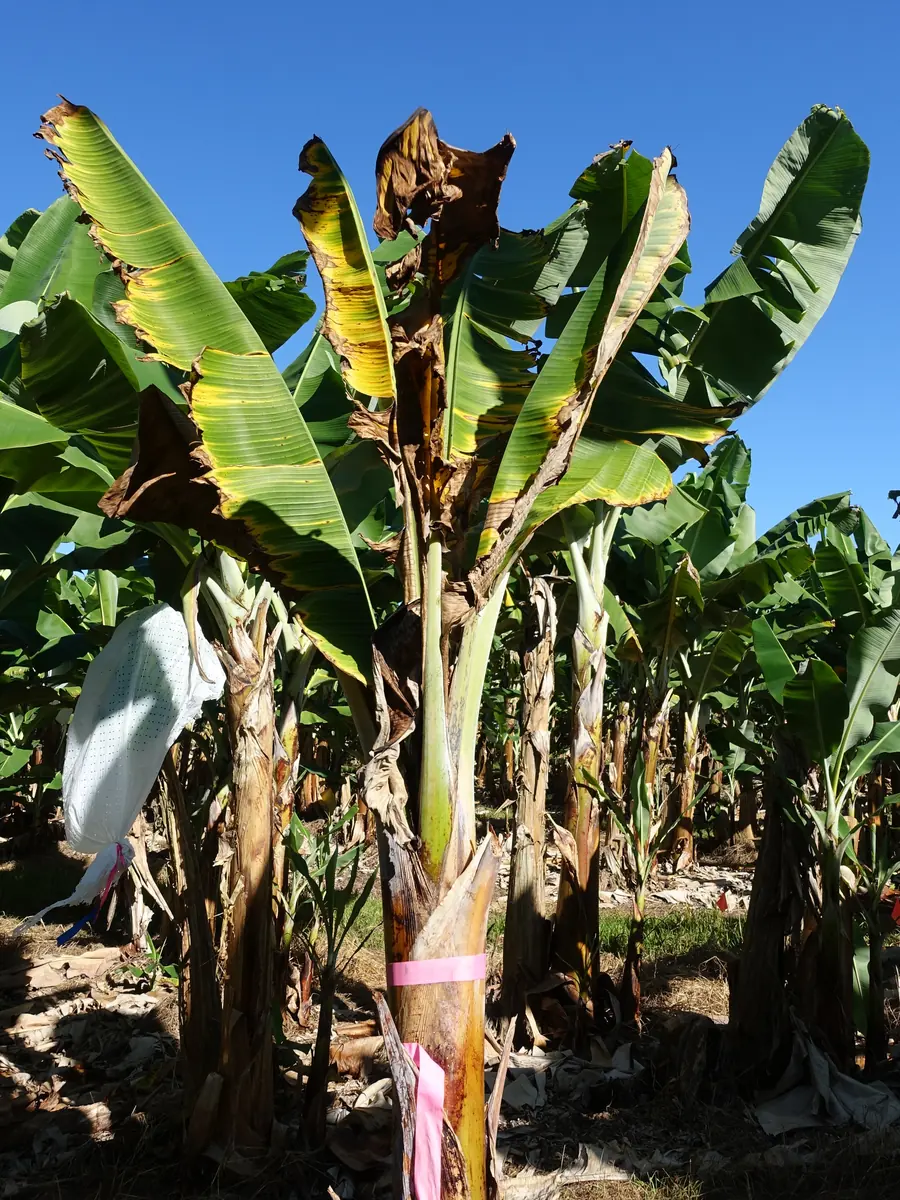
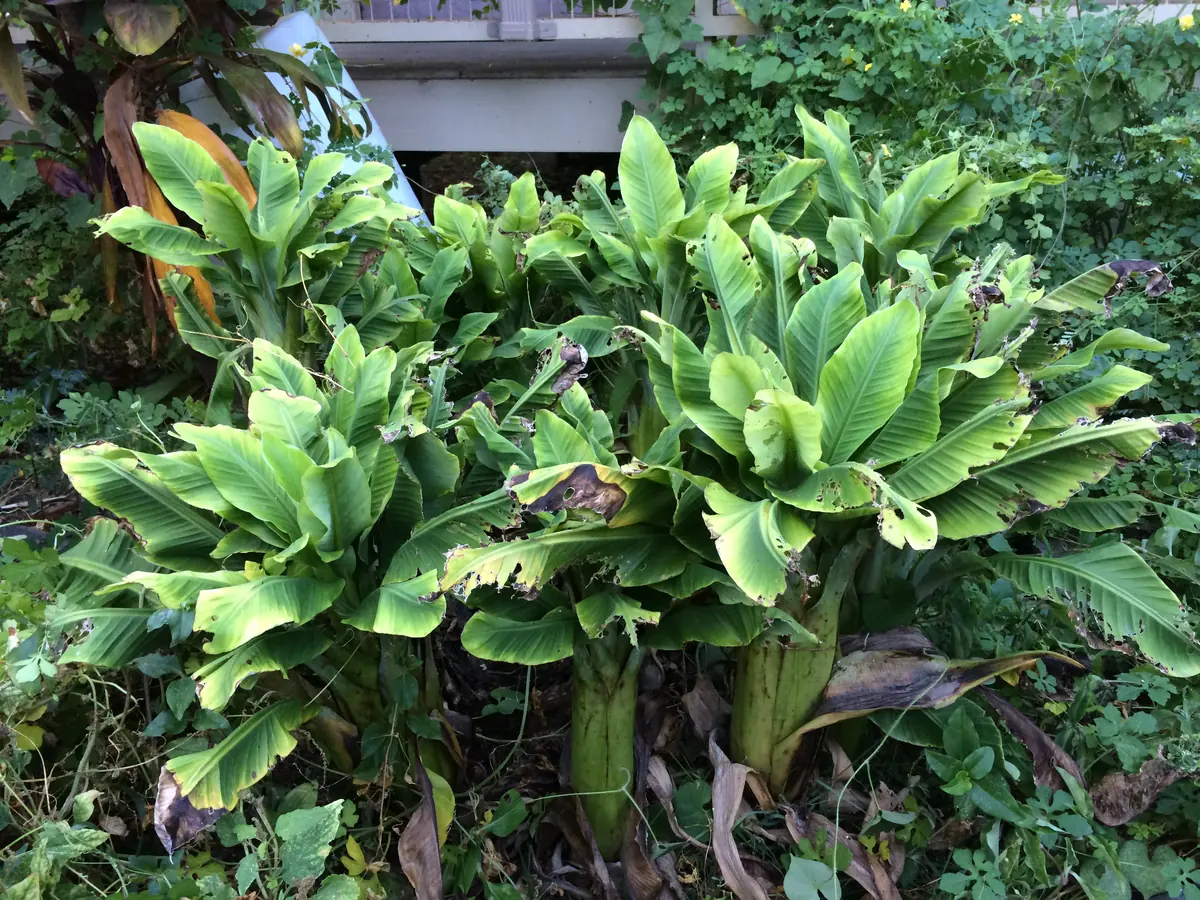
- New leaves come up shorter, narrower and more upright than normal, crowding together at the top of the plant in a tight rosette, which gives the bunched look.
- The edges of the new leaves are often yellow or pale and curl slightly upwards, and the leaves feel brittle.
- Hold a leaf up to the light and look at the underside: short dark green dots and dashes, often described as Morse code streaks, run along the small veins.
- Similar dark green streaks appear on the leaf stalk and along the midrib, and sometimes form hooks where they meet the midrib.
- Infected plants stop growing, and any bunch that forms is small and twisted; suckers from an infected plant are infected too.

What it is often confused with
Mosaic virus
Banana mosaic viruses cause yellow streaks or mottling across the leaf, but leaves are a normal size and are not bunched upright with dark green dot-dash marks.
Panama disease
Panama disease yellows and collapses the older leaves first, while bunchy top affects the youngest leaves at the top of the plant.
Aphids
Banana aphids are small, dark brown and sit in the leaf bases and around the heart of the plant. Finding them does not mean the plant is infected, but they are how the virus spreads.
When and where it is worst
Business Queensland describes the virus as contained in the southern banana biosecurity zone, which covers South East Queensland and runs into north-east NSW, where NSW DPI manages a Banana Bunchy Top control zone in the Northern Rivers. It is spread by banana aphids that fly up to about 100 metres between plants, and over longer distances by people moving infected suckers and plants.
If you garden in Queensland and see bunchy top inside the southern zone, call the Banana Bunchy Top Hotline on 1800 068 371. Outside that zone, including anywhere in North Queensland, report it to Biosecurity Queensland on 13 25 23 or the Exotic Plant Pest Hotline on 1800 084 881. In NSW, report suspect plants to NSW DPI through the Exotic Plant Pest Hotline on 1800 084 881.
Plants it affects
These plants in our library list it as a problem to watch for.
How to prevent it
- Buy banana plants only from accredited suppliers in the Quality Banana Approved Nursery (QBAN) scheme; tissue culture plants are the safest source.
- Never accept suckers from a neighbour or a market stall, even if the parent plant looks healthy.
- Do not move banana plants or planting material (anything other than fruit) into Queensland or between Queensland banana biosecurity zones without a biosecurity certificate.
- In the NSW control zone, notify NSW DPI when you plant bananas, which the 2021 rules allow within 7 days after planting.
- Check the youngest leaves of every banana plant each month for bunching and dot-dash streaks.
- Remove neglected or abandoned banana clumps you are responsible for, because unmanaged plants are a reservoir for the virus and the aphids.
Organic control, step by step
- Report suspected plants first, before you do anything else, and follow the advice you are given.
- Do not cut, dig up or disturb an infected plant yourself, and do not move any of its material off your property, because disturbing it can spread aphids carrying the virus.
- Infected plants cannot be cured and must be destroyed; officers will tell you how, which usually involves killing the aphids first and then killing the whole clump, including all suckers, in place.
- Keep weeds down around your bananas and watch for colonies of banana aphids in the leaf bases.
Conventional control
- No chemical cures banana bunchy top, and no product can make an infected plant healthy again.
- Destruction of infected plants and control of the aphids on them follow the method set by Biosecurity Queensland or NSW DPI; do not improvise with herbicides or insecticides before speaking with them.
- If you are told to use a product, read the label, check bananas are listed and follow it exactly.
Frequently asked questions
Can I eat fruit from a banana plant with bunchy top?
The virus does not affect people, and fruit is not how it spreads. Infected plants rarely produce a normal bunch, and the plant still needs to be reported and destroyed.
Can I take suckers from my healthy-looking banana to give away?
In Queensland and the NSW control zone there are rules on moving banana planting material, and suckers can carry the virus before symptoms show. Point friends to an accredited QBAN supplier instead.
Will a new banana be safe in the same spot?
The virus does not survive in the soil, so once every part of the infected clump is dead you can replant with a clean plant from an accredited nursery. Wait until the old clump and any aphids are gone, and check new plants often.
Related problems
Sources: Business Queensland, Banana bunchy top; NSW DPI media release, An appealing approach to managing banana bunchy top virus (9 September 2021); Australian Banana Growers' Council, Changes within the Bunchy Top control zone. Identification and control follow these sources. Always read the product label before use.