Mosaic virus: identify, prevent, control
Updated June 2026
Spreads through the warm growing season whenever aphids are active, September to April.
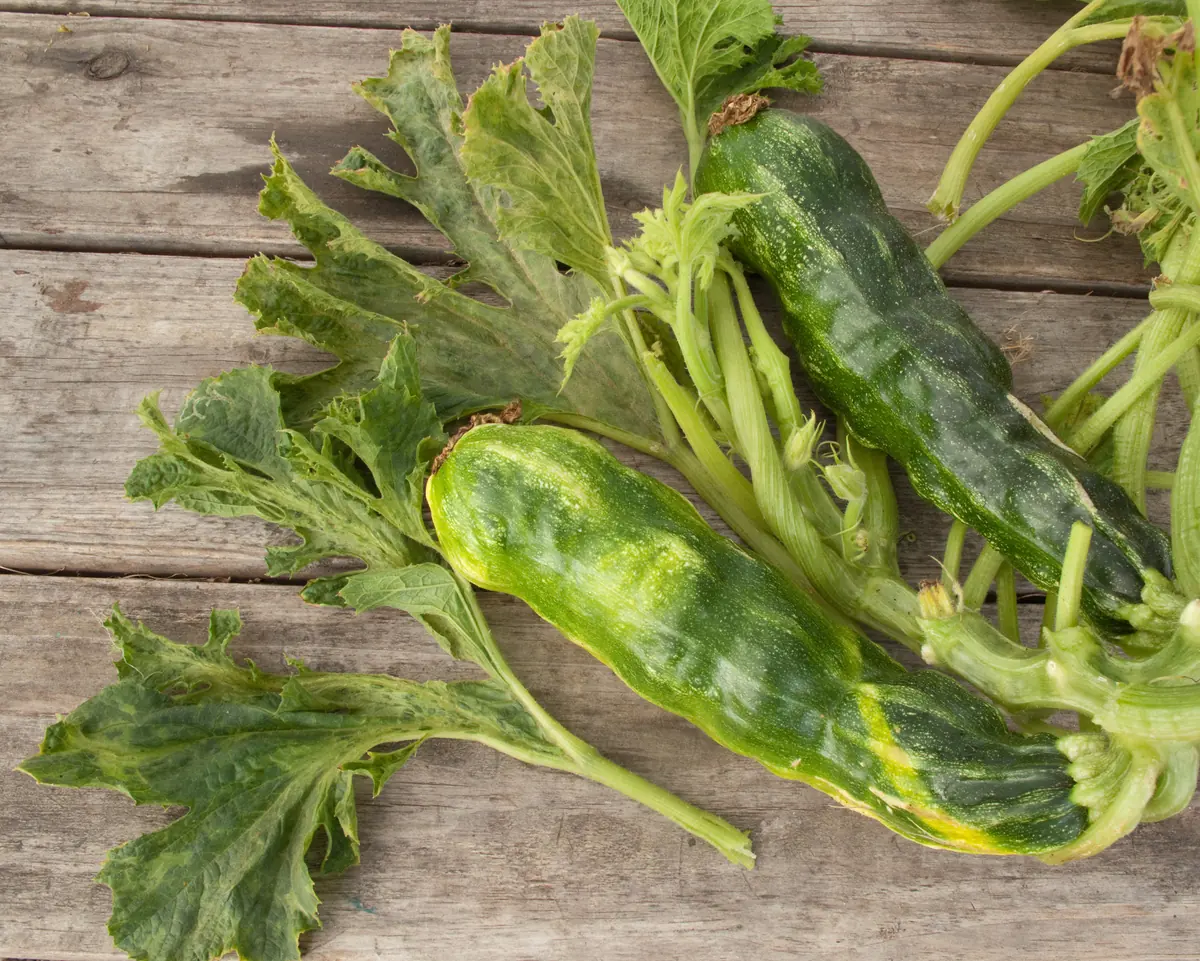
Mosaic viruses mottle leaves with light and dark patches and distort growth on cucurbits, tomatoes, beans and capsicum. They are spread mainly by aphids and on hands and tools, and there is no cure, so the focus is on controlling the carriers and removing infected plants.
How to identify it
- Mottled light and dark green or yellow patches across the leaves
- Puckered, distorted, narrowed or curled leaves
- Stunted plants with poor, often deformed fruit
- Symptoms spreading from plant to plant over time
How to prevent it
- Control aphids and other sap-suckers, the main carriers of the virus
- Use clean, certified seed and resistant varieties where available
- Wash hands and tools, and avoid handling plants after smoking, since tobacco can carry related viruses
- Remove weeds that host the virus and its carriers
Organic control, step by step
- Remove and bin infected plants promptly, since there is no cure
- Do not compost infected material
- Control aphids and whitefly to slow the spread between plants
- Disinfect tools and wash hands between handling plants
- Grow resistant varieties in future seasons where the virus is a recurring problem
- Keep weeds down to remove virus reservoirs
Plants it attacks
Track it in the app. The free Planting Season planner lists the pests and diseases to watch for on every plant in your garden, tuned to your region.