Banana weevil borer: identify, prevent, control
Updated October 2026
Active all year in warm coastal gardens, and most damaging in the cooler banana districts of South East Queensland and northern NSW where plants grow slowly.
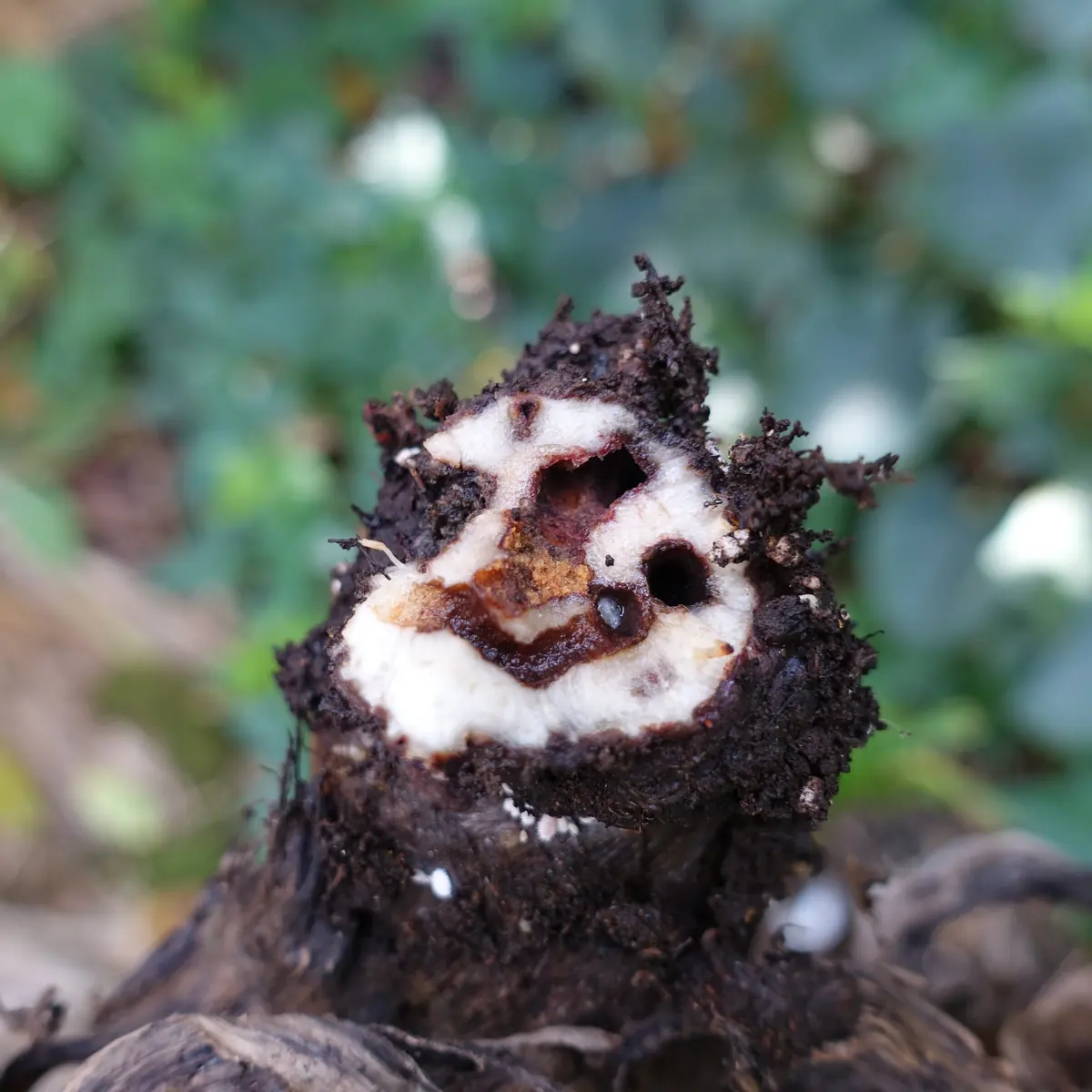
The banana weevil borer is a beetle whose grubs tunnel through the corm, the underground base of the banana plant. Business Queensland reports it throughout the coastal banana growing areas of NSW and Queensland and in the Ord River area of WA, and it is worst in the cooler south where plants grow slowly. Heavy infestations weaken the root system so plants produce poor bunches and blow over in wind.
Cosmopolites sordidus
_injury_to_basal_pseudostem.jpg)
How to identify it
- Plants look unthrifty, with yellowing leaves, slow growth and small bunches, even though they are fed and watered.
- Plants carrying a bunch lean or snap at the base and fall over in wind, often with the corm and roots left in the ground.
- When you cut across the corm or the base of an old stem, you find round tunnels about the width of a pencil, filled with brown, rotting frass.
- The grubs inside are creamy white, legless and curved, up to about 12 mm long, with a brown head.
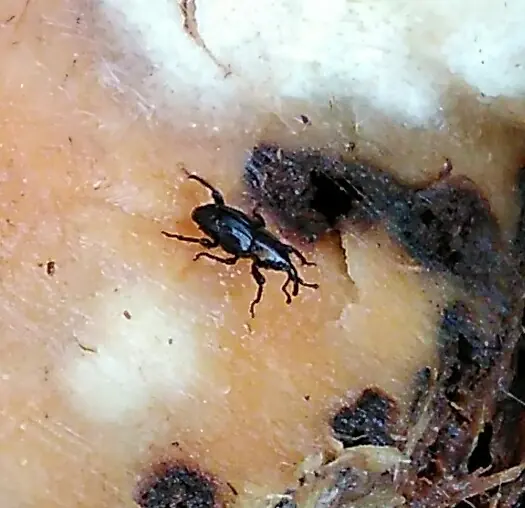
- The adults are hard, black or dark brown weevils 10 to 12 mm long with a long snout, which hide in trash and old stems by day and are rarely seen unless you trap them.

What it is often confused with
Panama disease
Panama disease also weakens and kills bananas, but the corm has no tunnels and the trunk shows red brown staining of the water conducting strands. Report suspected Panama disease rather than cutting the plant.
Nematodes
Burrowing nematodes make dark, rotting lesions on the roots and the outer corm that also lead to toppling, but without the pencil sized tunnels and grubs of the weevil borer.
Borers
Our borers page covers the moth and beetle larvae that bore into the trunks and branches of fruit trees. The banana weevil borer only attacks bananas and their close relatives.
When and where it is worst
Banana weevil borer is found in coastal banana growing areas from northern NSW through South East Queensland to North Queensland, and in the Ord River area of Western Australia. It is a bigger problem in backyards in Brisbane, the Gold and Sunshine Coasts and the NSW north coast than in the tropics, because bananas grow slowly in the cooler winters and old stems and corms are often left lying around, giving the weevils places to breed.
Adults live for a long time, crawl rather than fly, and are attracted to the smell of freshly cut and rotting banana stems. They lay eggs at the base of the plant, and the grubs feed in the corm for several weeks. The pest spreads mainly in infested suckers and corms moved from one garden to another.
Plants it attacks
These plants in our library list it as a problem to watch for.
How to prevent it
- Start new plantings with tissue cultured plants from an accredited nursery, which are free of weevil borer and also protect your garden from bunchy top and Panama disease.
- If you replant into an old banana patch, dig out all old corms and leave the area free of bananas for at least six months.
- After harvest, cut the old stem off at ground level and chop it into small pieces, or split it lengthways, so it dries out quickly rather than becoming a breeding site.
- Keep the base of the stools free of rotting stems and thick trash where adults hide during the day.
- Keep plants growing strongly with mulch, compost and regular water, so a light infestation does less damage.
Organic control, step by step
- Make simple traps by cutting a fresh banana stem into pieces about 30 cm long, splitting them lengthways and laying them cut side down near the base of the plants.
- Check the traps every few days, collect and destroy the weevils sheltering underneath, and replace the traps every week or two as they dry out.
- Keep trapping regularly through the warm months, as steady trapping reduces numbers over a season.
- Remove and destroy badly tunnelled corms and suckers rather than replanting them or giving them away.
Conventional control
- Insecticides registered for banana weevil borer in Australia are farm products used on commercial Cavendish and Lady Finger plantations, and we could not find a home garden product that lists this pest.
- Hygiene, clean planting material and trapping are the practical controls for home gardeners.
- If you use any product on your bananas, always read the label, check that bananas and this pest are listed, and keep to the withholding period.
Frequently asked questions
Why do my bananas keep falling over when they have a bunch?
Banana weevil borer tunnels and nematode damage both weaken the corm and roots, so the plant cannot hold the weight of the bunch in wind. Cut through the base of a fallen plant and look for pencil sized tunnels to confirm weevil borer.
Can I use suckers from my own infested bananas?
It is better not to, because suckers often carry eggs and grubs into the new planting. If you do, pare the corm back to clean white tissue and discard any with tunnels, but tissue cultured plants are a much safer choice.
Does banana weevil borer attack other plants?
It breeds only in bananas and their close relatives, such as plantains and ornamental Ensete. Other plants in your garden are not at risk.
Related problems
Sources: Business Queensland, Banana weevil borer; CSIRO Publishing, Australian Journal of Experimental Agriculture, banana weevil borer research; University of Hawaii CTAHR Crop Knowledge Master, Cosmopolites sordidus. Identification and control follow these sources. Always read the product label before use.