Black spot: identify, prevent, control
Updated October 2026
Worst in cool, wet springs and early summers, from Tasmania and Victoria up to the Granite Belt and the Sydney basin, and on roses in any humid summer.
Gardeners in Australia use the name black spot for three separate fungal diseases: rose black spot, apple and pear scab, and grape black spot, which is a form of anthracnose. Each fungus attacks only its own host, so scab on your apple tree will not spread to your roses, but all three are driven by wet leaves in spring and all three are managed in a similar way. Left alone, they strip leaves, weaken plants and leave fruit cracked, scabby or unsaleable.
Diplocarpon rosae (roses), Venturia inaequalis (apple), Venturia pirina (pear), Elsinoe ampelina (grapes)
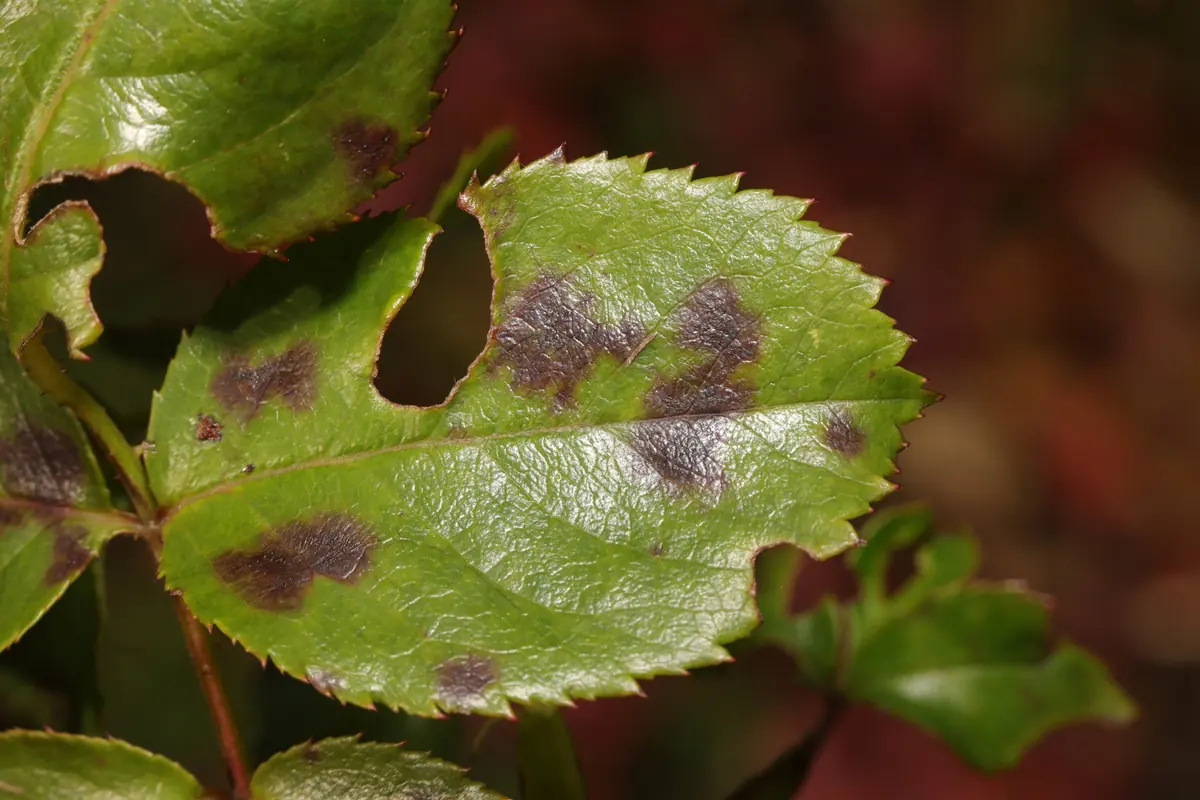

How to identify it
- On roses you first see round black spots with feathery, fringed edges on the upper side of older leaves, usually low on the bush.
- Rose leaves around the spots turn yellow and drop early, and badly affected bushes can be half bare by midsummer, with purple or black blotches on young canes.
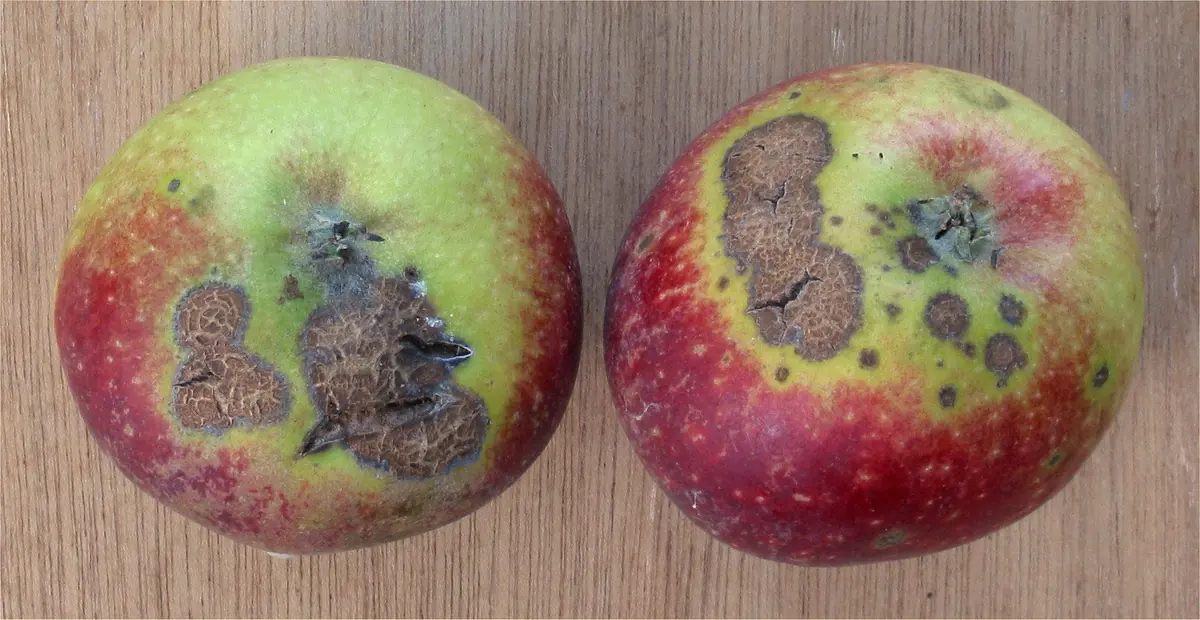
- On apples and pears, olive green to sooty black velvety spots appear on young leaves in spring, followed by dark, corky scabs on the fruit that often crack as the fruit swells.
- Pear scab looks much the same as apple scab and also forms small scabby lesions on young twigs, which carry the disease through winter.
- On grapes, small brown to black spots 1 to 3 mm across appear on young leaves and shoots, the centres fall out to leave holes, and canes develop sunken, cracked cankers.
- Infected grape berries show greyish spots with a dark rim, often described as bird's eye spots, that harden into crusts as the berries ripen.
.jpg)
What it is often confused with
Leaf spot
General leaf spots are usually small, round and neatly edged. Rose black spot has a fringed, feathery margin and causes heavy yellowing and leaf drop.
Anthracnose
Grape black spot is a type of anthracnose. Anthracnose on mango, avocado and other fruit is caused by different Colletotrichum fungi and is managed differently.
Sooty mould
Sooty mould is a black film that wipes off the leaf and follows sap-sucking insects. Black spot lesions are inside the leaf tissue and cannot be rubbed away.
When and where it is worst
All three diseases need free water on leaves or fruit for several hours to infect. Apple and pear scab is most serious in the cool, high-rainfall growing areas of Victoria, Tasmania, the Adelaide Hills, the NSW tablelands and the Granite Belt, where spring rain falls during blossom and early fruit set from September to November. Grape black spot is worst on sultanas and some table grapes in cool, wet springs, and is much less common in dry inland gardens.
Rose black spot is found in every region but is worst in humid Sydney, South East Queensland and coastal gardens, and anywhere roses are watered from overhead in the evening. It builds up through spring and late summer rain, then eases off in dry weather.
Plants it affects
These plants in our library list it as a problem to watch for.
How to prevent it
- Choose resistant varieties where you can, such as disease-resistant shrub roses, scab-resistant apples, and wine grape varieties rather than sultanas if black spot has been a problem.
- Plant in full sun with room between plants so leaves dry quickly after rain or dew.
- Water at the base of the plant in the morning and avoid wetting the leaves.
- Rake up and remove fallen leaves in autumn and winter, because the fungi survive on leaf litter and start the next spring's infections from there.
- Prune out cankered grape canes and scabby apple or pear twigs in winter and put them in the green waste bin rather than the compost.
Organic control, step by step
- Pick off the first spotted rose leaves as soon as you see them and bin them, then keep collecting fallen leaves through the season.
- Thin crowded rose canes and fruit tree branches to let air and light into the centre of the plant.
- On grapes, apply lime sulphur or a copper spray at budswell in late winter, before the green tips show, to reduce overwintering spores on the canes.
- On apples and pears, spray copper at green tip in early spring, then keep new growth covered with wettable sulphur through the wet blossom period, following the label for each crop.
- On roses, wettable sulphur or a copper spray applied every 7 to 14 days through wet weather protects new leaves, but avoid sulphur when days are above about 30°C.
Conventional control
- Mancozeb, alone or combined with wettable sulphur in home garden packs, is registered for black spot on roses and for apple black spot (scab); spray from green tip and repeat after rain as the label directs.
- Copper hydroxide or copper oxychloride can be used early in the season on apples, pears and grapes, and on roses, before most leaves have opened.
- Home garden rose sprays containing a triazole fungicide such as tebuconazole or myclobutanil give longer protection on roses only, and should be alternated with a different group to slow resistance.
- Read the label every time, check the crop you are spraying is listed, and keep to the withholding period before you pick fruit or grapes.
Frequently asked questions
Can black spot from my roses spread to my apple tree?
No. Rose black spot, apple scab, pear scab and grape black spot are caused by four different fungi, and each one only infects its own host. They share a common name because the symptoms look alike.
Are apples with black spot safe to eat?
Yes. The scabs are only skin deep and the fruit is safe to eat once you peel or cut away the damaged parts. Badly scabbed fruit often cracks and rots in storage, so use it first.
Should I strip every spotted leaf off my rose bush?
Remove the worst leaves and all fallen ones, but do not strip the bush bare, because the plant needs its leaves to recover. Combine light picking with better airflow and a protective spray in wet weather.
When is the best time to spray grapes for black spot?
The most useful spray is lime sulphur or copper at budswell in late winter, before the buds burst. In wet springs, follow it with protective sprays as new shoots grow.
Related problems
Sources: Agriculture Victoria, Apple scab; Agriculture Victoria, Black spot of grapevines; APAL, IPDM in focus: black spot (apple scab and pear scab); Pacific Pests, Pathogens and Weeds, Rose black spot. Identification and control follow these sources. Always read the product label before use.