How to Grow Zinnias in Australia
Updated June 2026
The easiest, most rewarding cut flower you can grow from seed
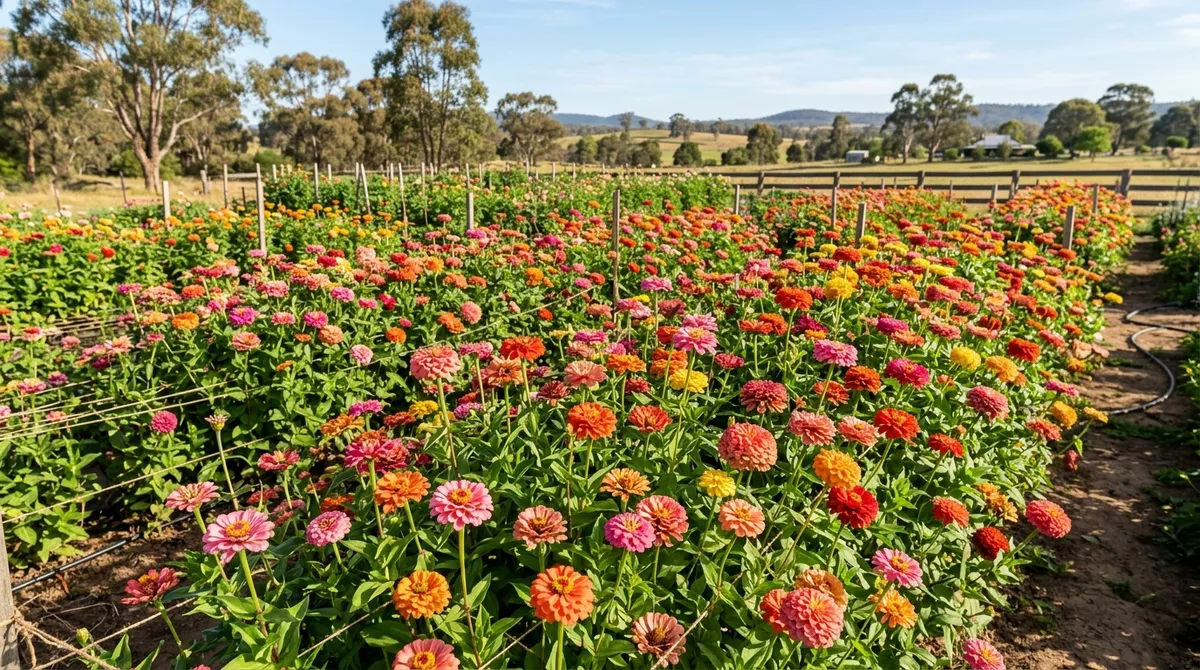
Zinnias are the gateway flower for anyone who has never grown cut flowers before. Drop seeds into warm soil, wait 8 to 10 weeks, and you will have armfuls of blooms in every colour from deep burgundy to lime green, coral to hot pink. The more you cut them, the more they produce. A single packet of seeds provides months of flowers for the house and enough to share with neighbours.
These Mexican natives love Australian heat. They thrive in the conditions that wilt many other flowers, and they keep blooming from late spring through to the first frosts of autumn. If you have a sunny patch of garden and access to a watering can, you can grow zinnias.
🌱 Plant profile: Zinnia, with sowing times for your region, companion plants and common pests.
When to Plant
Zinnias need warm soil to germinate. Wait until soil temperature is above 20 degrees before sowing. In practice, this means:
- Subtropical and tropical: August to February
- Temperate warm (Sydney, Perth): October to January
- Temperate cool (Melbourne, Adelaide): November to January
- Cool climate (Hobart, Canberra): November to December
Seeds sown into cold, wet soil will rot before they germinate. Patience pays off here. Wait for warm weather and the results are dramatically better.
How to Sow
Zinnias have a taproot and do not transplant well. Direct sowing is the preferred method.
- Choose a spot in full sun (minimum 6 hours of direct sunlight). More sun means more flowers.
- Prepare the soil with compost. Zinnias are not fussy about soil but grow best in rich, well-drained ground.
- Sow seeds 5 mm deep, 25 to 30 cm apart. If sowing in rows for cut flowers, space rows 40 cm apart.
- Water gently. Seeds germinate in 5 to 7 days in warm soil.
- Thin if needed. Proper spacing is important for airflow and mildew prevention.
If you want to get a head start in cooler regions, sow seeds in pots indoors 4 weeks before your planned outdoor planting date. Use deep pots or tubes to accommodate the taproot and handle seedlings carefully when transplanting.
The Pinching Technique
Pinching is the single most important thing you can do to improve your zinnia harvest. It sounds counterintuitive (you are cutting off the first flower), but it makes a huge difference.
Here is how it works:
- Wait until the plant has 3 to 4 sets of true leaves and is about 20 to 30 cm tall.
- Cut the main stem just above a set of leaves, removing the growing tip and any flower bud that has formed.
- Two new stems will grow from the leaf nodes below the cut.
- Those two stems will each produce a flower, and then branch again when cut.
Without pinching, a zinnia plant sends up one tall central stem with one flower. With pinching, the same plant produces a bushy form with 8 to 12 stems and 8 to 12 flowers. The flowers on pinched plants also have longer, straighter stems, which are better for arranging.
Variety Guide
Giant Dahlia Flowered
Large, fully double flowers up to 12 cm across on plants 90 to 100 cm tall. A classic variety that comes in a wide colour range. Good for dramatic vase arrangements. Needs staking in windy areas.
Benary's Giant
The gold standard for cut flower growers. Large double blooms on strong, straight stems 80 to 100 cm tall. Excellent disease resistance. Available in individual colours (Coral, Deep Red, Lime, Salmon Rose, Wine) or as a mix. This is the variety to grow if you want professional-quality cut flowers.
Zinderella
A scabiosa-flowered type with a distinctive pincushion centre and frilly outer petals. Unusual and eye-catching. Comes in lilac and peach. Plants are 60 to 70 cm tall. Good mildew resistance.
Lilliput
Compact, pompon-style flowers about 4 cm across on plants 40 to 50 cm tall. Perfect for borders, pots, and small gardens. The small flowers look charming in bud vases and mixed posies.
Queen Lime
Unusual lime-green to blush flowers that are popular with florists. Plants reach 70 to 80 cm. The colour is unique among zinnias and works well in both garden beds and arrangements.
Oklahoma
A heat-tolerant Australian favourite with semi-double flowers in warm colours. Plants are 60 to 70 cm tall and handle hot, dry conditions better than most zinnia varieties.
Watering and Feeding
Water zinnias at the base, never overhead. Wet leaves promote powdery mildew, the main disease problem with zinnias. Use drip irrigation or a watering can directed at the soil. Water deeply 2 to 3 times per week in hot weather rather than lightly every day.
Feed every 2 to 3 weeks with a balanced liquid fertiliser once flowering begins. A feed high in potassium (like a tomato fertiliser) encourages more blooms. Avoid excessive nitrogen, which produces big leaves but fewer flowers.
Preventing Powdery Mildew
Powdery mildew is a white, dusty coating that appears on zinnia leaves in humid conditions. It does not kill the plant but makes it look terrible and reduces flower production. Prevention is much easier than treatment.
- Space plants correctly. 25 to 30 cm between plants allows air to circulate and dry the foliage.
- Never water overhead. Always water at the base.
- Plant in full sun. Shade and poor airflow create the humid conditions mildew thrives in.
- Choose resistant varieties. Benary's Giant and Zinderella have good mildew resistance.
- Remove affected leaves. At the first sign of white spots, remove the affected leaves and bin them (not compost). This slows the spread.
If mildew takes hold despite prevention, a milk spray (1 part milk to 9 parts water) applied weekly can help slow it. Potassium bicarbonate sprays also provide some control.
Cutting and Arranging
Zinnias are cut-and-come-again flowers. Every stem you cut triggers the plant to produce two new stems below the cut. Regular cutting is the best way to keep plants producing all season.
When to cut
Cut when the flower is fully open and the stem feels firm when you gently shake it (the "wiggle test"). If the stem is floppy, the flower is too young and will wilt in the vase. Wait another day and check again.
How to cut
Cut stems long (30 to 40 cm) in the morning. Place immediately into a bucket of clean water. Strip all leaves that would sit below the waterline in the vase. Change vase water every 2 days. Zinnias last 7 to 10 days in a vase.
Saving Zinnia Seeds
Saving zinnia seeds is straightforward and a good way to build your collection over the years.
- Leave 3 to 4 of the best flowers on the plant to mature fully. Do not cut these for the vase.
- Let the flower heads dry on the plant until they are brown and papery (4 to 6 weeks after blooming).
- Cut the dry flower heads and bring them inside.
- Pull the petals apart. The seeds are small, arrow-shaped, and tucked between the petals and the seed head.
- Spread seeds on a tray to dry for a few more days indoors.
- Store in a labelled paper envelope in a cool, dry place. Seeds stay viable for 3 to 5 years.
Frequently Asked Questions
When should I plant zinnias in Australia?
Plant zinnia seeds in spring after the last frost, from September to November depending on your region. Zinnias need warm soil (above 20 degrees) to germinate well. In subtropical and tropical areas, they can be planted from August through to February.
Do you need to pinch zinnias?
Yes. Pinching the growing tip when plants have 3 to 4 sets of true leaves encourages branching, which produces more stems and more flowers per plant. Cut the main stem just above a leaf node. Two new stems will grow from that point, doubling your flower production.
How do you prevent powdery mildew on zinnias?
Space plants 25 to 30 cm apart for good airflow. Water at the base of the plant, never overhead. Choose mildew-resistant varieties like Benary's Giant or Zinderella. Remove and bin affected leaves at the first sign of white powdery spots. Mildew is worst in humid conditions with poor air circulation.
Can you save zinnia seeds?
Yes. Leave a few spent flowers on the plant to dry completely. When the flower head is brown and papery, pull the petals apart to find the arrow-shaped seeds inside. Dry them for a few days, then store in a labelled envelope in a cool, dry place. Seeds remain viable for 3 to 5 years.
Are zinnias good cut flowers?
Zinnias are one of the best cut flowers for home gardeners. They last 7 to 10 days in a vase, come in a huge range of colours, and the more you cut them, the more flowers they produce. Cut stems when flowers are fully open and place them in water immediately.
See also: Zinnia in the Plant Library
Plant profile
The zinnia profile has sowing times for your region, companion plants and common pests.