How to Grow Walnut in Australia
Updated September 2026

A long-lived nut tree for cool districts and big blocks
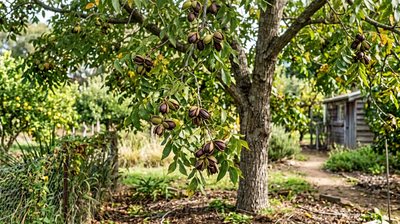
The English walnut, Juglans regia, is a tree for people who plan in decades. It grows into a broad shade tree of 8 to 20 m, starts bearing after a few years, and keeps producing for generations.
It needs a cold winter, deep soil and a great deal of room, so it suits larger blocks in cooler districts far better than a suburban courtyard. This guide covers where walnuts grow in Australia, choosing and pairing varieties, planting, pruning without bleeding the tree, pests and diseases, and how to hull, dry and store the crop.
When to Plant in Your Region
Walnuts are planted as dormant bare-root or potted grafted trees in winter. Plant from June to August in Sydney & Coastal NSW, Melbourne & Victoria, Adelaide & SA, Perth & WA, Tasmania and Canberra & ACT. It is not suited to South East Queensland, Northern Rivers NSW, North Queensland and Darwin & Top End. Choose your region below for the local calendar and any regional note.
Climate and Where It Grows in Australia
Walnuts need a properly cold, dormant winter. They also leaf out and flower in spring, when a late frost can burn the new shoots and flowers, so frost hollows are a poor place for them.
The site lists walnuts as suited to Sydney, Melbourne, Adelaide, Perth, Tasmania and Canberra, all planted in winter. Within those regions the tablelands, the cooler hills behind the cities, alpine Victoria and Tasmania give the most reliable crops. On the warmer coastal plains, deep soil, summer water and a late leafing variety help. The Queensland coast, the Northern Rivers and the tropics do not give walnuts the cold winter they need and are not suited.
- South East Queensland: not suited. Not viable in SEQ. Walnuts need a cold dormant winter the coast never gets.
- Northern Rivers NSW: not suited. Not viable. Walnuts need cold winters that even the Lismore and Kyogle hinterland does not deliver.
- Sydney & Coastal NSW: plant from June to August.
- Melbourne & Victoria: plant from June to August.
- Adelaide & SA: plant from June to August.
- Perth & WA: plant from June to August.
- Tasmania: plant from June to August.
- Canberra & ACT: plant from June to August.
- North Queensland: not suited. Not viable. Walnuts need a cold dormant winter. Impossible on the tropical coast.
- Darwin & Top End: not suited. Not viable. Walnuts need a cold dormant winter. Darwin has none.
Choosing a Variety
Chandler
A modern variety that carries nuts on its side shoots as well as the branch tips, so it crops earlier and more heavily than older walnuts. Pale, well filled kernels.
Franquette
An old French variety that leafs out and flowers late in spring, which helps it avoid frost damage in cold districts. It is often planted alongside Chandler for pollination.
Seedling trees
Cheaper, but slower to bear and variable in nut size and quality. Worth it only as a shade tree or a pollinator, not as the main cropping tree.
Planting
Plant in winter while the tree is dormant. Pick the deepest, best drained soil you have: walnuts send down a strong taproot and sulk in shallow or waterlogged ground. A pH of about 6 to 7.5 suits them.
- Space. Allow about 10 m from other trees, buildings and the vegetable garden. The tree will fill it.
- Keep the veggie patch clear. Walnut roots, leaves and husks release juglone, a compound that suppresses the growth of some plants. The plant library lists tomatoes and apples among the ones to keep away, and in practice it is simplest not to grow vegetables under the canopy.
- Planting. Dig wide rather than deep, set the graft union above the soil, water in well and mulch, keeping mulch clear of the trunk.
- Staking. A short stake for the first year or two helps in windy spots. Remove it once the trunk holds itself up.
Care
Watering
Water young trees deeply every week or so through their first few summers. Mature trees root deeply, but a dry summer while the nuts are filling gives shrivelled, poorly filled kernels, so a deep soak every couple of weeks in a dry spell is worth the water.
Feeding
Walnuts are not heavy feeders. Spread compost or a balanced fertiliser out to the drip line in late winter and keep a wide ring of mulch over the root zone.
Pruning
Shape the tree while young, choosing a central leader or a few well spaced main branches, and lift the lowest branches over time so you can walk and mow underneath. After that, prune very little. Walnuts bleed a lot of sap when cut from late winter into spring, so do any pruning in late summer or early autumn.
Pollination
A walnut carries long male catkins and small female flowers on the same tree, but on many trees the two do not open at the same time. A single tree may set a light crop. A second variety whose catkins release pollen while the first tree's female flowers are open gives much better set. Pollen travels on the wind, so the second tree does not need to be right beside the first, just in the same area.
Pests and Diseases
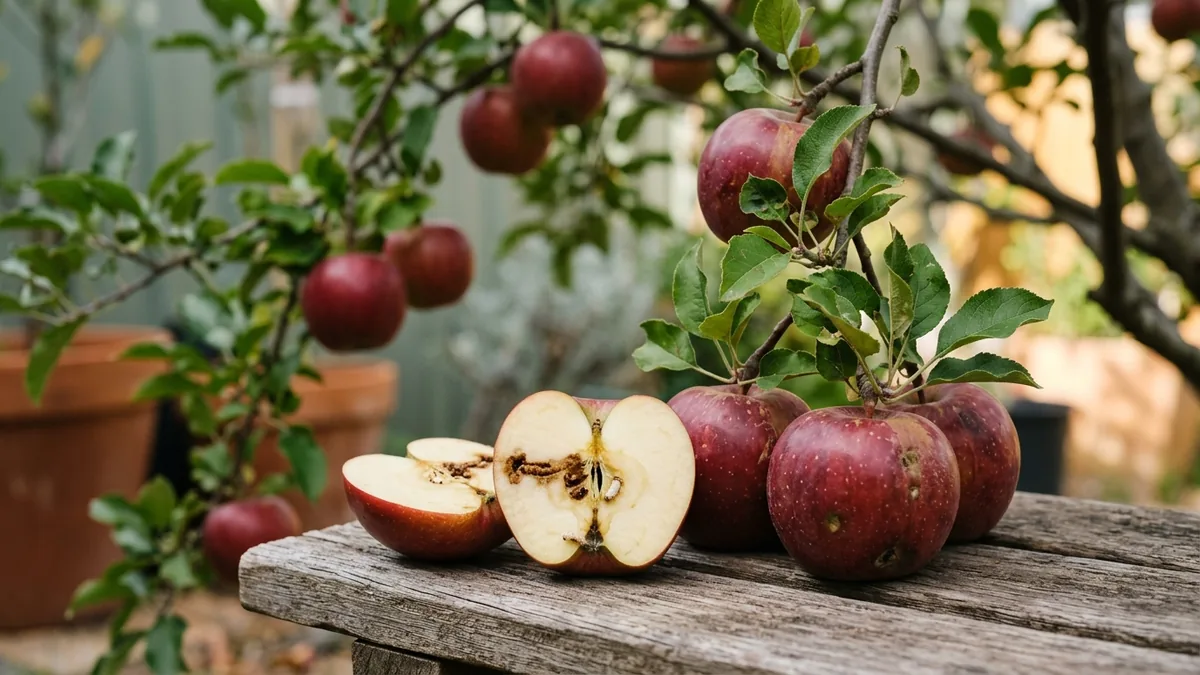
- Codling moth. The same grub that attacks apples tunnels into walnuts. Band trunks with corrugated cardboard in summer to trap larvae and remove fallen, damaged nuts. Our codling moth guide covers traps and timing.
- Birds, rats and possums. Cockatoos and crows take nuts from the tree, and rats and possums take them from the ground. Gather fallen nuts often.
Walnut blight is the main disease. It shows as black spots on leaves and young shoots in wet springs, and young nuts that blacken and drop. Copper sprays at bud burst and during flowering reduce it in wet districts, and late leafing varieties such as Franquette escape much of it. In wet summers some trees also get leaf spots and drop leaves early, listed in the plant library as anthracnose; raking up and removing fallen leaves in autumn reduces it the next year.
Harvest and Storage
Walnuts ripen in autumn. The green husks split and the nuts begin to drop. Gather them every day or two, because nuts left lying on damp ground go mouldy and attract rats and birds.
- Wear gloves. The husks stain skin dark brown for days.
- Peel off any husk still attached and rinse the shells clean.
- Dry the nuts one layer deep in a shaded, airy spot for two to three weeks, turning them now and then.
- They are ready when the kernel snaps crisply and the thin papery divider inside is brittle.
In the shell, walnuts keep for several months in a cool, dry, rodent-proof place. Shelled kernels are best frozen, because the oils turn rancid at room temperature.
Track Your Walnut Tree
Add walnuts to your garden in the Planting Season app and get reminders for planting, care and harvest, tuned to your region.
Open the App →Frequently Asked Questions
When should I plant walnuts in Australia?
It depends on your region. Plant from June to August in Sydney & Coastal NSW, Melbourne & Victoria, Adelaide & SA, Perth & WA, Tasmania and Canberra & ACT. It is not suited to South East Queensland, Northern Rivers NSW, North Queensland and Darwin & Top End. Choose your region in the calendar on this page for the local window.
How long does a walnut tree take to produce nuts?
A grafted walnut usually starts bearing in about four years, and crops keep building for many years after that. Seedling trees can take considerably longer.
Do walnut trees stop other plants growing?
They can. Walnut roots, leaves and husks release juglone, which suppresses the growth of some plants, including tomatoes and apples. Keep vegetable beds and sensitive plants out from under the canopy.
Do I need two walnut trees?
Not always, but it helps. On many walnut trees the male catkins and female flowers open at different times, so a single tree sets a light crop. A second variety that sheds pollen while the first is flowering gives much better crops.
See also: Walnut in the Plant Library, and How to Grow Hazelnut for a cool climate nut that fits a smaller garden.