Codling Moth in Apples and Pears
Updated June 2026
Identify the grub in the core, understand why timing beats spraying, and pick a control plan that fits your garden.
Codling moth is the classic apple wrecker, the reason for the old joke about finding half a grub in your fruit. If you have ever bitten into a home-grown apple and found a brown tunnel running to the core, this is almost certainly the culprit. It is the single most damaging pest of backyard apples and pears across temperate Australia.
The good news is that codling moth is very manageable in a home garden once you understand one thing: the grub spends almost its whole life either inside the fruit or hidden under bark, and that means good control is mostly about timing and barriers, not heavy spraying. This guide walks through how to identify it, why the lifecycle dictates everything, and a simple plan you can pick based on how much you want to do.
Choose Your Control Plan
There is no single magic spray for codling moth. The most reliable approach combines a couple of methods. Use the selector below to see an accurate, step-by-step plan at the level of effort that suits you. Most home gardeners do best starting with Prevent plus Organic first.
Codling Moth Control Method Selector
Pick an approach. You can combine them, and the strongest results come from layering prevention with one active method.
Prevent: keep moths off the fruit and break the cycle
These steps lower pressure year on year and are the foundation everything else builds on. They are low cost and harm nothing beneficial.
- Hang a pheromone trap to monitor. Place one delta trap baited with the codling moth lure in the tree canopy from early spring, before blossom. It catches male moths and tells you when flights begin. This is your timing clock for every other method, not a control on its own in a backyard.
- Sanitation, all season. Pick up dropped and infested fruit at least twice a week and remove it from the garden. Do not leave it sitting in an open compost heap, where grubs simply crawl out to pupate. Thinning out clearly stung fruit early also helps.
- Band the trunk to trap pupating grubs. Wrap a strip of corrugated cardboard (ridges facing the bark) or hessian around the trunk in summer. Mature grubs crawl down the trunk looking for a sheltered spot to pupate and hide in the band. Remove and destroy the band every week or two through the season.
- Tidy loose bark and hiding spots. Scrape away flaking bark over winter, where grubs overwinter in cocoons, and remove nearby fruit-tree prunings and debris.
Organic first: gentle, targeted, bee-safe
Layer these over the Prevent steps. They are the best fit for most home orchards.
- Bag the fruit (the most reliable backyard method). Soon after fruit set, while fruit is small, slip a barrier over each apple or pear. Fabric exclusion bags made for fruit work well, and a stretched footy sock over a single fruit is a cheap home version. The moth simply cannot reach the fruit to lay. Fiddly, but close to foolproof on a few trees.
- Codling moth granulosis virus. This is a naturally occurring virus (Cydia pomonella granulovirus) sold as an organic spray. It infects and kills hatching grubs and is harmless to people, pets, bees and beneficials. Apply it onto the fruit as eggs are hatching, guided by your trap, and reapply through the hatch period because it breaks down in sunlight.
- Horticultural oil at the right moment. A light oil spray can smother eggs laid on the fruit. Timing to the egg-laying window (again, read from the trap) matters, and avoid oil on hot days or stressed trees.
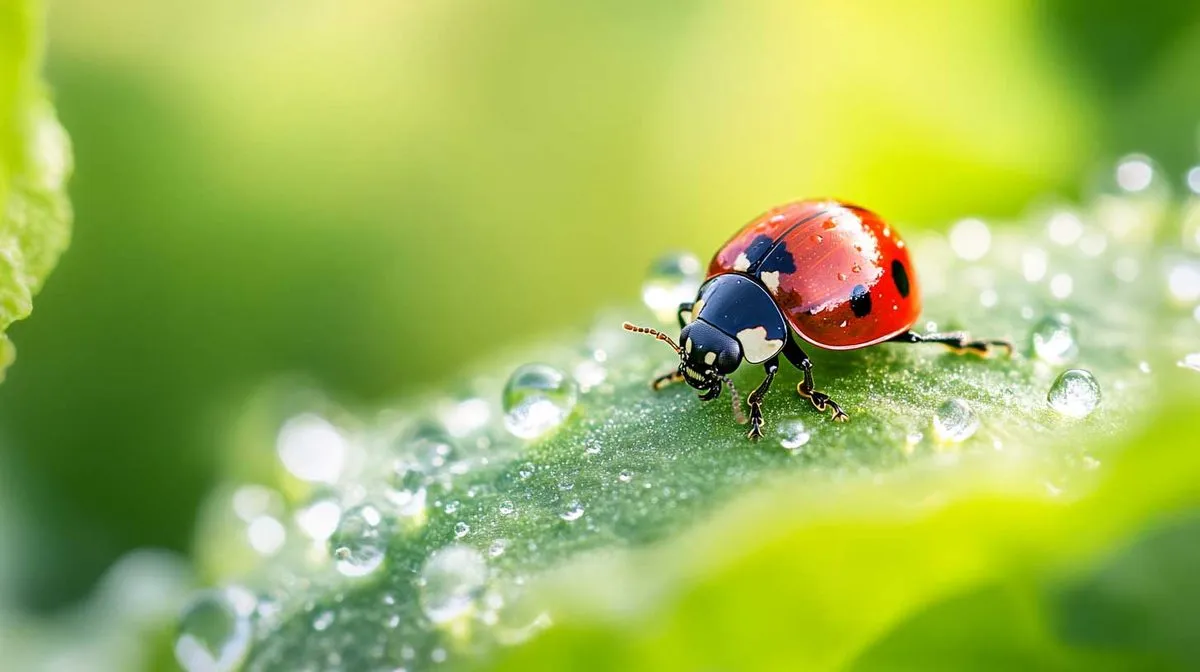
- Encourage natural enemies. Birds, predatory bugs and parasitic wasps all take codling moth. Avoid broad-spectrum sprays that wipe them out.
Stronger: when pressure is high and gentler methods are not keeping up
Reserve these for heavy, repeated infestations. Keep prevention and sanitation running underneath them.
- Spinosad, well timed. Spinosad is a fermentation-derived insecticide allowed in many organic systems. It is effective on hatching grubs when applied to egg-hatch timing from your trap. It can harm bees while wet, so spray in the evening when bees are not foraging and never on open blossom.
- Registered codling moth insecticides. Some garden products are registered specifically for codling moth on apples and pears. Choose a product registered for the job, follow the label exactly, observe the withholding period before eating fruit, and time applications to egg hatch.
- Run multiple timed sprays per generation. Warmer districts get two or three generations a season. Keep the trap up all season and repeat the timed program for each flight, rather than spraying on a calendar.
How to Identify Codling Moth
You will usually meet codling moth as damage long before you see the adult. The tell-tale signs:
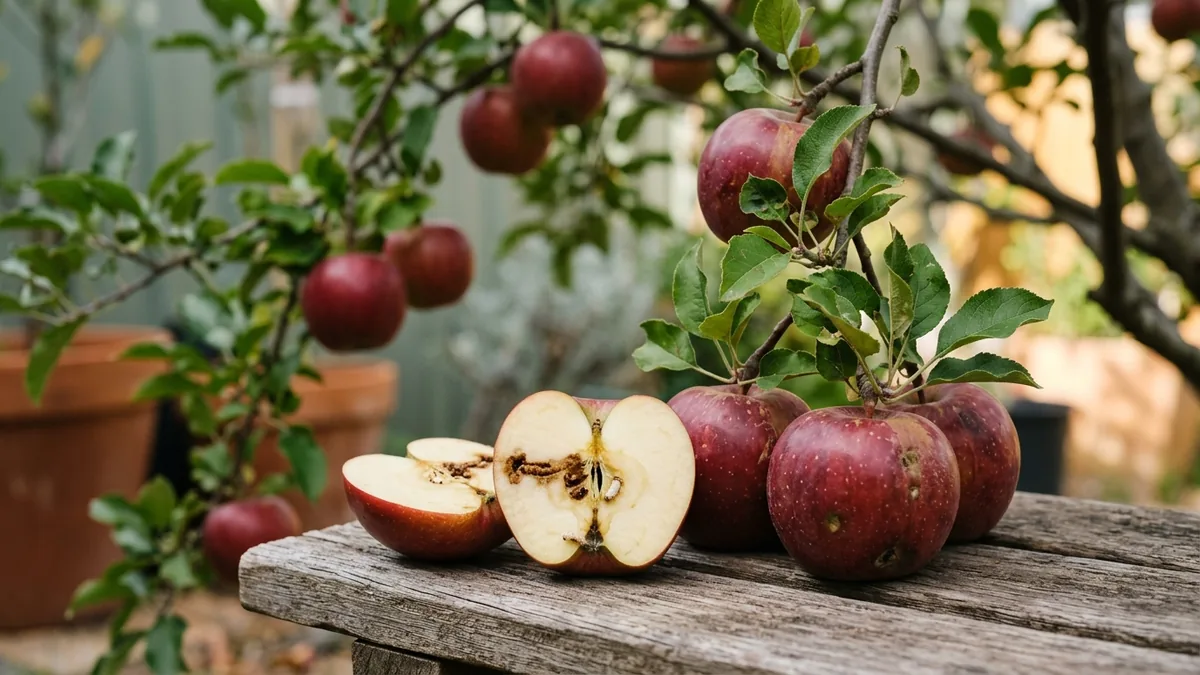
- The grub in the core. A single pinkish-white caterpillar up to about 15 to 20 mm long, with a dark head, tunnelling toward the core to feed on the seeds.
- Frass at the entry hole. The tunnel and the small entry hole on the skin are packed with crumbly brown droppings called frass. A blob of frass at a hole is the classic giveaway.
- Premature drop and stings. Infested fruit often colours up and drops early. Small "stings" (shallow nibbles where a grub started then died) can dimple the skin.
- The adult moth. Rarely seen. A small grey-brown moth about 10 mm long, with a coppery bronze patch at each wingtip, active at dusk in warm, still spring evenings.
The Lifecycle, and Why Timing Matters
Everything about controlling codling moth comes back to its lifecycle, because the grub is only exposed for a brief moment.
| Stage | Where it is | Can you reach it? |
|---|---|---|
| Overwintering grub | In a cocoon under bark or in litter | Yes, by scraping bark and clearing debris in winter |
| Adult moth (spring) | Flying at dusk, laying eggs on or near fruit and leaves | Monitor with a pheromone trap; this sets your timing |
| Egg, then newly hatched grub | On the fruit surface, briefly, before boring in | Yes, this is the only spray window (virus, oil, spinosad) |
| Grub inside fruit | Tunnelling to the core | No. Protected. Nothing sprayed on the surface reaches it |
| Mature grub leaving fruit | Crawling down to pupate | Yes, with trunk banding |
Because the grub is only out in the open for a day or two between hatching and boring in, a spray has to already be on the fruit when eggs hatch. Spraying a week too early or too late wastes the spray entirely. That is the whole reason a pheromone trap is worth hanging: it tells you when the moths are flying, so you can put your protection on at egg hatch rather than guessing by the calendar. In warmer districts the cycle repeats two or three times over summer, so monitoring runs all season.
Prevention That Lasts
- Sanitation is the cheapest win. Removing dropped and stung fruit promptly through the season starves next year's population before it can mature.
- Band trunks every summer to mop up grubs heading down to pupate.
- Clean up over winter: scrape loose bark, clear leaf litter and prunings near the tree.
- Keep a trap up from early spring so you are never guessing about timing.
- Bag fruit early on a few precious trees for near-complete protection without any spray.
Affected Plants
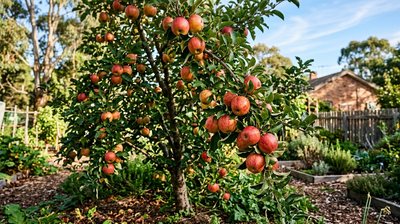
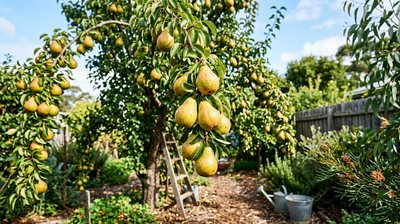
Codling moth is a specialist of pome fruit. It is a major problem on:
It does not attack stone fruit, citrus, berries or vegetables. If something is tunnelling those crops, look to a different pest such as fruit fly. See our broader pest management guide for the wider picture.
When It Is Serious
For a backyard tree, codling moth is a quality problem rather than a threat to the tree's life: the tree itself stays healthy, but a large share of the fruit can be ruined if it is ignored. It becomes serious when:
- You are getting 30 percent or more of fruit stung or tunnelled year after year, which means a resident population is well established and needs a layered program, not a single tactic.
- You have several trees and warm summers driving two or three generations, so monitoring and timed action need to run all season.
- You plan to store fruit. Grubs continue to develop in stored apples, so infested fruit must be sorted out.
Region Note (Australia)
Codling moth is widespread through the cooler and temperate apple and pear districts of southern Australia, from Tasmania and Victoria through the cooler parts of New South Wales, South Australia and the south-west of Western Australia, plus cool highland pockets. It is generally not a factor in tropical and subtropical regions, where apples and pears are uncommon. Warmer southern summers tend to push more generations per season, lengthening the monitoring and spray-timing window, so use the trap to read your own season rather than a fixed date. Western Australia treats it as a quarantine concern in some areas, so check current state requirements if you move fruit or trees.
Time Your Codling Moth Actions in the App
Use the Planting Season app's Pest Calendar to set reminders for trap checks and egg-hatch spray windows, and the Harvest Planner to plan your apple and pear crop for the season.
Open the App →Frequently Asked Questions
How do I know it is codling moth and not something else?
Cut the fruit open. Codling moth leaves a tunnel that bores to the core, packed with crumbly brown frass, often with a single pinkish-white grub inside. The entry hole on the skin is usually plugged with frass. Fruit fly, by contrast, leaves soft watery rot and tiny maggots near the surface, with no neat tunnel to the core.
Why does spray timing matter so much for codling moth?
Most sprays only work on the newly hatched grub during the short window before it bores into the fruit. Once it is inside, it is protected. The grub hatches from eggs laid on or near the fruit, so the spray has to be on the fruit surface as eggs are hatching. That is why a pheromone trap matters: it tells you when the moths are flying so you can time the spray to egg hatch rather than guessing.
Do pheromone traps control codling moth on their own?
In a backyard with one or two trees, traps are mainly a monitoring tool, not a cure. They catch male moths and tell you when flights start, which lets you time other actions. They can reduce numbers a little but should be paired with sanitation, banding or fruit bagging for real control.
Does bagging the fruit really work?
Yes. Slipping a barrier over each young fruit, such as a fabric exclusion bag or even a stretched footy sock, physically stops the moth laying on the fruit. It is the most reliable organic method for a small number of trees, though it is fiddly and you need to do it early, soon after fruit set.
What is codling moth granulosis virus?
It is a naturally occurring virus (Cydia pomonella granulovirus) sold as an organic spray that infects and kills codling moth grubs while being harmless to people, pets, bees and beneficial insects. Like other controls it has to be on the fruit as grubs hatch, and it breaks down in sunlight, so it needs reapplying through the egg-hatch period.
Will picking up fallen fruit make a difference?
It makes a big difference over the season. Grubs leave infested fruit to pupate, so removing dropped and infested fruit promptly, and not composting it loose, removes the next generation before it can mature. Sanitation is one of the highest-value low-effort steps you can take.
Is codling moth a problem everywhere in Australia?
Codling moth is widespread in cooler and temperate apple and pear growing areas across southern Australia. It is generally not present in tropical and subtropical zones where apples and pears are uncommon. Warmer areas can see two or even three generations a season, which means longer monitoring and more spray timing windows.